

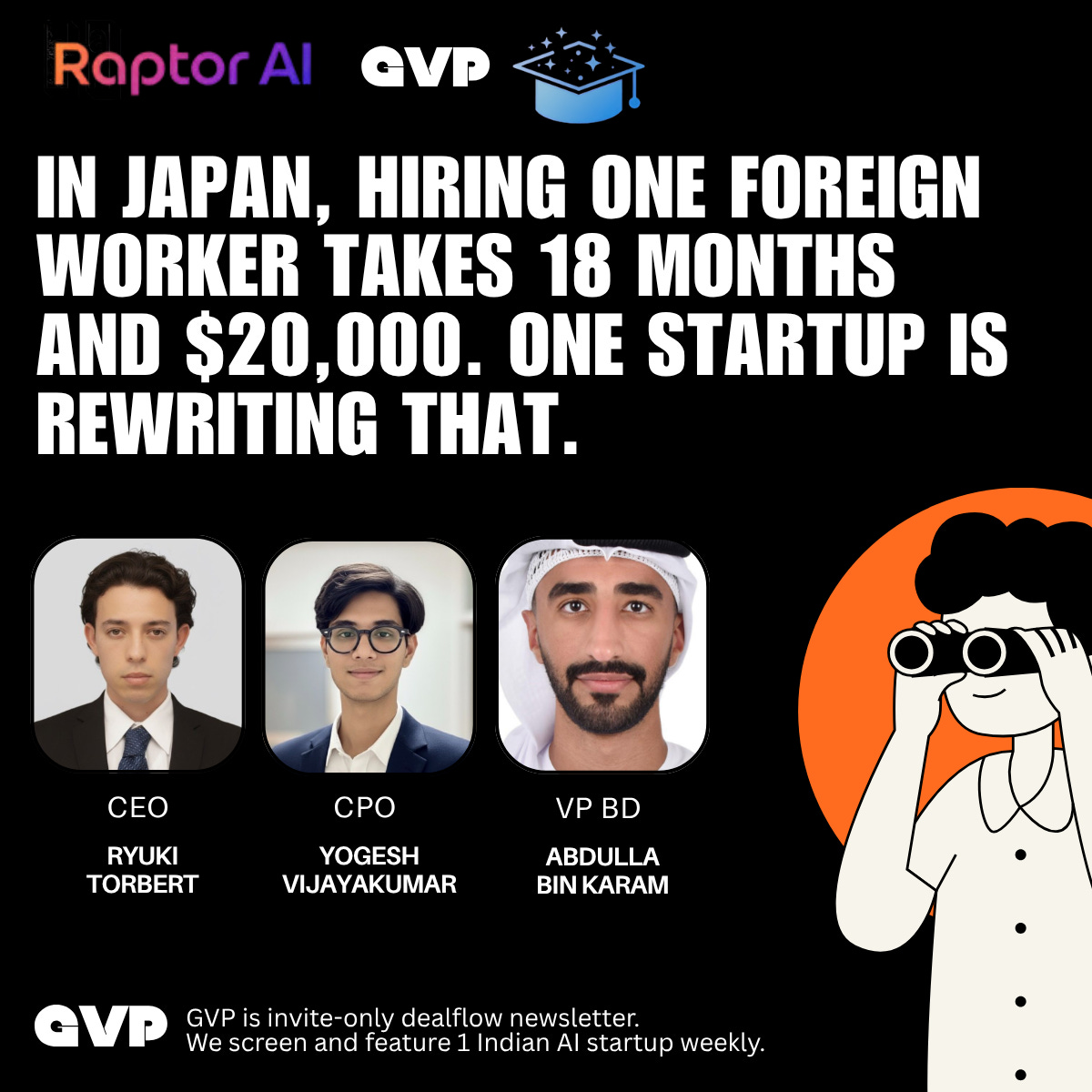
For the first time in the history of humankind…
Data shows the world doesn’t have enough people to work.
Japan is one of the most admired countries in the world. Living there feels like stepping into the future

It’s the place where robots serve ramen in Tokyo.
It’s the only place where trains arrive more punctually than people.
and with vending machines on nearly every street corner.
Yet the same nation that living in 2030 is quietly dying the most
Ordinary crisis on Earth.
Not a money crisis.
Not an innovation crisis.
But the PEOPLE crisis.
Every year, half a million citizens disappear from its population.
Nearly one in three are already over 65.
Factories are short of workers.
Hospitals are short of nurses.
Hotels can’t find staff.
By 2040, Japan will need 6.7 million foreign workers just to stay alive.
But here’s the real problem.
Hiring a single international worker still takes 18 months, 7 middlemen, and $20,000 to hire one foreign worker in Japan.
And Japan isn’t alone.
Germany, South Korea and other developed countries are facing the same crisis.
The Great Labor Bottleneck
Every trillion-dollar market hides a secret
It’s either mature…. Or broken.
The United Nations projects that by 2030, there will be 85 million unfilled jobs worldwide, costing the global economy nearly $8.5 trillion in lost output.
The global staffing and recruitment industry is worth $757 billion today.
By 2031, it will pass $2 trillion.
But beneath that growth is chaos.
90% of all cross-border hiring still happens through emails, spreadsheets, and middlemen.
Japan alone runs a $72 billion staffing economy almost entirely offline.
Companies spend $20,000 per hire and wait more than a year to fill a single position.
Across Asia-Pacific, a $158 billion market is exploding..
Countries like Germany, South Korea, and Japan desperately need talent.
Countries like the Philippines, Indonesia, and Vietnam are overflowing with it.
In a world that can send rockets to Mars and data across oceans in milliseconds, we still can’t move people efficiently between countries.
The global hiring system is older than the internet itself.
Governments tried to fix it.
Agencies made it worse.
And somewhere between the factories of Osaka and the villages of Kerala,
a trillion-dollar bottleneck was born.
A small team in Japan decided to rebuild the global hiring pipeline from scratch — not for corporations, but for people.
A revolutionary solution
For decades, the world accepted this as normal.
“That’s just how international hiring works,” they said.
But when economies like Japan start collapsing, understanding their demographic weight, something has to change.
That’s when a small team in Japan asked a question no one had dared to ask:
What if we rebuilt the entire global hiring system from scratch?
Not for corporations. Not for agencies. But for people.
And they called it Raptor AI.
Backed by Japan’s government, Raptor AI is constructing the digital rails that
can move a human across borders as easily as moving money across banks.
Instead of recruiters, it deploys AI agents.
Instead of paperwork, microservices.
Instead of 18 months, it only takes 12 weeks
When it comes to hiring international talent, there are 3 major bottlenecks:
Finding the right matching candidate from hundreds of resumes and pay 5–7 middlemen, yet still end up with mismatched or non-compliant candidates.
Even after hiring, up to 40% of workers drop out before joining or leave within months — wasting time, money, and visas.
Handling all the paperwork regarding visa, license, government filings spread across countries In the backend.
Here’s how they’re solving it:
Raptor’s system runs on three intelligent AI agents, each doing the work of hundreds of recruiters and consultants:
1. Nozomi — the recruiter for companies.
It finds the perfect match, manages data, and ensures compliance.
2. Naomi — the recruiter for people.
It predicts long-term commitment, filters dropouts, and ensures workers stay and grow.
3. Natsumi — the immigration partner.
Handles every visa, license, and relocation process automatically across borders.
Together, they collapse months of paperwork into a single digital workflow — replacing inefficiency with intelligence.
Meet the Team
The reason I especially like this team is that they’re not obsessed with building AI for its own sake. They’re relentlessly customer-focused, almost textbook examples of doing things that don’t scale.
They obsess over understanding the customer’s problem, and the way they dig into it is both rational and fast. They’re not trapped by automation hype or the “sexy startup” syndrome.
They’re unafraid to get their hands dirty, to do things that don’t scale and that’s exactly what I value most in founders.
That’s why, personally, I have a soft spot for this team.
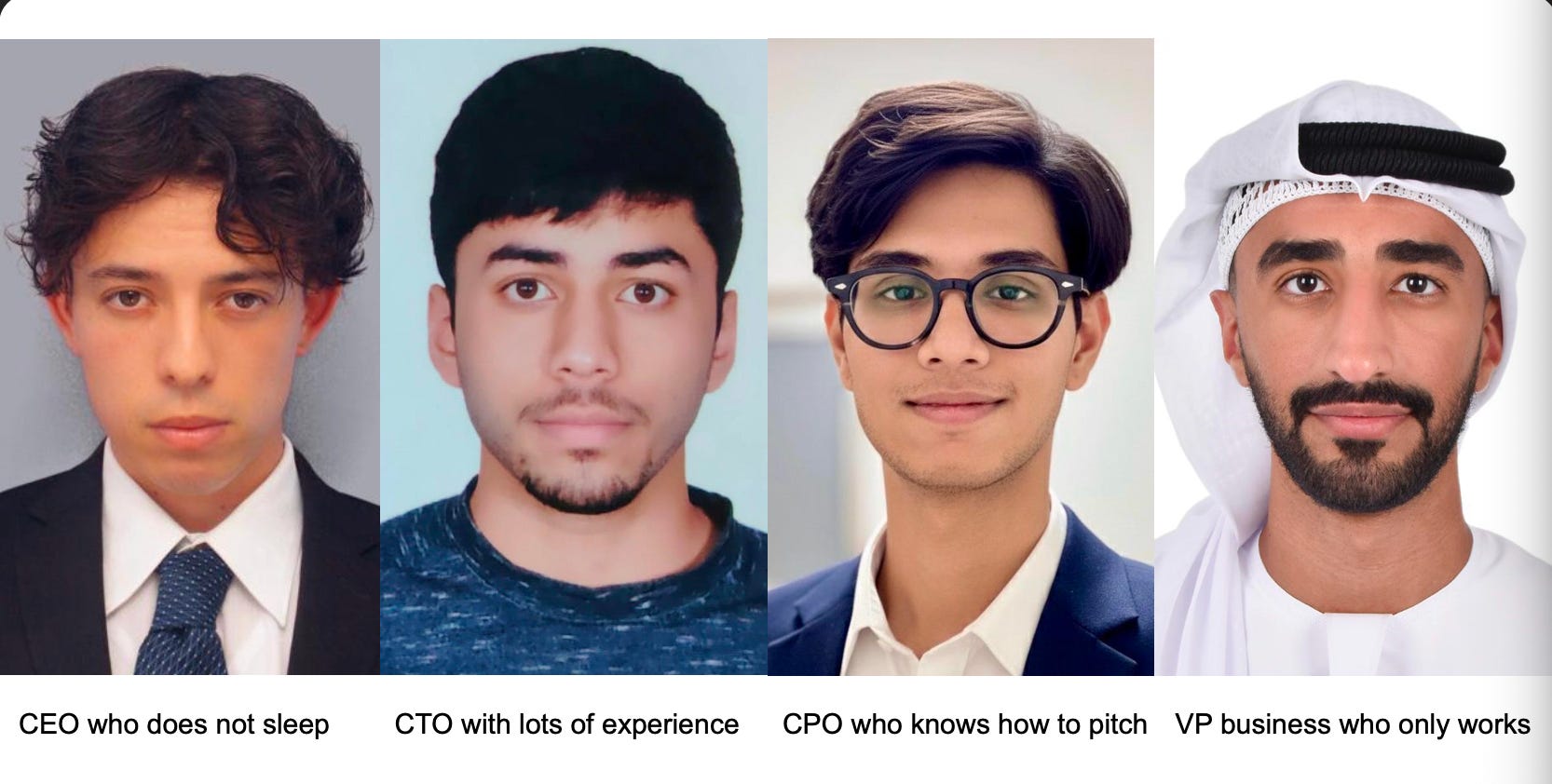
Ryuki Torbert — CEO
Entrepreneur since 19, Ryuki spent five years building and scaling businesses across Japan, navigating cross-border trade and immigration bottlenecks firsthand before deciding to fix the system from within.
Sriram Radhakrishna — CTO
An AI and robotics researcher with five international papers published by 21, Sriram built the automation backbone that turns Raptor’s 18-month hiring process into a 12-week workflow.
Yogesh Vijayakumar — CPO
Having changed jobs four times and visas three times by age 22, Yogesh knows how broken the global hiring system is—and he’s building the product he wishes existed.
Abdulla Bin Karam — VP, GCC Markets
Youth Ambassador for Osaka World Expo 2025, Abdulla bridges Japan and the Gulf, bringing the cultural fluency and networks needed to unlock the fastest-growing labor corridor in the world.
Together, they’re building what governments couldn’t and agencies wouldn’t: a borderless hiring infrastructure that runs on intelligence, not inefficiency.
Ph.D. AI researcher from Silicon Valley[Updated this week]
It’s been just seven days since we sent our newsletter to Pro subscribers and a lot has happened.
We’ve onboarded a highly motivated Ph.D. AI researcher from Silicon Valley to accelerate product development and strengthen our AI-driven moat.
We also got selected for the Google Cloud for Startups program, securing $40,000 worth of compute credits.
This team is growing fast. Every week, we’re evolving into a stronger, more capable version of ourselves.
Their Business Model
Raptor AI doesn’t make money by charging people to find jobs.
It makes money fixing what wastes money for everyone else.
They’ve 3 revenue models in their business:
Success-Based Revenue
SaaS
Licensing Corridors
Please see the Pro-Zone to to check their business model and unit economy.
Their MOAT:
Raptor built a system the world can’t easily copy.
To legally hire across borders, you need government-issued licenses — permits that take time, capital, and deep local trust.
Raptor AI has already secured full licensing and compliance in Japan.
In India and the UAE, the company has set up local offices and is ready to apply for licenses after its pre-seed round — a process that requires an initial bank deposit.
Until then, Raptor operates through partnered, government-licensed agencies, giving it legal access to cross-border recruitment at a fraction of the cost.
And with Abdulla Bin Karam — an Emirati and Youth Ambassador for Osaka Expo 2025 — on the founding team, Raptor holds a unique local advantage to fast-track UAE licensing within months.
🌎 GVP’s take:
We featured Raptor AI because it’s solving one of the most urgent problems no one wants to talk about -- the world is running out of Human Capital.
Japan, Germany, and South Korea are shrinking. India, Indonesia, and Vietnam are overflowing with young talent.
Between them lies a broken system that takes 18 months, seven middlemen, and endless paperwork to move one human across borders.
Raptor is rebuilding that system from the ground up.
It already holds the licenses to operate legally in Japan, India, and the UAE — a regulatory moat that takes years to achieve.
And the market potential is enormous — a $2 trillion industry still running on paper.
But what convinced us most was the team’s clarity and timing.
They’re building in the world’s toughest labor market (Japan), with backing from government agencies, and they’ve already expanded to GCC corridors — where the labor demand is exploding.
The last century was about moving goods.
The last decade was about moving data.
The next economic revolution will be about moving people.
Unit economy, traction records & full pitch deck download(Pro Zone)
