


If you’re new here, Welcome.
Welcome back to GVP. Every week we meet one Indian founder, verify the traction, and write the story so you can make faster investment decisions. We added 32 new subscribers last week — now at 550 investors reading weekly. If someone forwarded this to you, subscribe here.
“They call it market fluctuation but it’s not market fluctuation. It’s an organized loot that’s happening on the citizens of this country.”
— Shafi Parambil, Member of Parliament, Lok Sabha
Hey there!
Three months into building his startup, Aditya got the kind of email most 21-year-olds dream about.
The vice president of one of the largest travel companies in the world wanted to talk. Not about a partnership. Not about a mentorship. They wanted to buy his company.
After two meetings, they made him a real offer for the idea he launched just three months ago.
He had an opportunity to walk away with a serious payday in his final year of college.
But He said no.
Today I’m going to walk you through why a college student turned down the acquisition offer from a Fortune 500 company.
What he’s seen in the Indian flight booking market that nobody else has, and the early traction that’s caught the attention of investors and acquirers alike.
The problem that reached parliament.
In July 2024, a Kerala MP walked into the Lok Sabha holding a single screenshot.
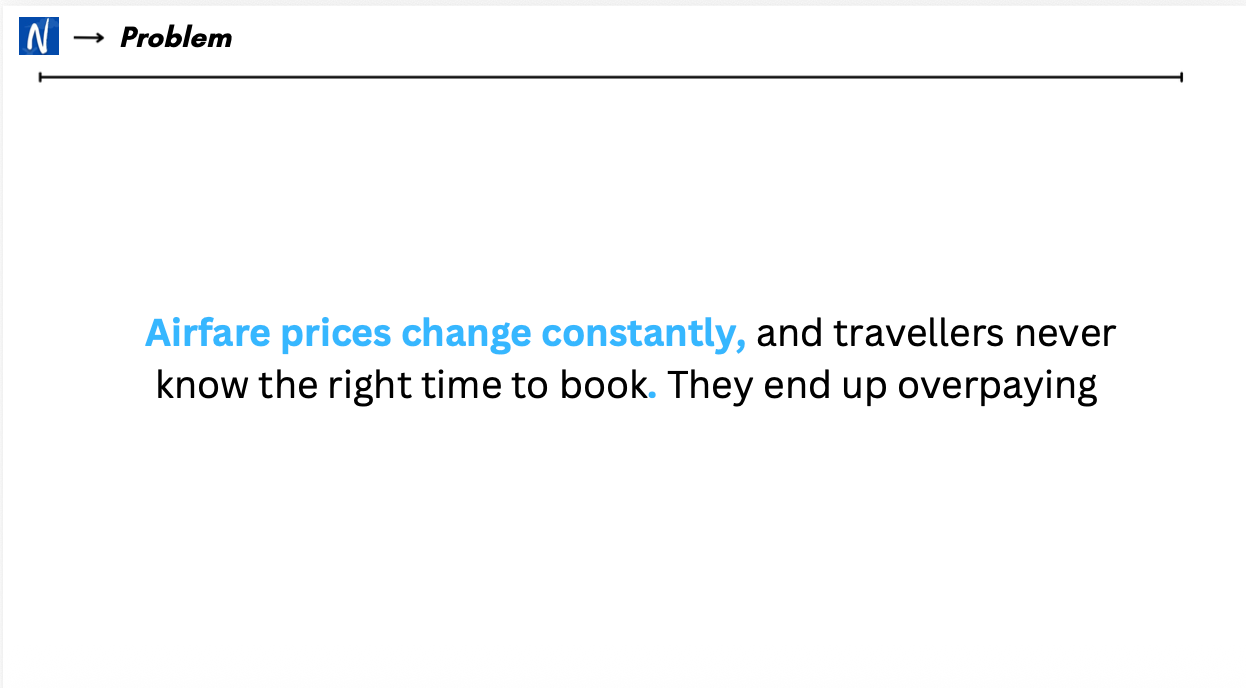
A Kochi to Dubai flight on Air India. ₹19,062 ($228) for July 27. ₹77,573 ($930) for August 31.
Same airline, same route, four times the price one month apart.
What Shafi Parambil called this on the floor of parliament is the line you cannot unhear:
“They call it market fluctuation but it’s not market fluctuation. It’s an organized loot that’s happening on the travelers, that’s happening on the citizens of this country.”
Think about who actually pays for this loot:
Gulf migrant workers. Around 8.9 million Indians work in the Gulf, most earning ₹25,000 to ₹40,000 ($300 to $480) a month. A ₹77,000 ($925) vacation ticket home costs them two months of salary.
People caught in crises. After the Pahalgam terror attack in April 2025, Srinagar-Delhi fares hit ₹62,000 ($745) before the DGCA stepped in. Trivandrum-Delhi during another crisis touched ₹1,00,000 ($1,200)
.Regular Indian travelers. International fliers lose ₹5,000 to ₹15,000 ($60 to $180) per ticket on average. 70 percent of Indians book a month in advance, locking themselves in before prices drop.
Parambil asked the government for a quasi-judicial body to regulate airfares.
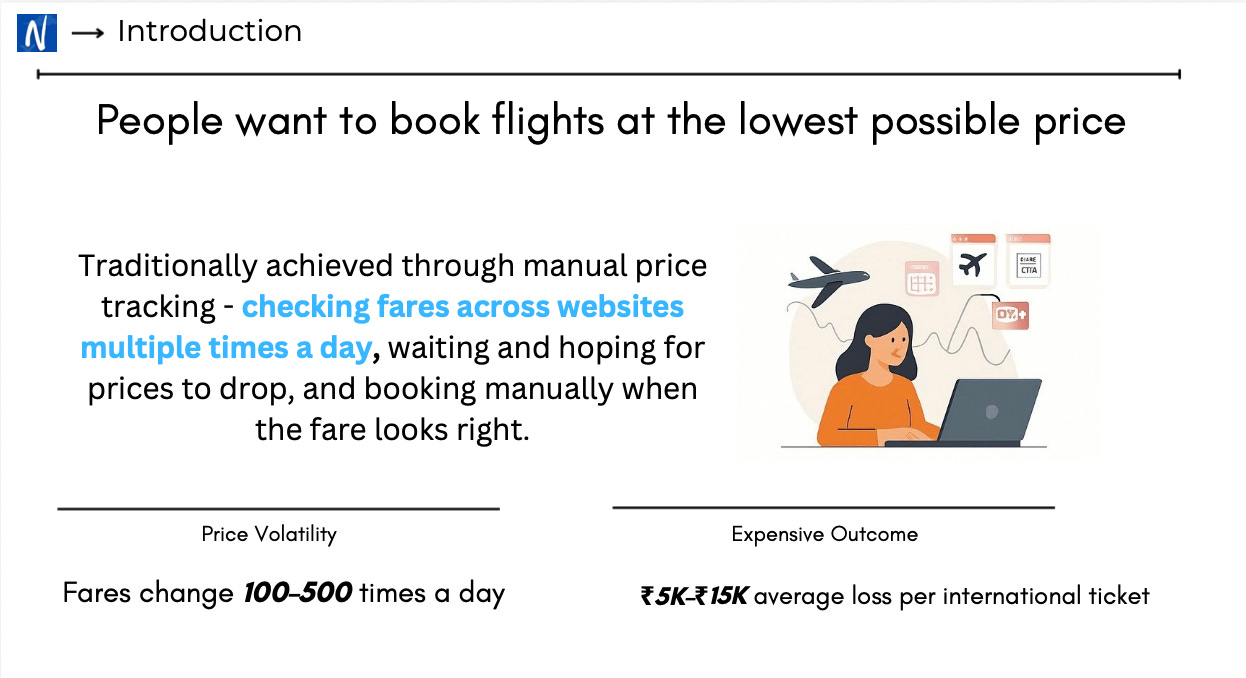
They acknowledged the problem and promised an inquiry. A year later, fares still move 100 to 500 times a day.
MakeMyTrip, Cleartrip, and Skyscanner let you compare or set alerts. None of them book the cheaper fare for you when it drops.
A 21-year-old college student decided to do that himself.
How this 21-year old solving this problem?
Aditya was a final-year BBA student in Mumbai who could not afford to instantly book flights.
He kept missing the price drops. So he built the tool he wished existed.
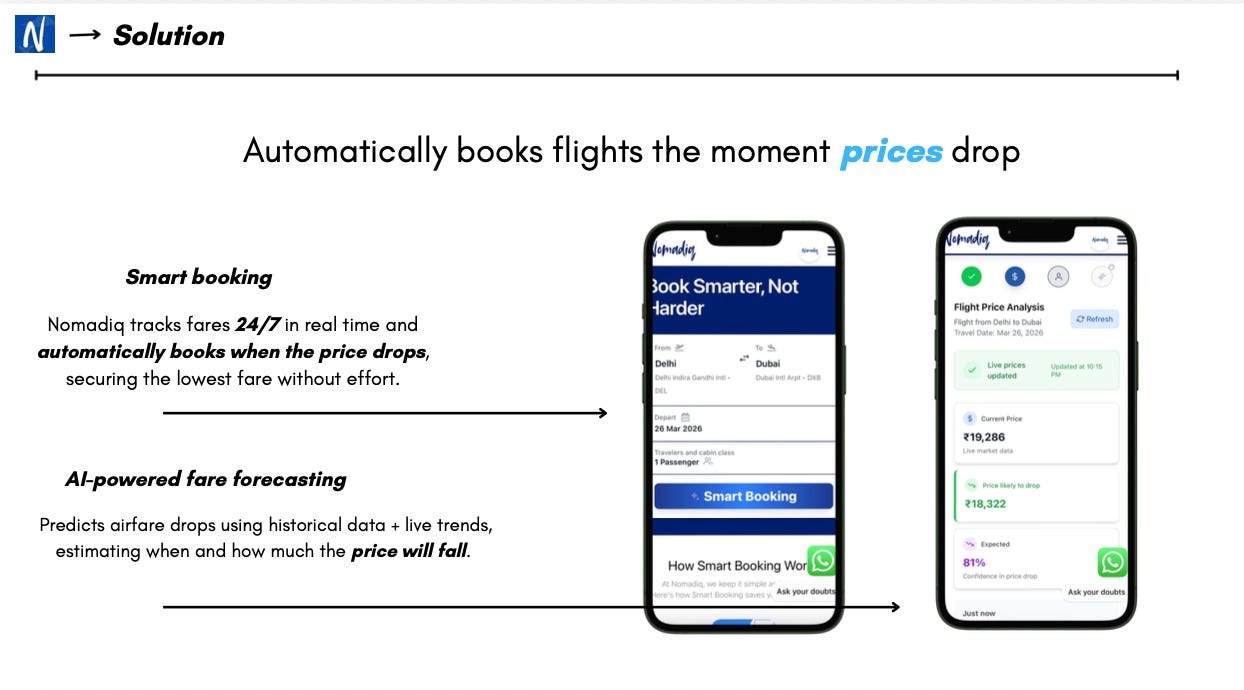
Here is how Nomadiq works:
You enter your route, dates, and preferences (timing, airline, cabin class).
The AI looks at one year of fare data (21 million data points and predicts how much the price will drop and when.
You pay the current price upfront. The system then tracks your route 24/7.
The moment the price drops, Nomadiq books the cheaper ticket and refunds the difference to your bank account.
Their current prediction accuracy is around 93 to 95 percent.
The biggest single drop the team has tracked so far was a Switzerland to Chennai business class flight that fell ₹5 lakh ($6,000).
Before writing a line of code, Aditya did something most founders skip.
He walked into the pricing teams at Air India and IndiGo and asked the analysts who set fares whether prices actually drop.
They confirmed it. Five months of research and 21 crore data points later, the model was ready.
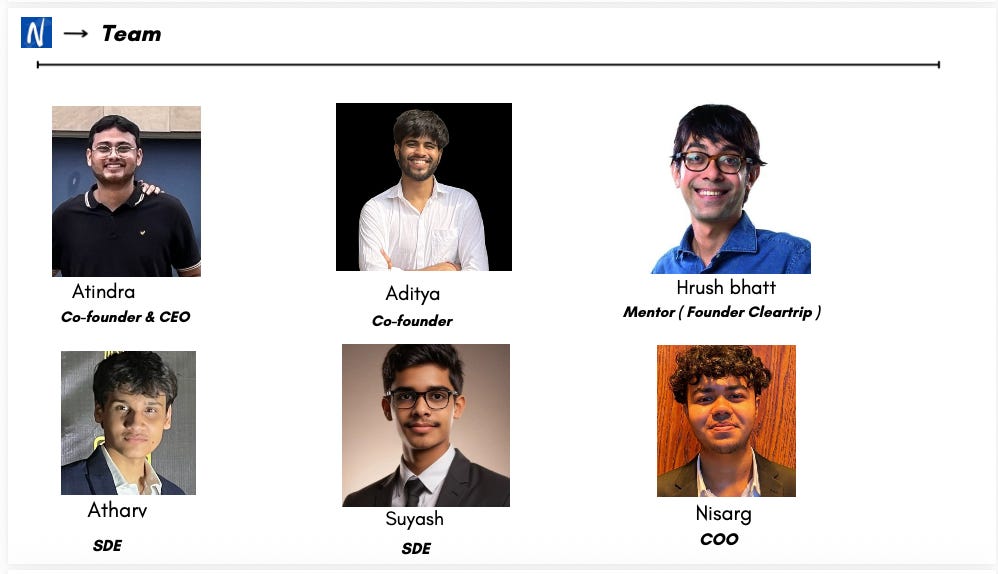
The team
Aditya Aryan — Co-founder, 21, final-year BBA student.
Atindra — Co-founder & CEO.
Nisarg — COO.
Eleven members in total, six in the core team.
Traction and market
The numbers from a team operating without paid marketing:
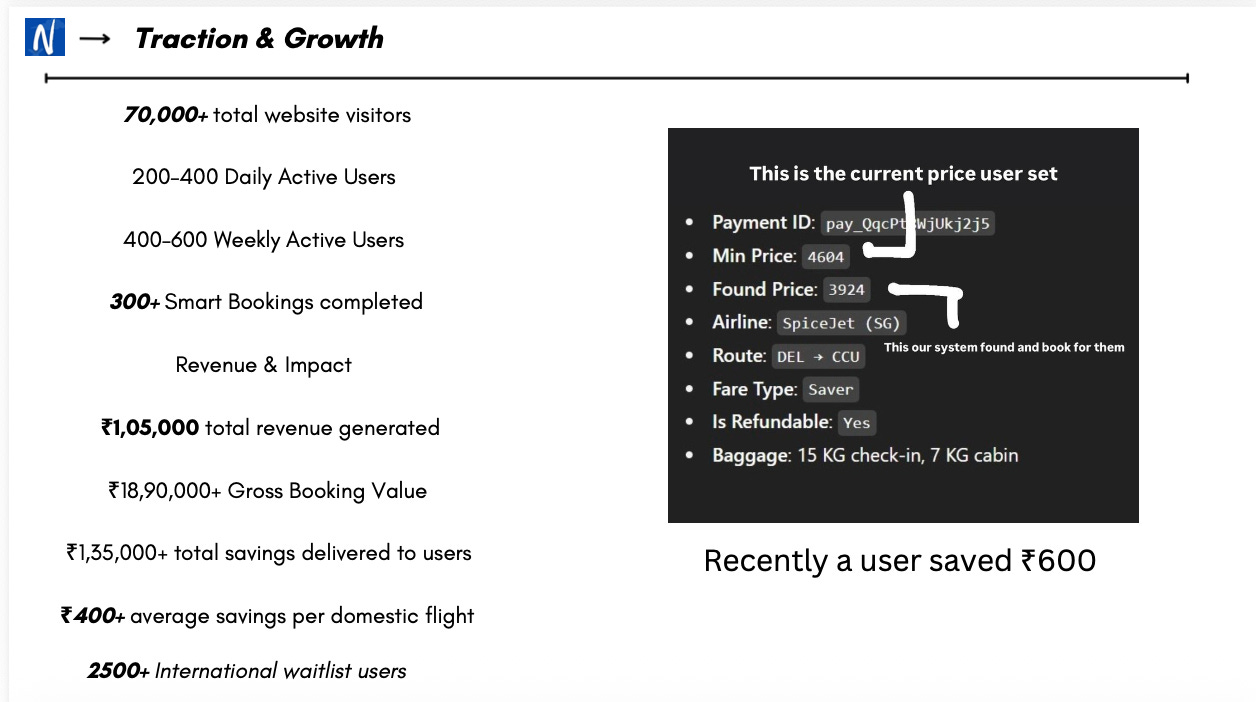
500+ paying customers in the first few months.
₹2 lakh+ ($2,400) in savings delivered to users.
₹1.5 lakh ($1,800) in revenue from a flat ₹350 ($4) platform fee per domestic booking.
300+ Smart Bookings completed.
2,500+ international waitlist users.
90% of users came from organic LinkedIn posts.
One Reddit post hit 330K views. A Mumbai auto poster campaign got picked up by news channels.
The Indian online flight booking market sits at $9.5B today and is projected to reach $15.8B by FY26 at 18.5% CAGR.
International bookings are where the money is.
Nomadiq takes 25% of the savings delivered to users on international fares, which means a single booking with a $100 saving generates $25 in revenue, the same as 5 to 10 domestic bookings.
The team is currently raising ₹2 Cr ($240K), with ₹50 lakh ($60K) already committed by the co-founder of Wernos, a corporate travel company.
GVP take:
A few things stood out to me about Nomadiq:
They are solving a problem that an entire nation is facing, if this problem has been addressed in Lok Sabha’s parliament, there is a high chance the government will support for startups who can solve this issue.
The acquisition offer is the strongest validation. A fortune 500 company does not approach a three-month-old company unless they see something the market does not.
The data moat is real. 21 crore historical fare data points trained on a self-learning model is not something a competitor replicates in a weekend.
The business model favors quality, not volume. One international booking earns what 5 to 10 domestic bookings earn elsewhere.
They’re solving a problem a nation is facing, but existing players chose not to solve. That gives them an high advantage.
P.S. One last thing…
If this was useful, forwarding it to one person in your network is the single best way to support what we’re building.
500+ investors already read this every week, including firms like Accel, WTFund, and Ice VC, alongside family offices from Dubai, Singapore, and Europe.
Our only promise is this: we will keep finding India’s best founders at the earliest stage, so you never miss a deal worth taking.
See you next week
If you want me to make a warm intro with this startup founder, feel free to reply to this email!
Email: jaylee@globalventureplay.com