

Quick Summary
Sector: Defense Tech
Stage: Pre-seed
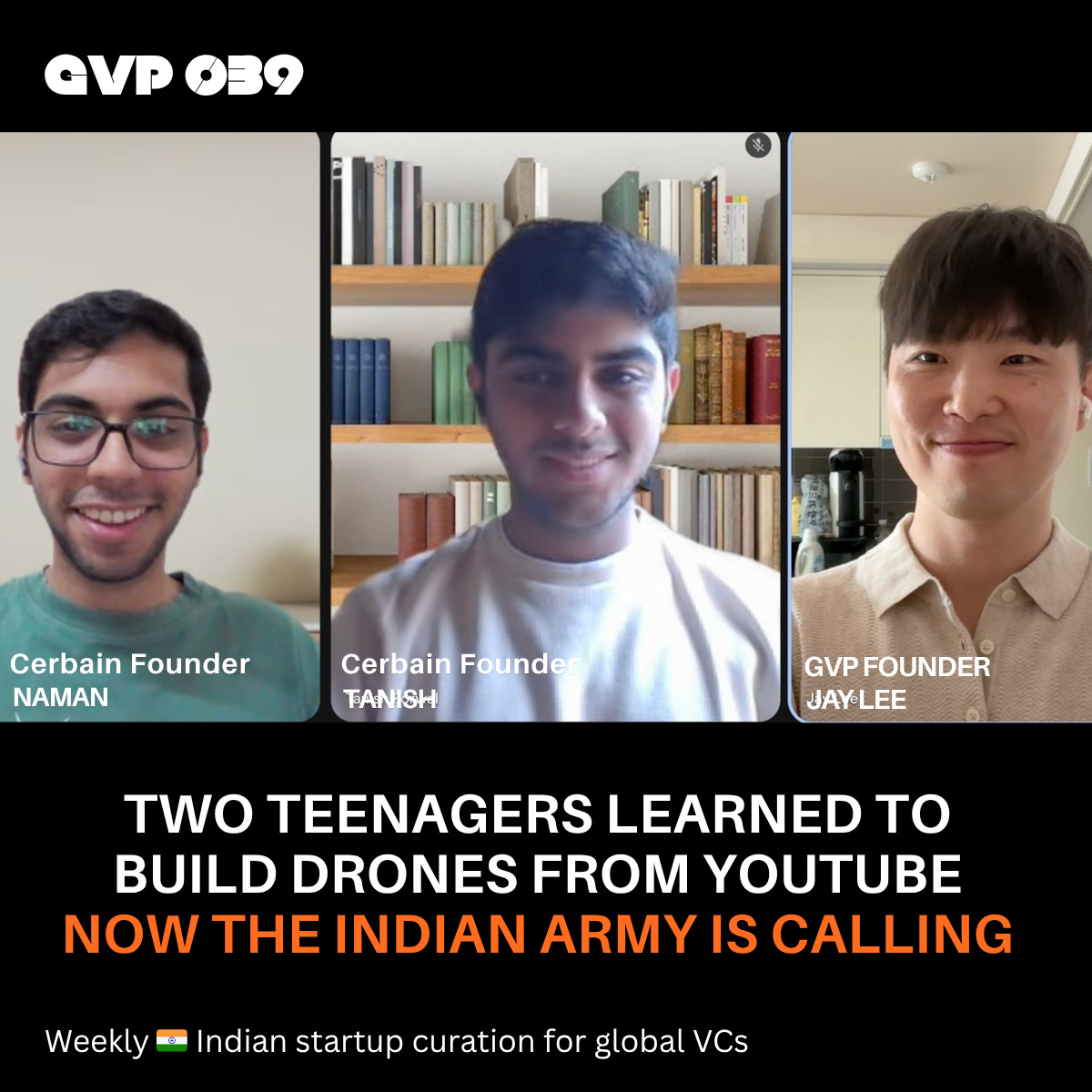
Founders: Naman Porwal (CEO, IIT Delhi ‘23, ex-HKUST, ex-Goldman Sachs) & Tanish Porwal (CTO, IIT Delhi, current student, AI & CUDA developer)
Product: Nex Ecosystem, an AI-powered autonomy and intelligence layer for the future battlefield. Starting with automating the aerial battlefield
Business Model: Software licensing to drone OEMs + subsystem sales + co-development partnerships
Market: the global drone market is $73B in 2024 and is projected to reach $164B by 2030. India’s addressable market exceeds $1.3B.
Welcome to Global Venture Play (GVP)
Every week, we feature one high-potential Indian startup, carefully vetted for traction, team strength, and scalability. Helping our investors to find undervalued Indian AI startups.
Trusted by Accel, Ice.VC and other 500+ global investors
The country that automates the battlefield first wins the next decade
In 2017, two teenage brothers in India watched YouTube videos about drones being used in the Iraq and Syria conflict.
The footage of American B-2 bombers caught their attention. The internet had just become cheap across the country.
They wanted to build a plane.
They found a Vietnamese YouTube channel called Creative Channel.
Followed along step by step. A build that should have taken two hours took them two months. They didn’t know how a motor worked.
Didn’t know what servo motors were. Learned everything from scratch, failing at every step.
When the plane was ready, they took it to their family farmhouse for the first flight.
Everything was working exactly as it should.
But it crashed.
But instead of walking away, they had a thought. The machine worked perfectly. Every part did its job. It crashed because of the humans controlling it.
So they asked a question that sounded silly at the time: what if it could fly itself?
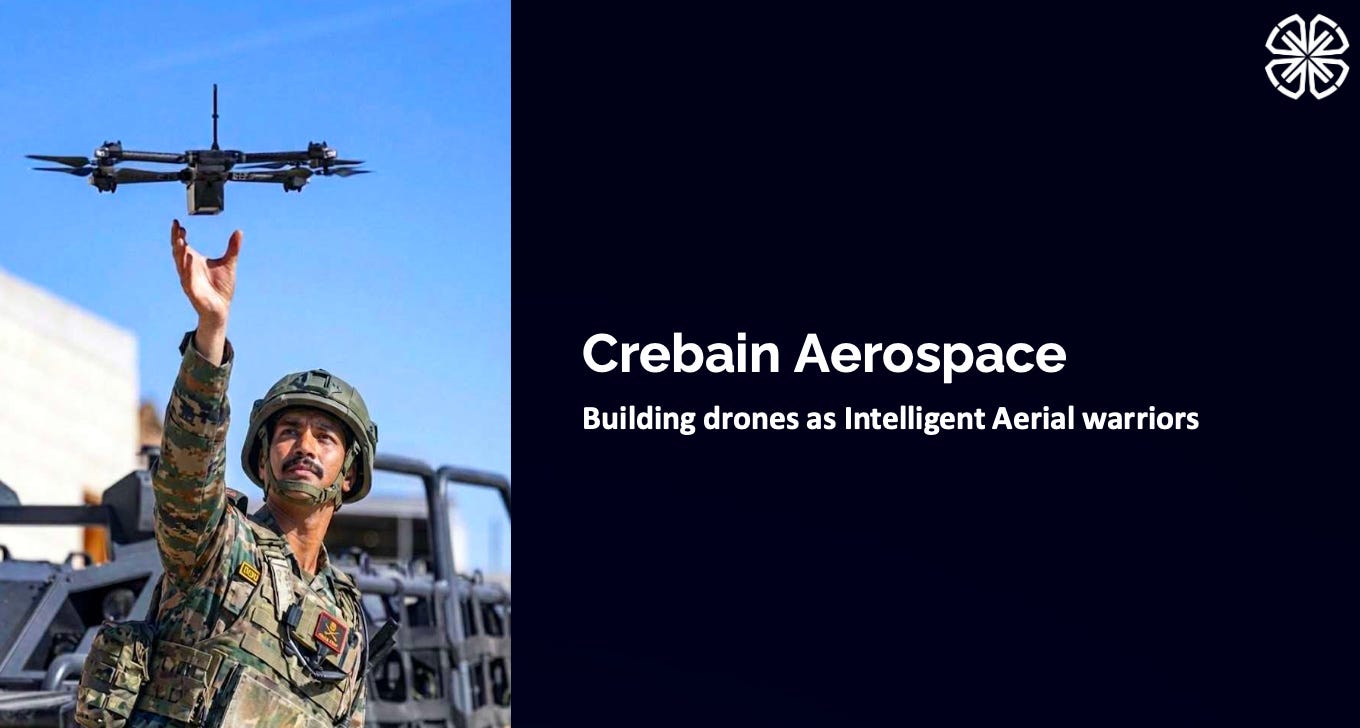
That question is now Crebain Aerospace.
Naman and Tanish believe soldiers on the front lines will soon be history. Future wars will be fought from closed command rooms.
Autonomous machines will handle air, water, land, and space.
Humans will make decisions. Machines will carry them out.
They’re starting with the sky.
Why military drones today are still "dumb"?
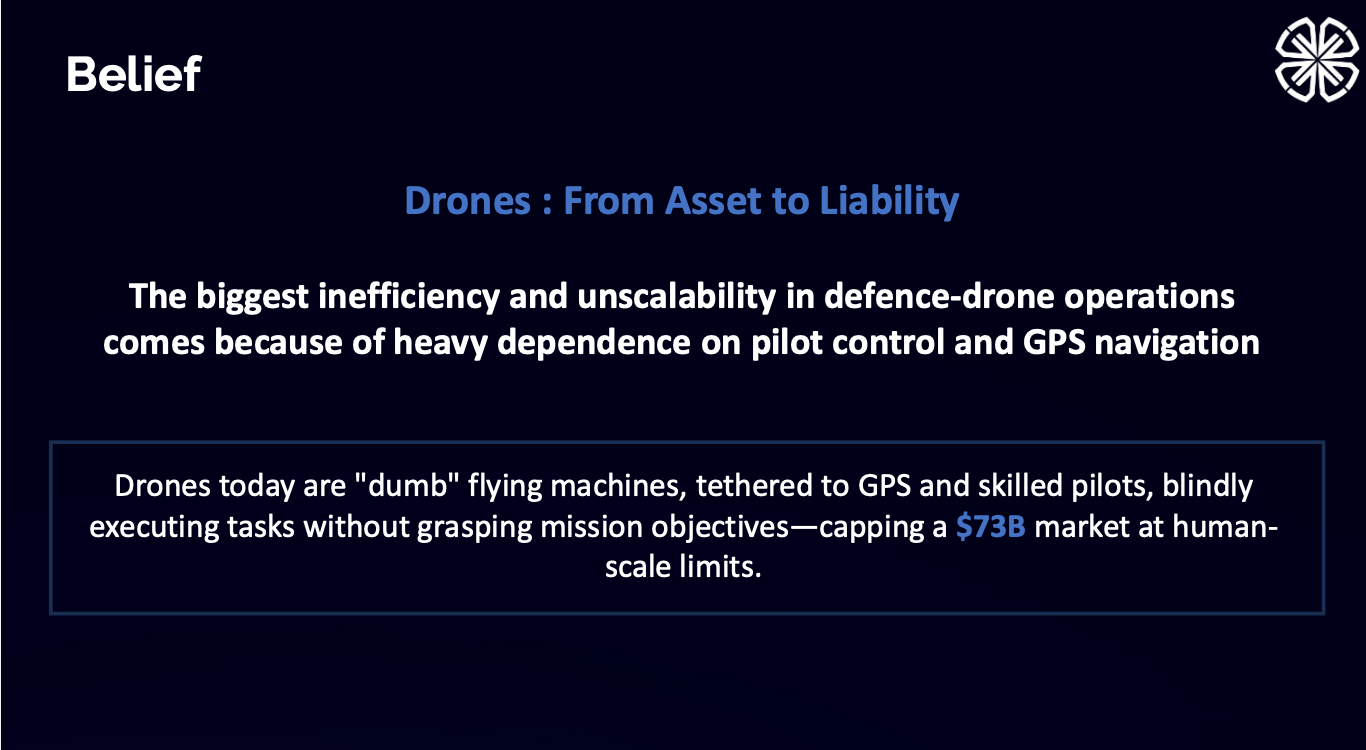
Most military drones in 2026 still work like remote-controlled cars with wings.
One trained pilot per drone and GPS are required for navigation.
If the enemy jams GPS, the drone gets lost. If communication drops, the drone is useless.
Ukraine produces 8 million FPV drones per year.
Their defence force is 800,000 people. That’s 10 drones per soldier.
Most get destroyed almost immediately because they can’t think for themselves in electronic warfare zones.
In the first week of the Iran conflict, the US and Israel burnt through 800 Patriot interceptor missiles.
Each Patriot costs $3-4 million. Each Iranian drone it targeted costs $20,000.
The math is unsustainable for every country trying to defend itself.
Earlier this year, India’s Army had to emergency-purchase autonomous drones from Shield AI, a US company valued at $5.3 billion.
India, one of the world’s largest defense spenders, didn’t have a domestic company that could build what they needed.
Crebain is building the brain, not the body
They aren’t building drone hardware. They’re building the intelligence that makes drones think for themselves.
They’re starting with air because it’s the most mature battlefield technology and the most urgent gap to fill.
They watched the Indian market carefully and saw that after 2021, when India restricted Chinese imports, dozens of companies rushed into drone manufacturing.
Hardware is becoming commoditized.
So they took the opposite approach. They build intelligence software that plugs into other companies’ drones. Think of it as “Intel Inside” for military drones.
Their product is called Nex Ecosystem.
It gives any UAV three capabilities:
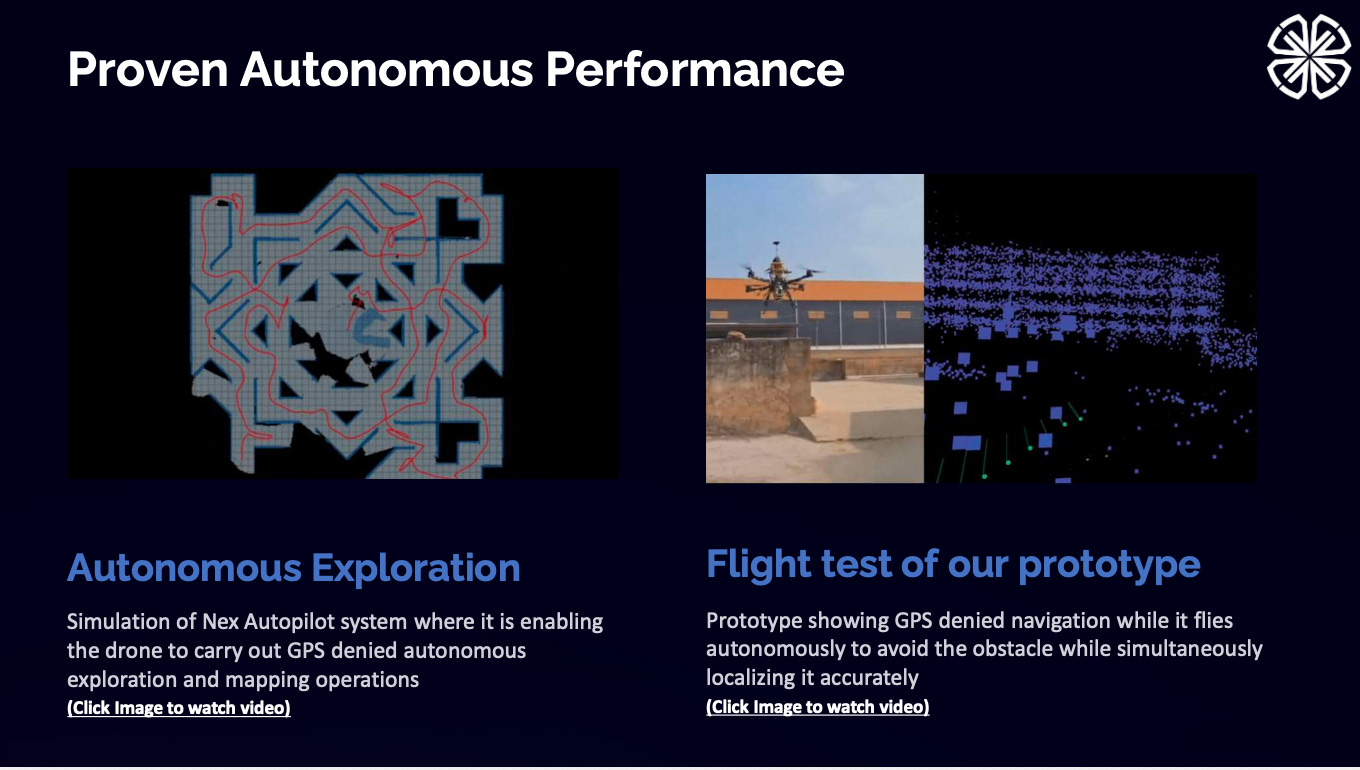
The ability to see its environment using cameras and sensors without GPS (they call this Vigil)
The ability to navigate and avoid obstacles autonomously (that’s the Nex Autopilot)
And a secure data network that gives commanders a full picture of the battlefield, i.e., COP (Common Operating Picture)
They’ve already tested Version 1.0. In flight tests, their drone navigated a 10 km path without GPS and maintained a position error of less than 8 metres.
It handled dust clouds, visual occlusion, and dynamic obstacles.
Version 2.0, the mission-aware layer where operators can give high level mission objectives to the UAV and trained behaviours execute it. This stack is currently under development.
The team Behind Crebain Aerospace
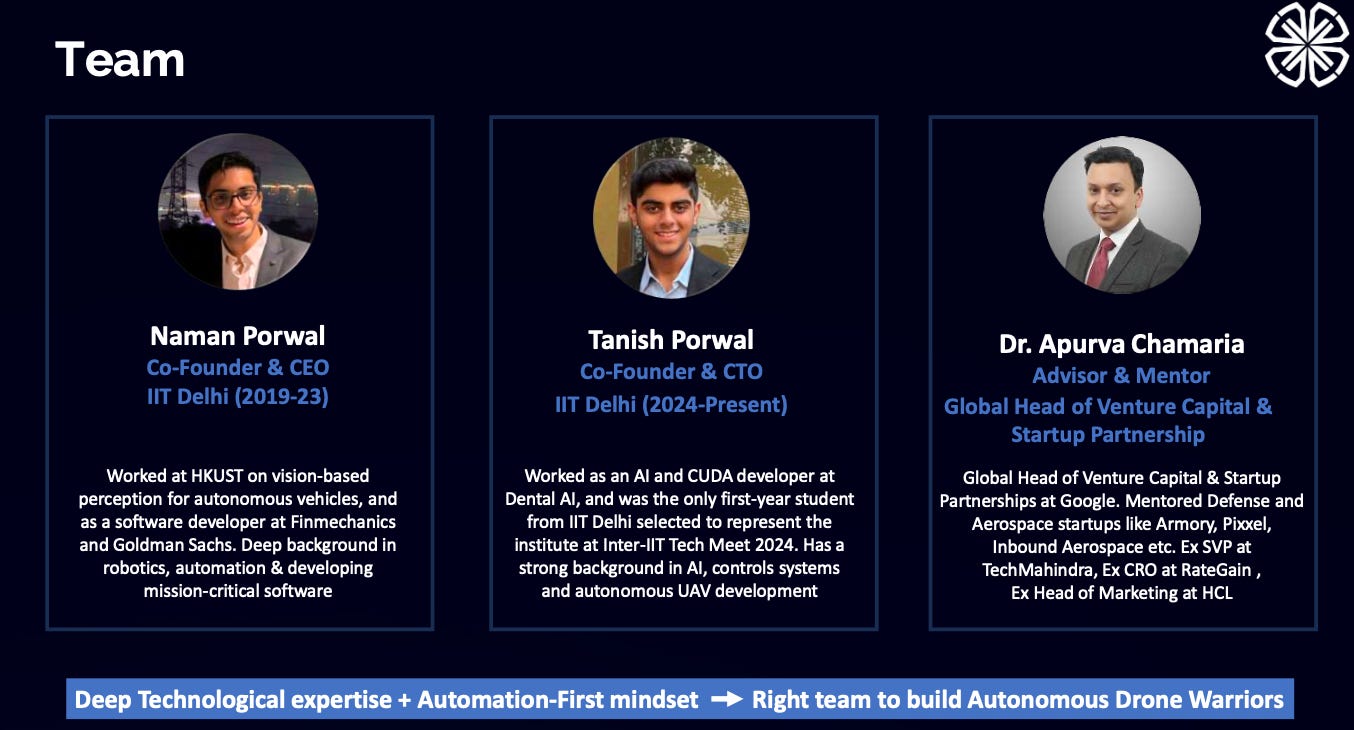
Naman Porwal (CEO): IIT Delhi 2019-23. Worked at HKUST on autonomous vehicle perception and as a software developer at Goldman Sachs & Finmechanics. Leads business, Product and strategy.
Tanish Porwal (CTO): IIT Delhi, current student. Only first-years were selected to represent IIT Delhi at Inter-IIT Tech Meet 2024. AI and CUDA developer. Leads technology development.
Both come from a family that has run a fertiliser manufacturing business for 50 years.
When asked about his timeline, Naman said plainly, “We are not building a company that runs for four years. It has to be a legacy thing.”
Where they stand today.
Nex Autopilot V1.0 (GPS-denied navigational autonomy) is built and flight-tested.
They are already in conversations with Indian drone Original Equipment Manufacturers (OEMs) to integrate the software.
After Operation Sindoor (India-Pakistan, May 2025), GPS-denied capability became a top priority for the Indian Army. The founders report strong inbound interest from defense stakeholders.
They are pre-revenue. Raising $1M pre-seed for team building ($400K).
GVP Take
I wanted to feature Crebain for a specific reason.
India’s army buying American drones through emergency procurement is the clearest market signal. The government is actively pushing indigenous manufacturing. A domestic software company that can plug autonomy into Indian-made hardware has a structural advantage.
Hardware manufacturing in India is crowded. Software licensing to OEMs means lower risk, higher margins, and the ability to become the autonomy layer across many hardware platforms.
The founders carry a 3D printer everywhere. When parts don’t exist in the market, they design and print them on the spot. They 3D-printed a power distribution board for their prototype because the right one wasn’t available. That’s the kind of resourcefulness that matters at this stage.
The risks are real. They’re pre-revenue. Defense sales cycles run 18-36 months. The mission-aware autonomy layer (their core differentiator) is still in development. And they’re competing in a space where Shield AI has raised over $1 billion.
But the timing is perfect. After the India-Pakistan conflict, after the Iran drone warfare crisis, after India’s emergency purchase of American drones, every signal points to India needing this capability built domestically. These two brothers from IIT Delhi might be the ones to build it.
P.S. Reply to this email for a warm intro to the founders. They’re raising their $1M pre-seed now.

If you want me to make a warm intro with this startup founder, feel free to reply to this email!
Email: jaylee@globalventureplay.com
Whatsapp: +821068181518
Woah, great to see you here. Keep going