

If you’re new here, welcome.
Welcome back to GVP. Every week we meet one Indian founder, verify the traction, and write the story so you can make faster investment decisions. We added 32 new subscribers last week — now at 661 investors reading weekly. If someone forwarded this to you, subscribe here.
Quick commerce’s paradox: huge growth, ugly economics
Fast delivery is expensive. India’s quick-commerce companies have spent years proving that.
Zepto’s delivery cost was still around ₹46 per order in FY26. Swiggy’s quick-commerce contribution margin fell to -5.6% in Q4 FY25 as it opened more dark stores and spent more to acquire customers.
The faster you promise to deliver something, the more infrastructure you need sitting close to the customer.
More stores, more riders, more idle capacity, more money. Now imagine replacing the delivery rider with a trained phlebotomist.
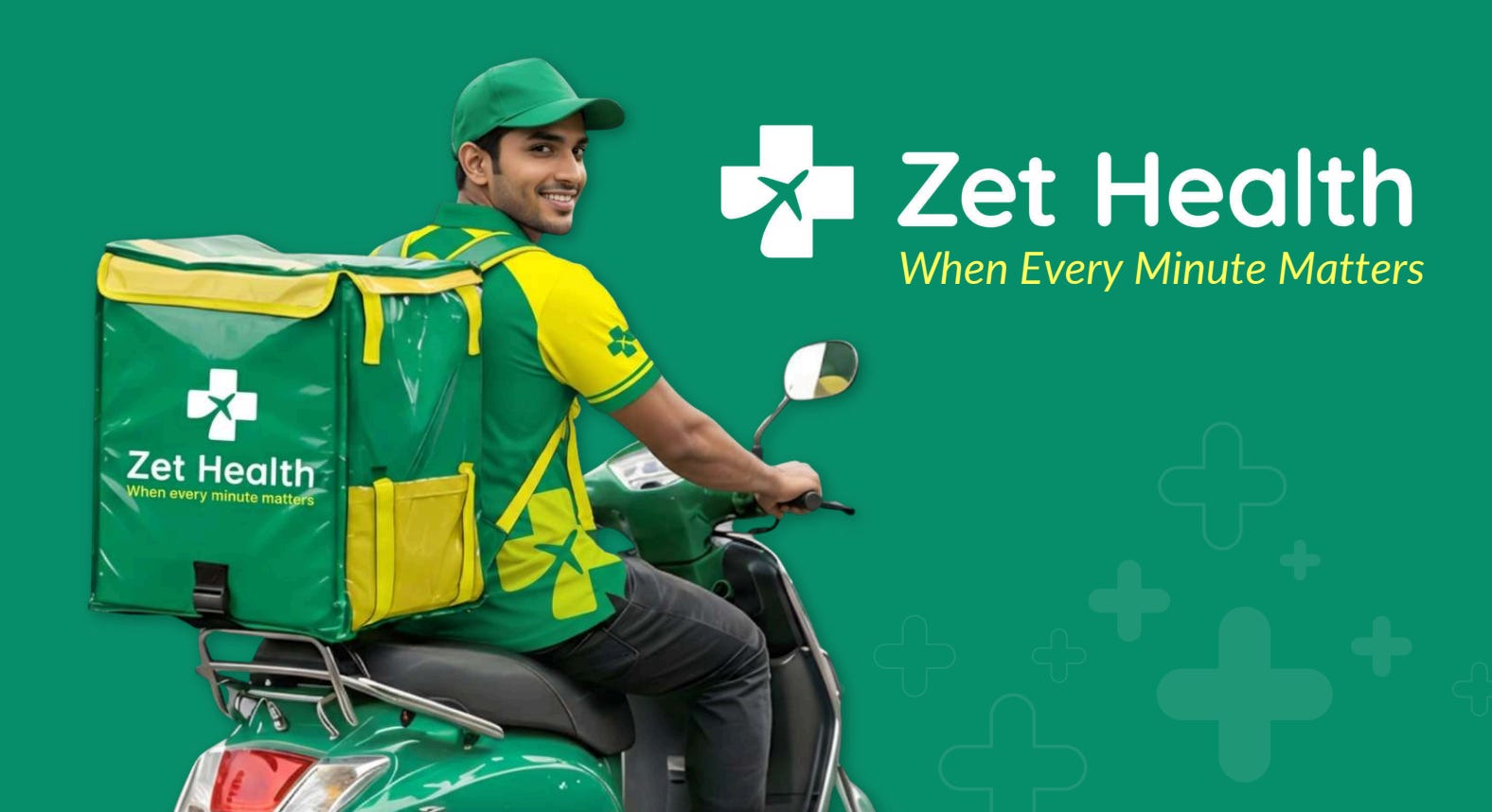
And replacing a packet of groceries with a blood sample. That is the business Zet Health is trying to build.
The Bangalore startup says it can send a phlebotomist to your home in 10–20 minutes, 24 hours a day.
More interestingly, it says it is doing this with a 25% contribution margin.
If that number holds as the company scales, that may be more interesting than the 10-minute promise itself.
Their competitor already proved Indians will pay for faster diagnostics.
Zet is not the first company to make diagnostics faster.
Orange Health has built one of India’s best-known on-demand diagnostic businesses around the same basic consumer promise.
It currently promises home sample collection within 60 minutes and reports for many tests within six hours. Unlike Zet, Orange owns automated laboratories in the cities it serves.
Investors have backed that model heavily.
Orange has raised about $78 million, including a $30 million Series C in June 2026.
So there is already evidence that investors believe Indians want faster diagnostics.
Can it offer that speed without building the expensive laboratory infrastructure behind it?
Zet chose the opposite model from its biggest competitor
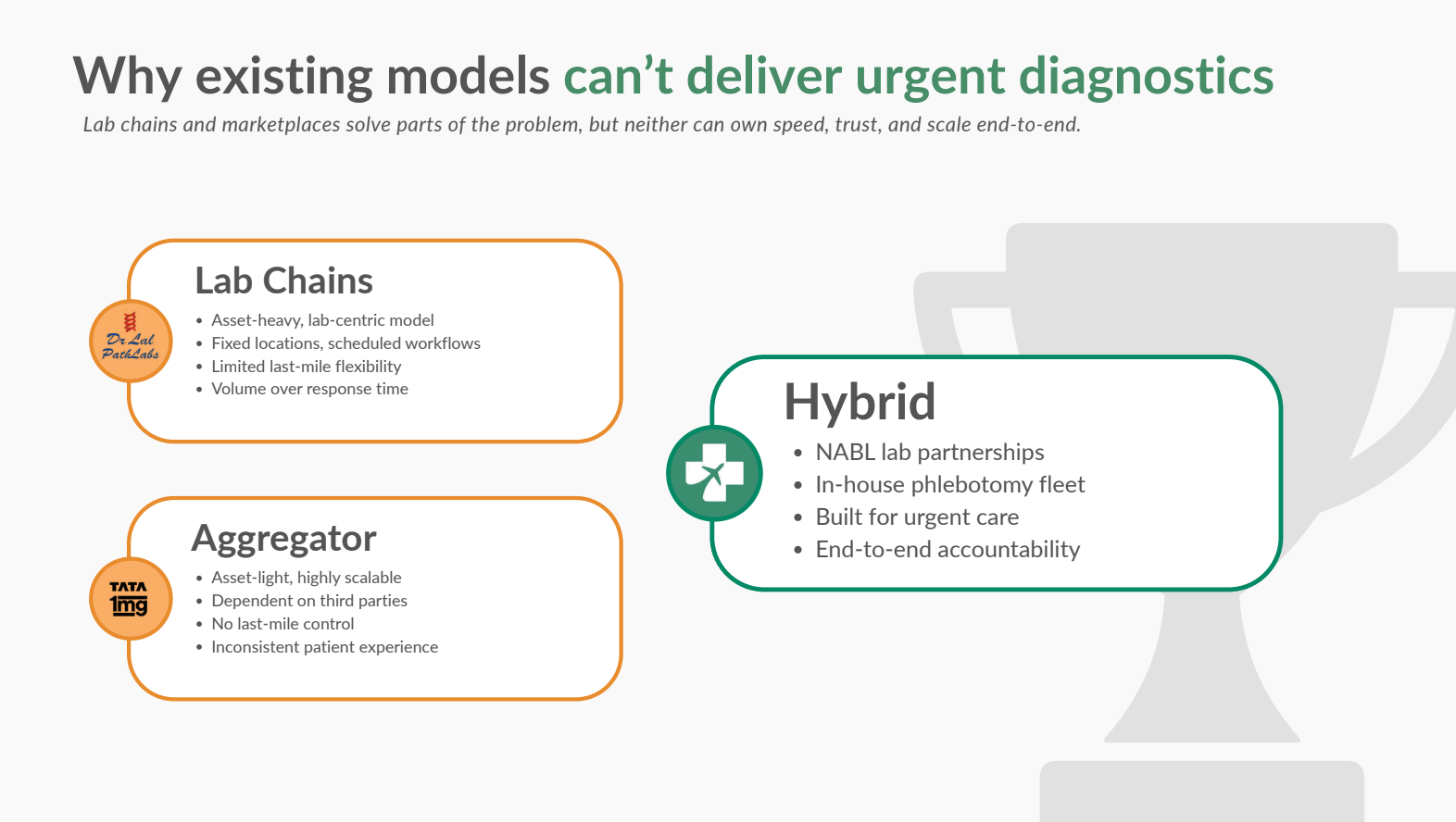
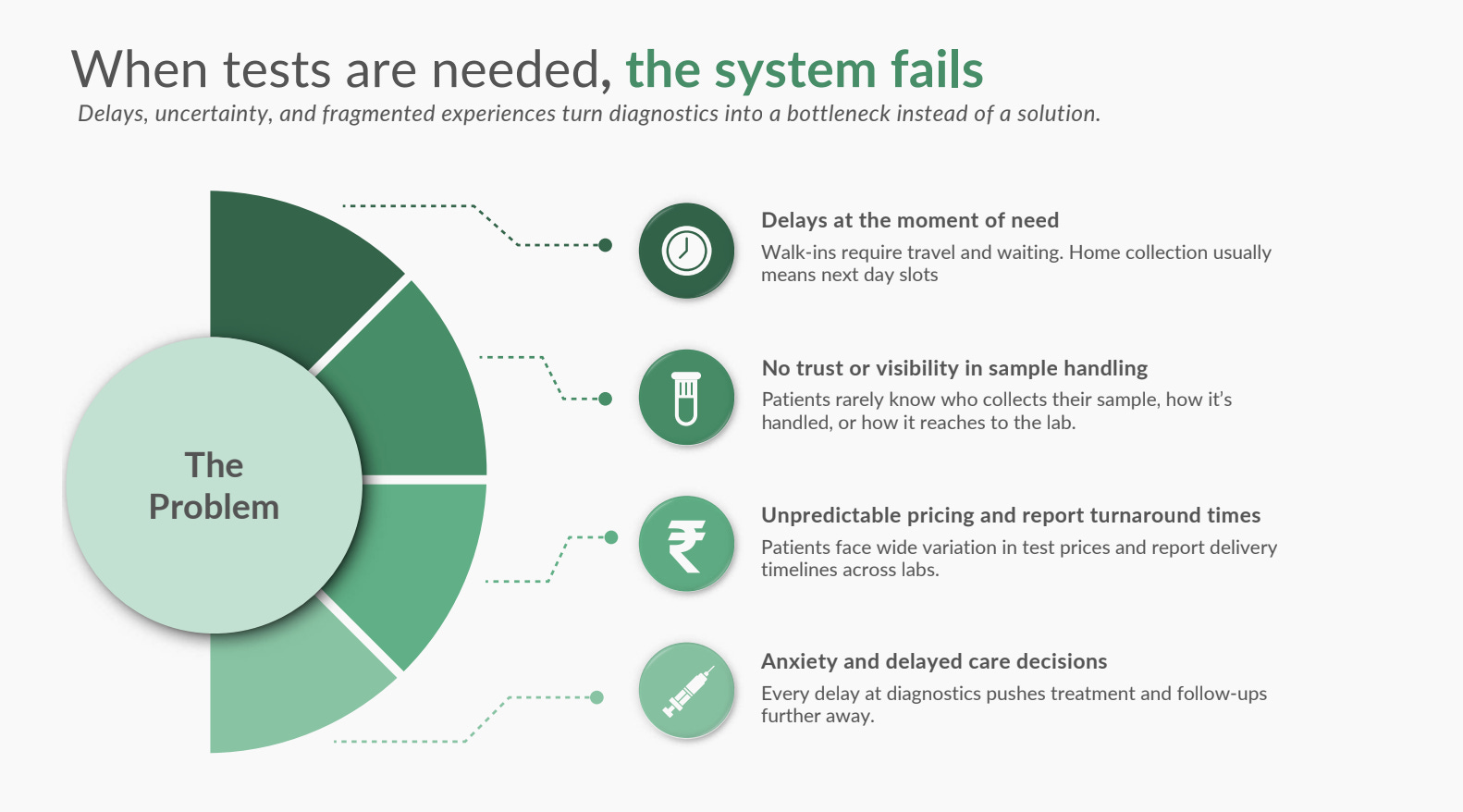
Zet doesn’t own diagnostic labs. It partners with trusted labs and owns the last mile instead.
Its phlebotomists operate inside roughly 5 km clusters, collect samples from patients, and take them to a nearby partner lab. Zet says this lets it collect samples in 10–20 minutes and return many reports within a few hours.
The small radius matters.
Inside a lab, a phlebotomist can move from patient to patient. Once they start travelling between homes, productivity drops sharply. One industry report estimated roughly 35–40 collections a day inside a lab versus 4–5 through home collection.
Zet’s bet is simple: pack enough orders into a small area, cut travel time, and keep each phlebotomist productive.
Just like quick commerce, the economics depend on density.
25,000 tests later, the economics are starting to get interesting.
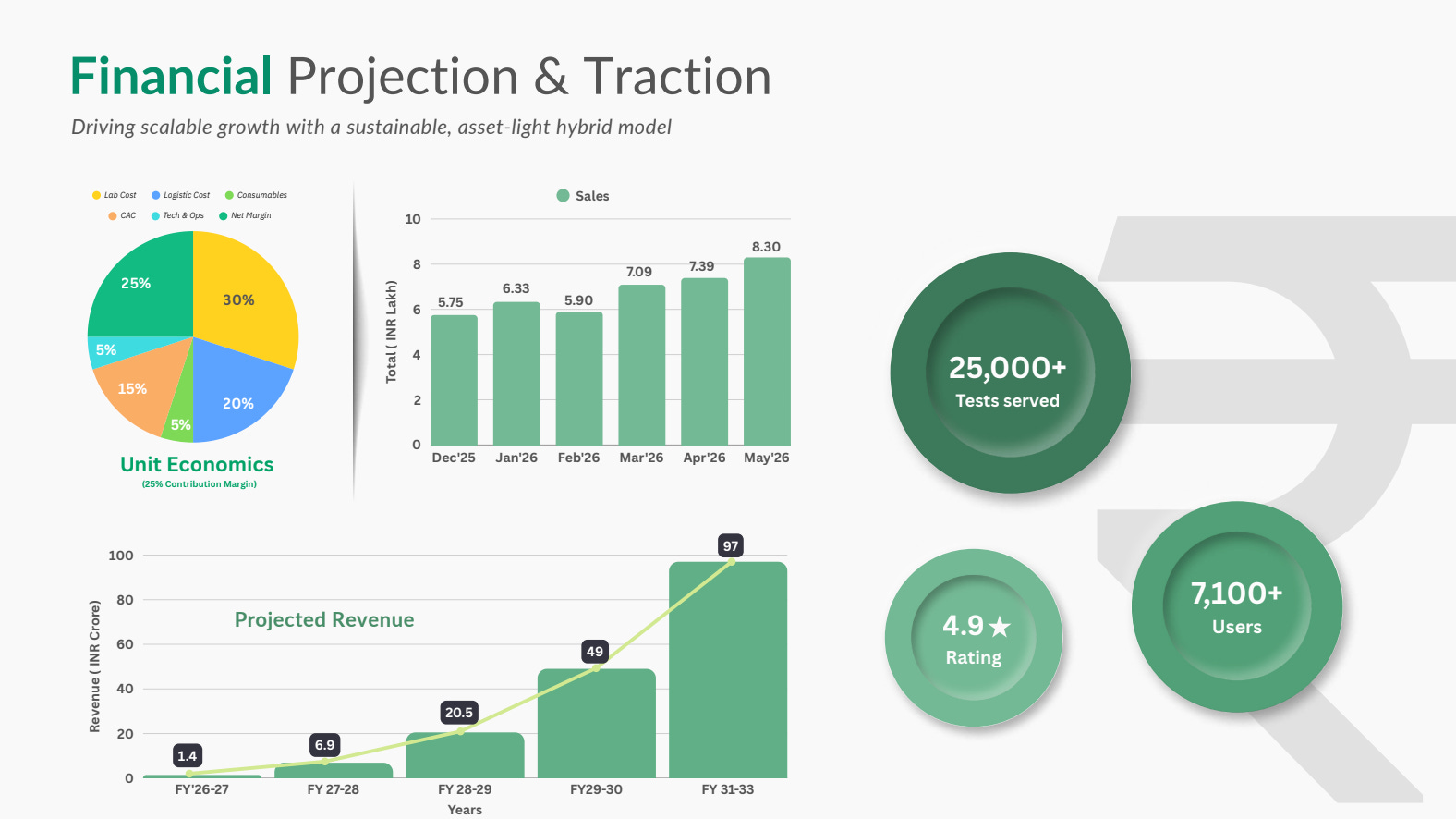
Zet says it has now completed more than 25,000 tests for roughly 8,000 users. Monthly revenue is around ₹8 lakh, with an average order value of roughly ₹800.
Its current cost structure, according to the company, looks roughly like this:
30% to partner labs
20% logistics
5% consumables
15% customer acquisition
5% technology and operations
25% contribution margin
The deck also claims CAC payback in under 30 days.
One care provider needed 24/7 diagnostics and was already using a larger, established provider. According to Zet’s founder, they switched to Zet and have now stayed for more than a year.
That kind of switch is a meaningful early signal.
This team covers the three things Zet needs to get right
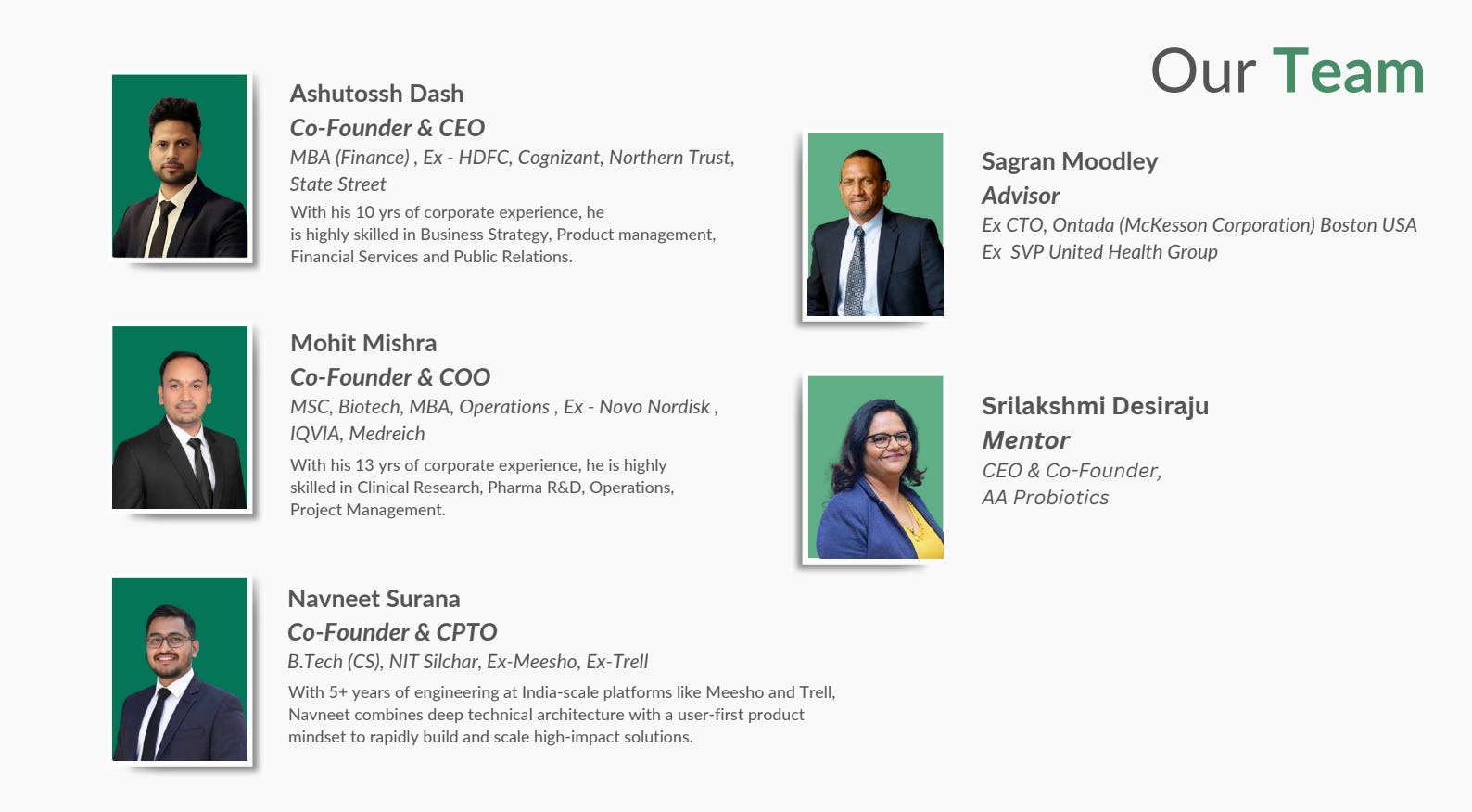
Ashutossh Dash spent more than a decade across finance and financial services.
Mohit Mishra spent roughly 13 years in healthcare and pharma, including roles at IQVIA and Novo Nordisk.
Navneet Surana previously worked on technology at Meesho and Trell before joining Zet. There is also a small detail from our conversation that we liked.
After joining, Navneet did not stay behind a laptop. He learned from Zet’s phlebotomists how to measure blood pressure and blood sugar himself.
For a business where software and field operations have to work together, that matters.
GVP Take
Zet says the model currently delivers a 25% contribution margin.
What we’d watch next is collections per phlebotomist per day. If that rises as each five-kilometre cluster gets denser, travel costs should fall and margins should improve.
The next few clusters will show whether the model can repeat without losing speed or economics.
Orange Health has already proved there is demand for fast diagnostics. Zet now has to prove it can deliver that convenience with a lighter model.
Want an intro to the founders? Just reply to this email.
P.S. One last thing…
GVP has 657 investor subscribers — including partners at Accel, principals at family offices in Singapore and Dubai, and angels across the US, Australia, and Europe.
If you forward this newsletter to 3 investors who subscribe, we’ll make a warm intro for you to any family office or VC in our network you’d like to meet.
See your next week
If you want me to make a warm intro with this startup founder, feel free to reply to this email!
Email: jaylee@globalventureplay.com