

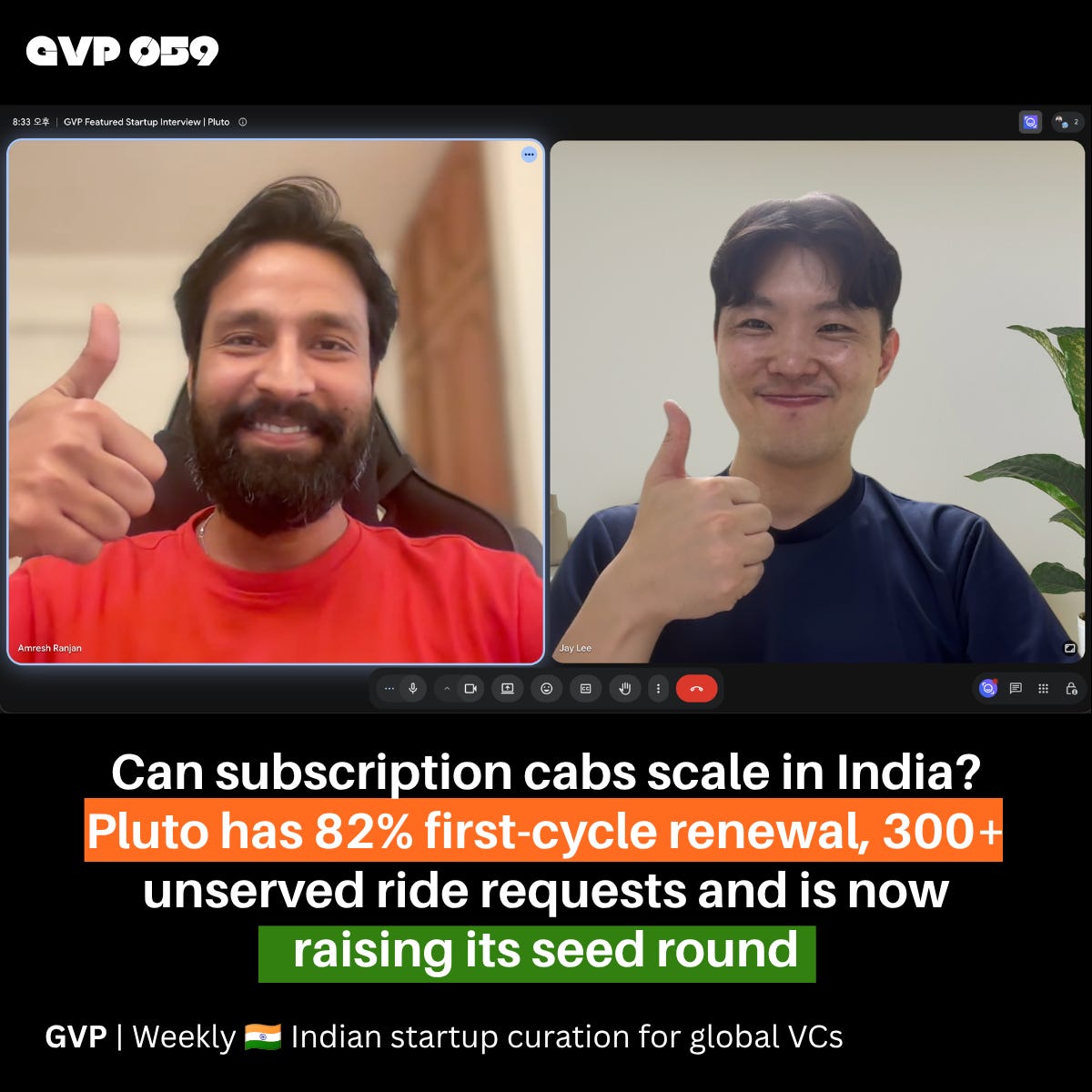
Their first customer paid them before they even had a bank account.
Before Amresh started Pluto, he went to Bengaluru apartment societies, put up standees, talked directly to commuters, and asked:
“If I build this, will you actually pay for it?”
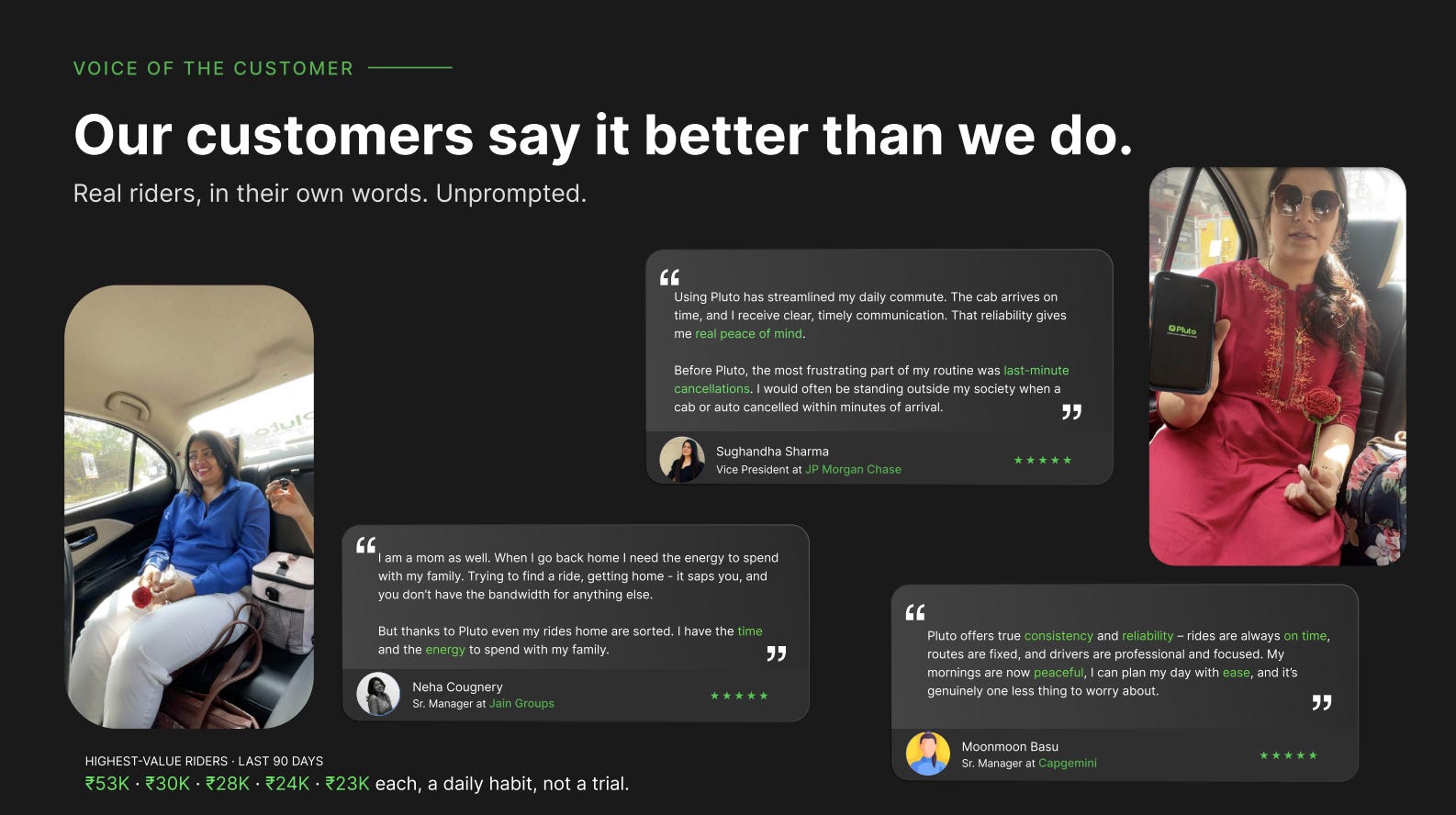
One of the commuters he met was Jyothi, a working mother who needed to be home around 1 PM, when her child returned from school.
Every minute lost to find another driver or sitting in Bengaluru traffic increased the chance that her child would reach home before she did.
If a cab was cancelled or she couldn’t find one during peak hours, the rest of her schedule got affected.
She agreed to try what Amresh was building.
Pluto didn’t even have a company bank account then, so Jyothi paid the first subscription directly to Amresh’s personal Google Pay.
Jyothi’s schedule made the problem unusually costly, but the underlying problem is common.
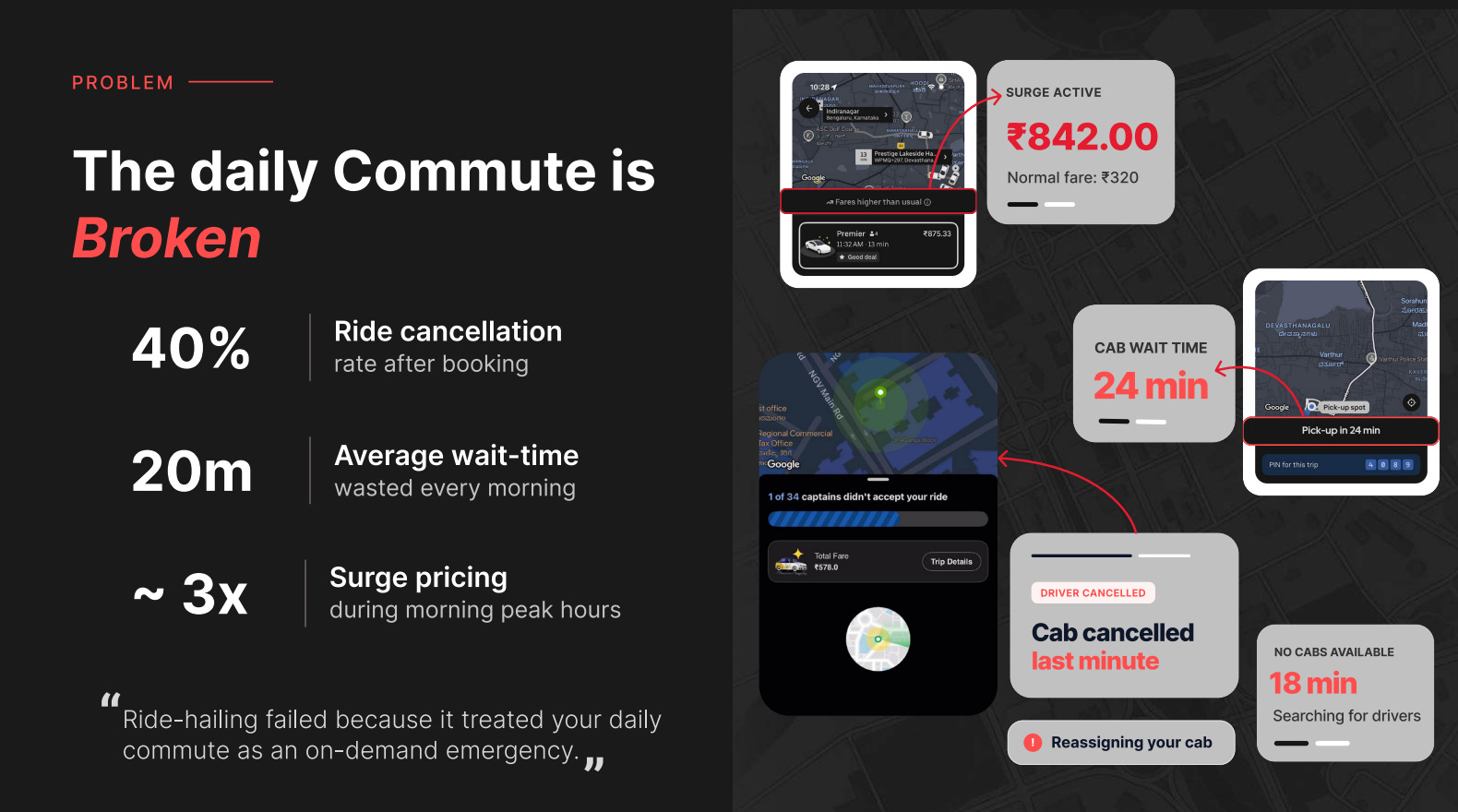
Most commuters still rely on Uber, Rapido and other ride-hailing apps.
They work well when you need an occasional ride. But for something as repetitive as the trip to work, the experience can still be unpredictable.
Prices change from one day to the next, and drivers can cancel at the last minute. During peak hours, both problems get worse.
Pluto describes the difference well:
“The daily commute isn’t a ride. It’s a routine.”
If the same trip happens at roughly the same time, on the same route, every week, Pluto’s bet is that it can be planned instead of being booked from scratch every morning.
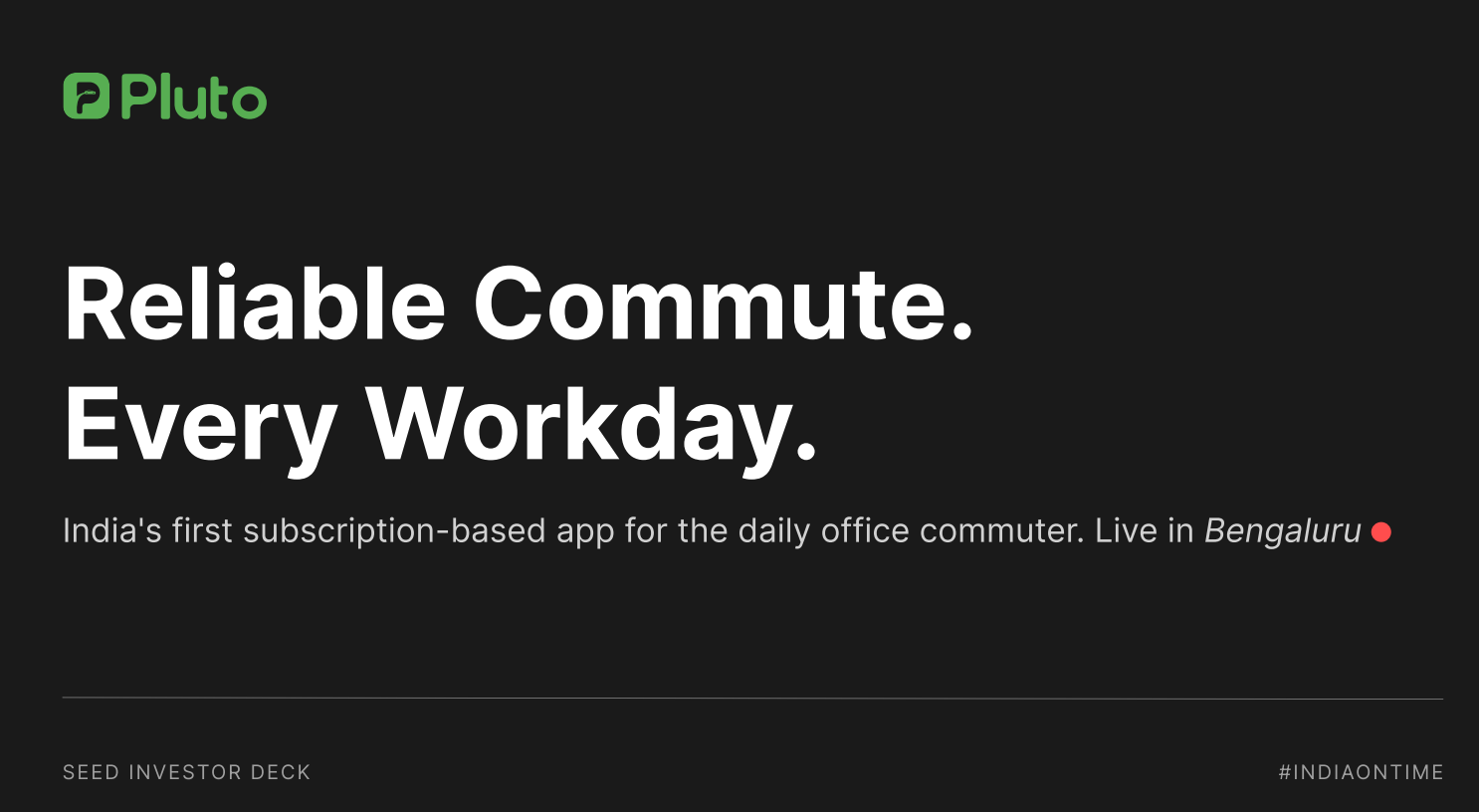
Office commuting is already a large business in India.
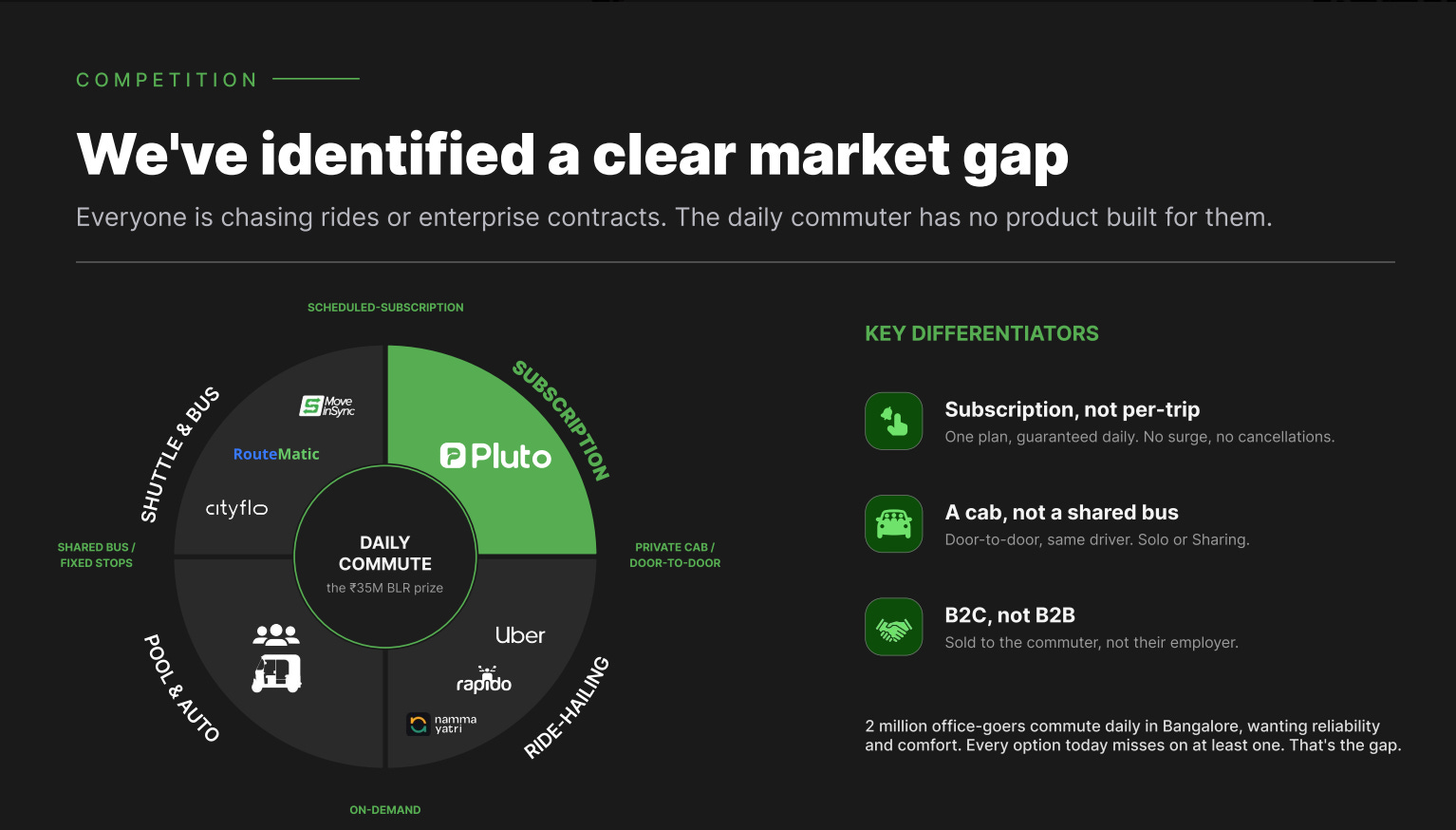
MoveInSync launched GetToWork in Bengaluru back in 2019 around almost the same pain: fixed-time office rides without surge pricing or last-minute availability problems. [Business Standard]
Cityflo took another route: scheduled premium buses. Today, it says 120 of its 150 routes are cash-positive.
MoveInSync and Routematic mainly sell to the employer. Cityflo sells directly to the commuter, but uses fixed bus routes and stops.
Pluto sells a door-to-door cab subscription directly to the commuter.
The team behind Pluto
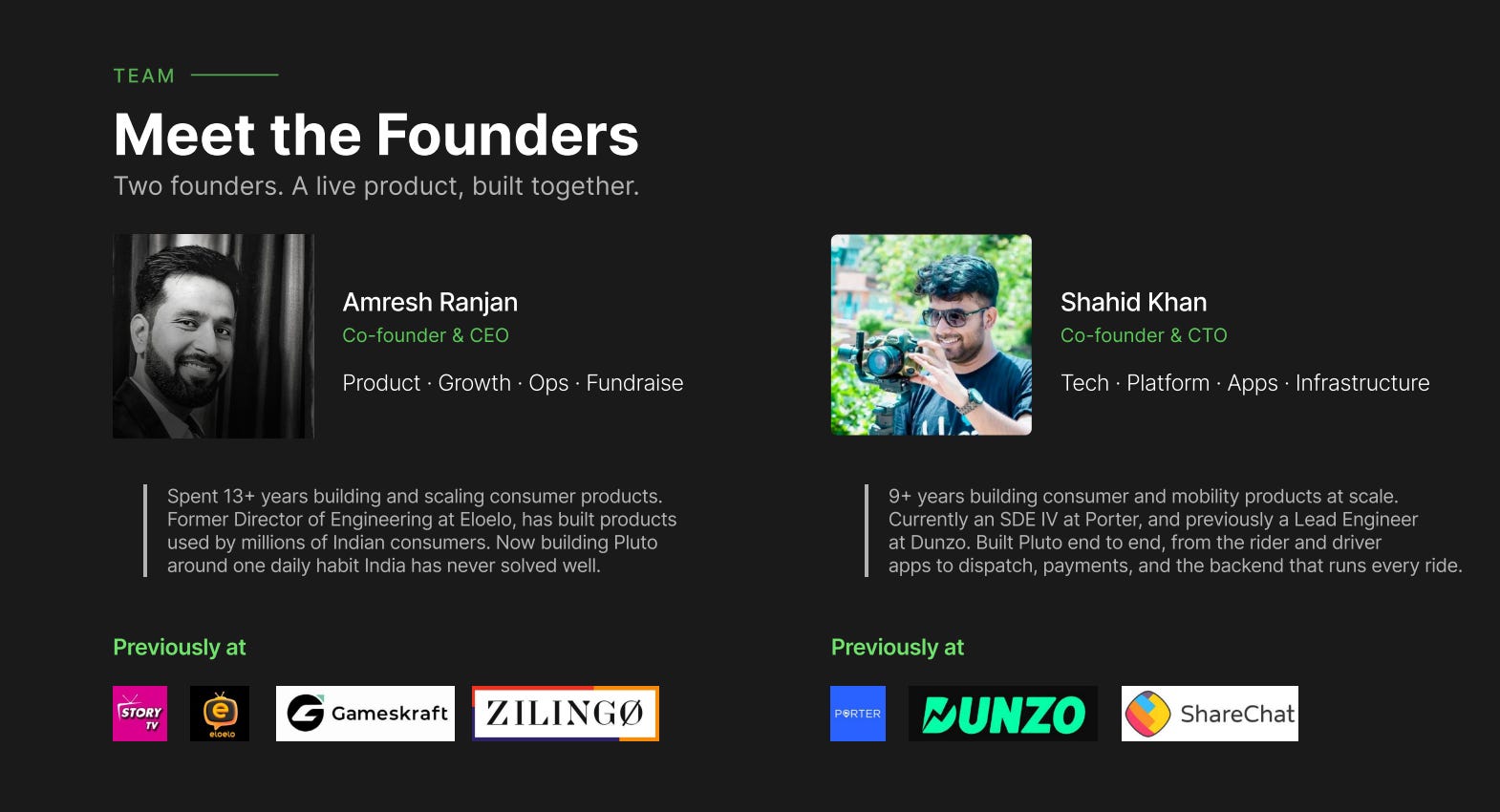
Amresh has spent more than 13 years building consumer technology products and was previously Director of Engineering at Eloelo, where he helped build products used by millions of Indian consumers.
His co-founder Shahid brings the mobility experience. He has more than nine years of experience across consumer and mobility technology, including Dunzo and Porter, and built Pluto’s rider app, driver app, dispatch system, payments and backend.
Amresh brings the experience of building consumer products at scale. Shahid has already worked on the technology behind urban mobility.
Pluto needs both.
Early traction
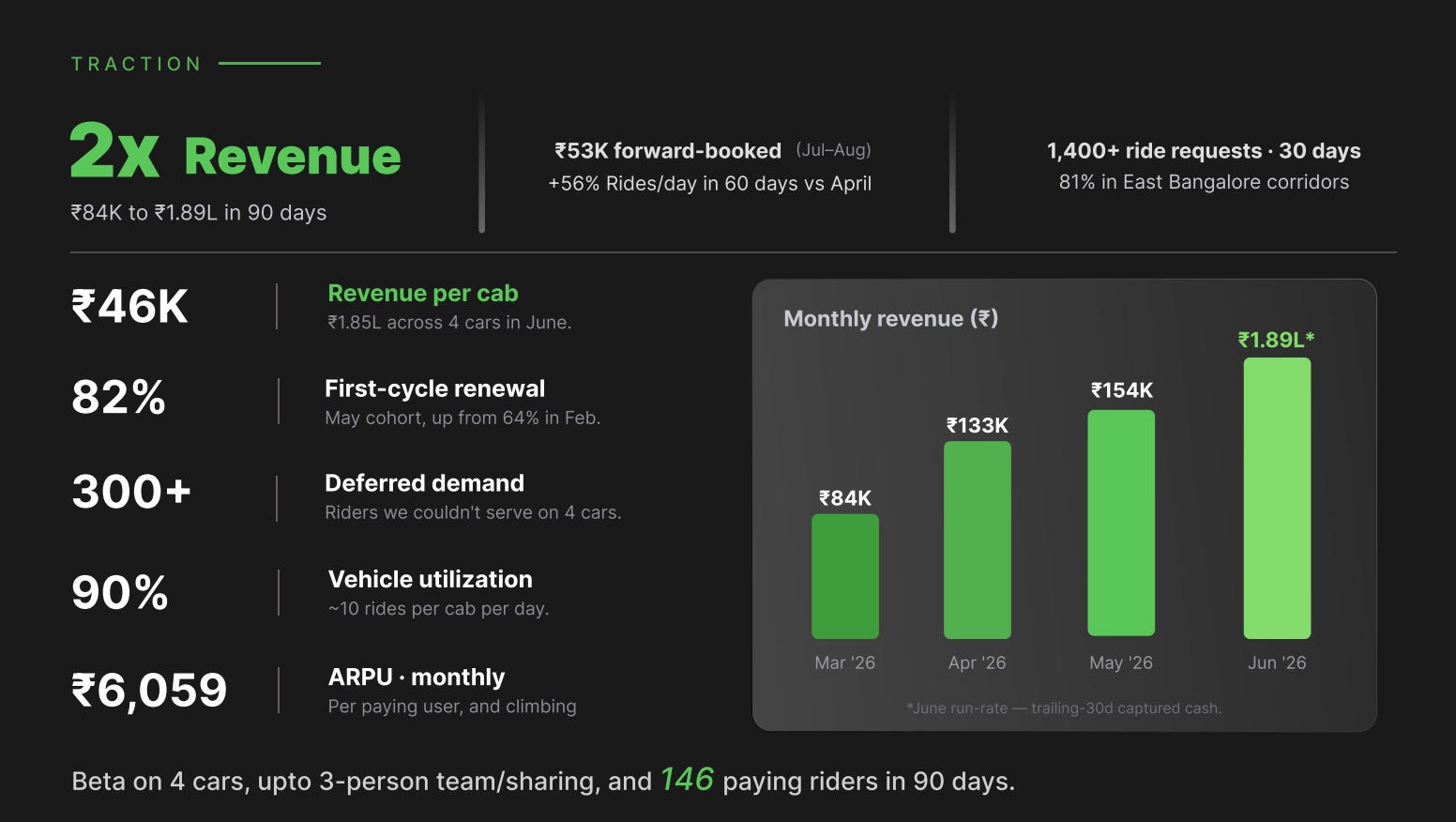
Pluto is still operating with only four cars, so these are early signals rather than proof that the model works at scale.
But four numbers stand out:
1. Monthly revenue grew from ₹84,000 in March 2026 and peaked at roughly ₹2.3 lakh in June 2026.
By June 2026, rides per day had also increased 56% compared with April.
2. 81% of ride requests came from East Bengaluru.
In the latest 30-day period reported in June 2026, Pluto received more than 1,400 ride requests, with most of that demand concentrated in East Bengaluru.
3. 82% of the May 2026 cohort renewed after their first subscription.
That was up from 64% in February 2026. For a product built around a recurring commute, whether customers continue paying after the first cycle matters more than how many try it once.
4. By June 2026, Pluto had completed more than 3,000 rides.
Its June 2026 deck also reported 146 paying riders over the preceding 90 days, while running the beta with four cars.
What Pluto needs to prove next
With only four cars, Pluto says it had more than 300 ride requests it couldn’t serve.
Adding more cars solves part of that problem. But those cars also need enough subscribers travelling through the same corridors at similar times for the economics to improve.
As of October 2026, Pluto is raising a $500,000 seed round to scale its Bengaluru operation before moving into other cities.
The current plan is to spend roughly 45% on fleet and supply, 30% on acquiring subscribers and building density in existing corridors, and 25% on operations and technology.
The company wants to grow from 4 to 25 EV cars and from 35 to 250 subscribers, while gradually moving proven routes from leased vehicles to driver-owned cars.
As of October 2026, Pluto is targeting roughly ₹16 lakh in monthly revenue and profitability around month 10 of this expansion plan.
GVP Take
Pluto has shown that some commuters are willing to pay in advance for a more reliable way to get to work.
Now it has to show that the same demand can produce a good business.
That depends heavily on where the next 200 subscribers come from.
If many of them travel through the same corridors at similar times, Pluto can carry more paying customers per car and improve the economics of those routes.
If they are spread across Bengaluru, the company may need to keep adding cars to serve them, which makes the business much harder.
So over the next year, we would pay less attention to the total number of users and more attention to how many riders Pluto can serve per car, what each car earns after its costs, and whether customers continue renewing as the fleet grows
Want an intro to the founders? Just reply to this email.
P.S. One last thing…
GVP has 683 investor subscribers — including partners at Accel, principals at family offices in Singapore and Dubai, and angels across the US, Australia, and Europe.
If you forward this newsletter to 3 investors who subscribe, we’ll make a warm intro for you to any family office or VC in our network you’d like to meet.
If you want me to make a warm intro with this startup founder, feel free to reply to this email!
Email: jaylee@globalventureplay.com
See you next week