

Quick Summary
Sector: Semiconductor Infrastructure
Stage: Early-stage
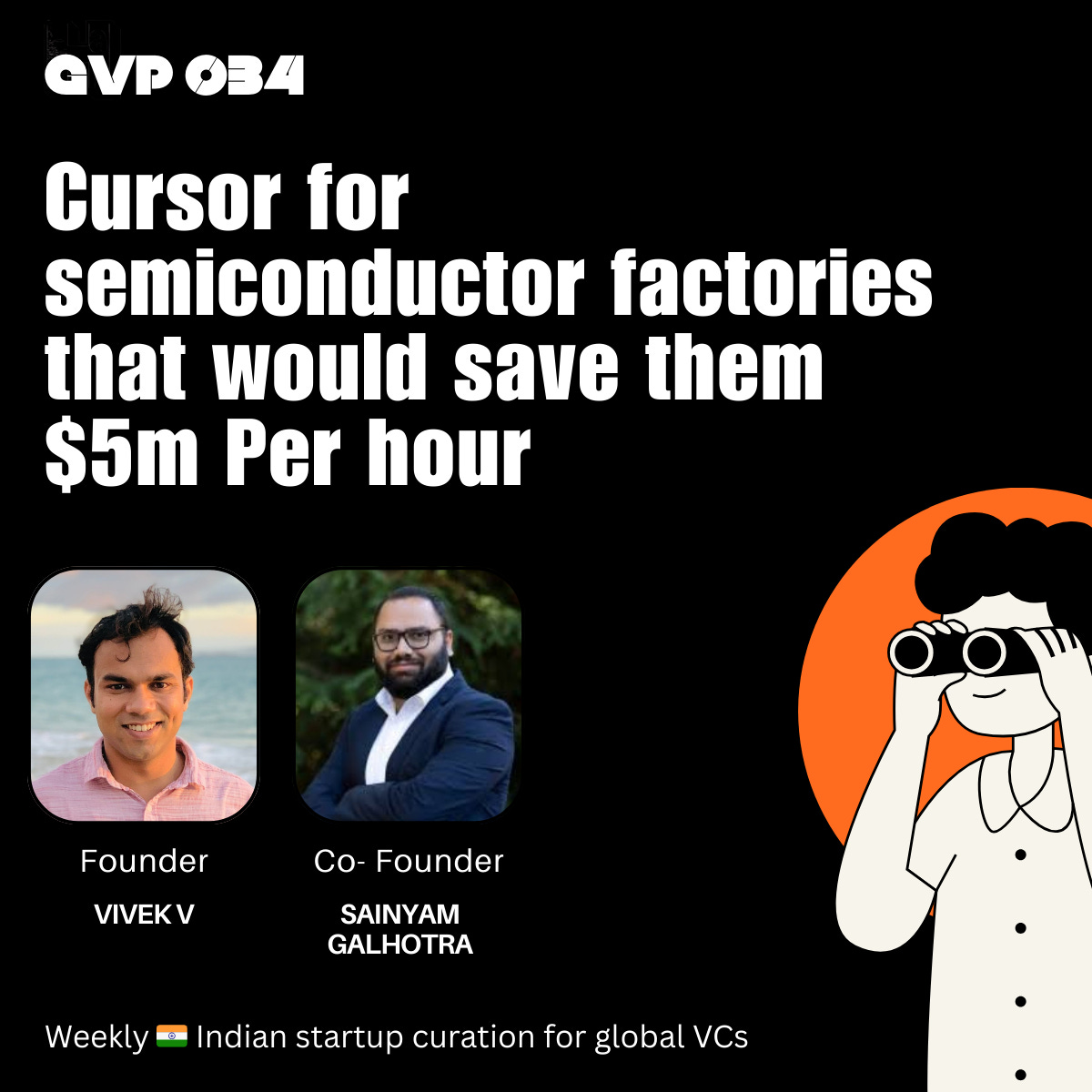
Founder: Vivek – 8 years at Intel
Product: Software for semiconductor manufacturing
Market Focus: Japan, Taiwan, Malaysia, Singapore, South Korea, and SoutheastAsia
Opportunity: Automating one of the most expensive manual workflows left inside semiconductor fabs
When the best engineer quits, the machine gets dumber..
Vivek spent eight years at Intel working inside semiconductor fabs. He saw the same problem again and again.
When a single machine fails, production on that line can stop immediately. Engineers dig through logs, sensor data, and old reports to figure out what changed.
It’s slow.
In some cases, diagnosis took 10 to 12 days.
Not because the engineers lacked skill — but because most of the real knowledge lived in someone’s head.
When that engineer left, the factory had to start from zero.

A small delay can cause $5 million per hour…
A single advanced lithography tool can cost over $200 million.
When it goes down, the production line tied to it often stops.
For large fabs, downtime can cost anywhere between $1 million to $5 million per hour, depending on capacity and output.
Why is it taking too long and costly to solve this?
The machine generates huge amounts of data, but it’s spread across different systems and screens.
Engineers have to manually compare what’s happening now with what happened in the past.
If they’re unsure, they often have to call the company that built the machine to help diagnose it.
None of this is automated. It depends on people connecting the dots.
Building memory for machines
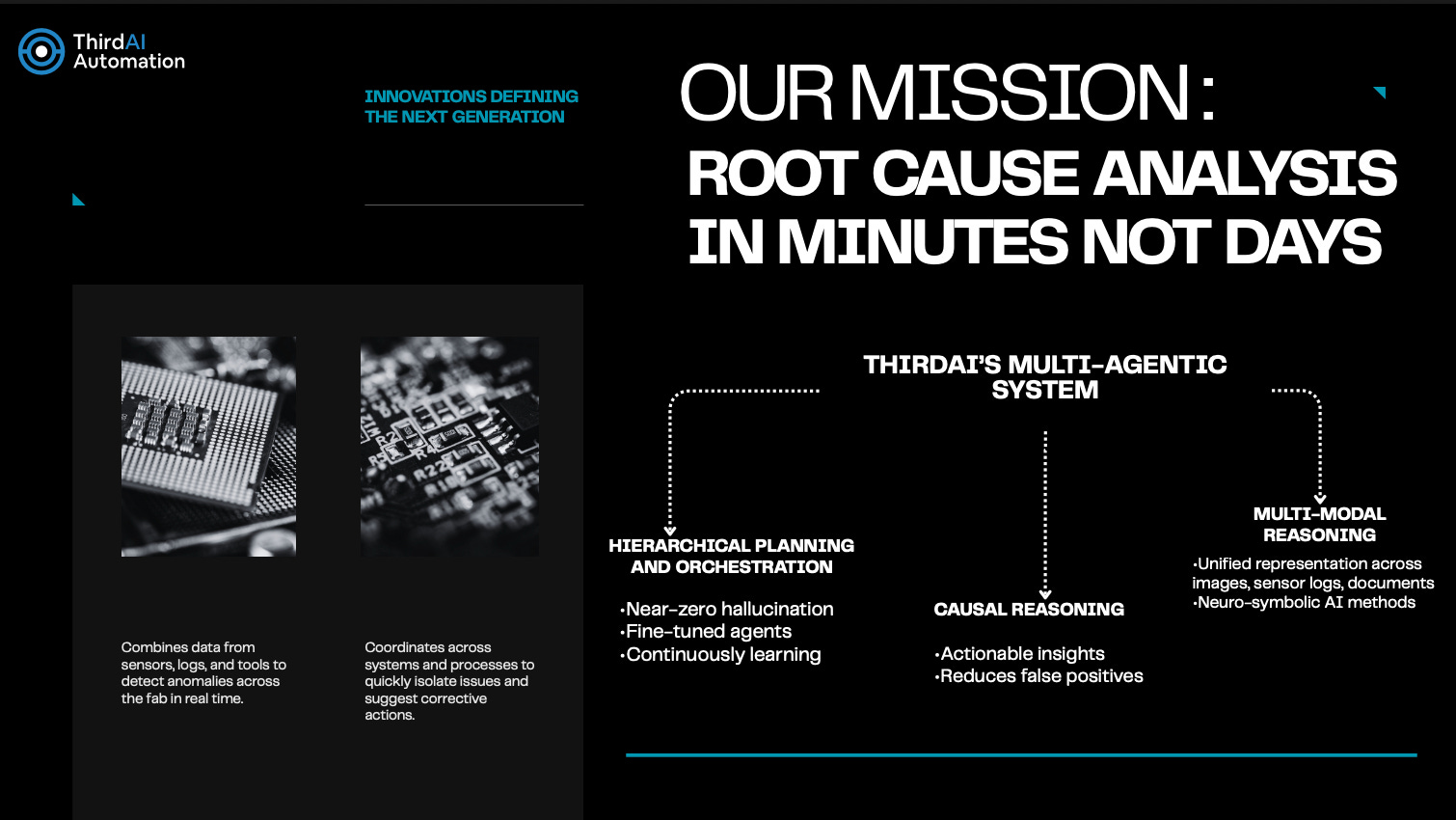
ThirdAI is starting with one clear goal: help factories figure out why a machine failed.
Instead of letting every failure start from zero, ThirdAI builds a structured memory for each machine.
Their software connects to the tool’s data and records what happens during every incident — what signals changed, what tests were run, and what fix worked.
So when a similar failure appears, engineers don’t have to dig through logs or rely on someone who “has seen this before”.
The system analyses past cases and surfaces the most likely causes within minutes.
It doesn’t replace engineers.
It reduces the time it takes to diagnose the problem.
The Economics That Actually Work
GVP pro zone: To see more, subscribe to our pro plan!
Team
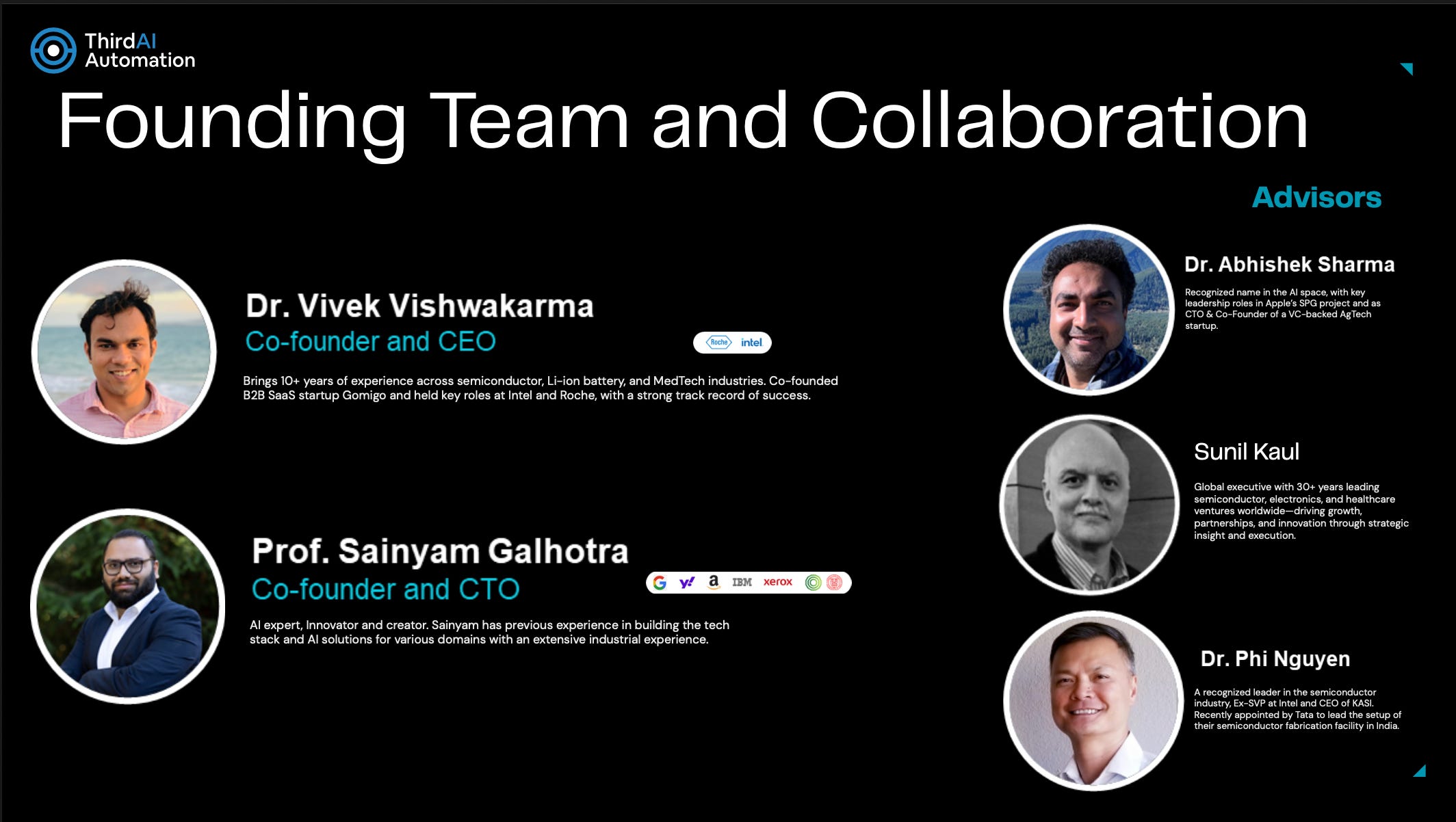
Vivek (Founder & CEO): He spent eight years at Intel and saw firsthand how long it takes to diagnose machine failures.
Sainyam (Co-Founder, AI & Engineering): He previously co-founded a B2B SaaS startup and has built AI systems across semiconductor, battery, and industrial domains. He has worked at companies like Intel and Roche, combining AI development with real industrial use cases.
Early Traction…
The software is currently being tested in a semiconductor facility in Japan, where it has been running for more than six months.
The team is starting with a narrow focus: they are testing it on one machine first. They want to make sure it works before using it on more machines.
Beyond Japan, they are targeting semiconductor hubs across Taiwan, Malaysia, Singapore, South Korea, and Southeast Asia.
GVP Take
Semiconductor manufacturing is one of the most advanced industries in the world. Yet one of its most expensive workflows, like root cause analysis, but it still depends heavily on people.
That creates a bottleneck.
When a machine fails, millions can be lost every hour. The faster a team identifies the real cause, the faster production resumes. Today, that process relies on experience, memory, and coordination across teams and vendors.
If ThirdAI can reliably shorten diagnosis time without sacrificing accuracy, this becomes infrastructure-level software inside fabs.
Not a dashboard. Not a reporting tool.
A system that factories depend on.
If you want me to make a warm intro with this startup, feel free to reply to this email!
Email: jaylee@globalventureplay.com
Whatsapp: +821068181518