

Quick Summary
Sector: Rural Infrastructure / Sanitation Tech
Stage: Pre-seed ($250K-$500K raise)
Founder: Pankaj Jaiswal - Physicist, former software entrepreneur (world’s 2nd live streaming app, 2013).
Product: Pre-fabricated toilet and washroom with patent-backed gravity-driven water system (no electricity)
Traction: Indian Patent granted (Jan 2024).
Business Model: Manufacturing + retail, ₹25K-₹75K/unit, 20%+ margins
Market: 100M+ Indians lack proper sanitation, $5B+ serviceable market
Team: 10-year sanitation veteran + manufacturing expert + B2C sales specialist
Opportunity: First mechanical AGI solving $68B problem governments couldn’t crack
Welcome to Global Venture Play (GVP)
where we help investors discover undervalued Indian AI startups.
Every week, we feature one high-potential Indian startup, carefully vetted for traction, team strength, and scalability, so you can build conviction and deploy capital without wasting weeks on due diligence.
Trusted by top venture firms like Accel, WTFund, and Ice VC, alongside 500+ investors across four continents.
He built live streaming tech before Facebook in 2013. Now he builds $275 toilets with mechanical AI.
Hey there!
In 2013, Pankaj Jaiswal built the world’s second live streaming application for a Japanese corporation.
At the time, Facebook didn’t have live streaming. Most tech giants didn’t. Pankaj and his team were among the first in the world to crack this technology.
He was running a 30-employee software company, working with international clients, and making good money as a computer science engineer.
Then in 2014, he did something unexpected. He left the software industry and went back to his village in Uttar Pradesh to build brick-and-mortar toilets.
For 10 years, from 2014 to 2024, he built hundreds of toilets in rural areas under India’s Swachh Bharat Mission. He talked to over 6,000 families. He built toilets with government subsidies.
And he watched as many of those toilets built by the government were unused.
Not because people didn’t want them. But because the toilets had no water supply, no lighting, no bathing space, and no way to store water without electricity.
The government had spent $10 billion over 10 years building toilets across India. But they missed something fundamental: a toilet without water and light isn’t a solution. It’s just a structure.
So Pankaj decided to solve this problem the way he knew best: through innovation.
Today, I’m going to show you how he created the world’s first Artificial General Intelligence in a mechanical machine and why it could transform sanitation for 181 million rural families across South Asia.
South Asia’s $68 Billion Sanitation Crisis
India has over 100 million people who still lack proper sanitation facilities.
That’s not because India is poor. It’s because the existing solutions don’t work for the people who need them most.
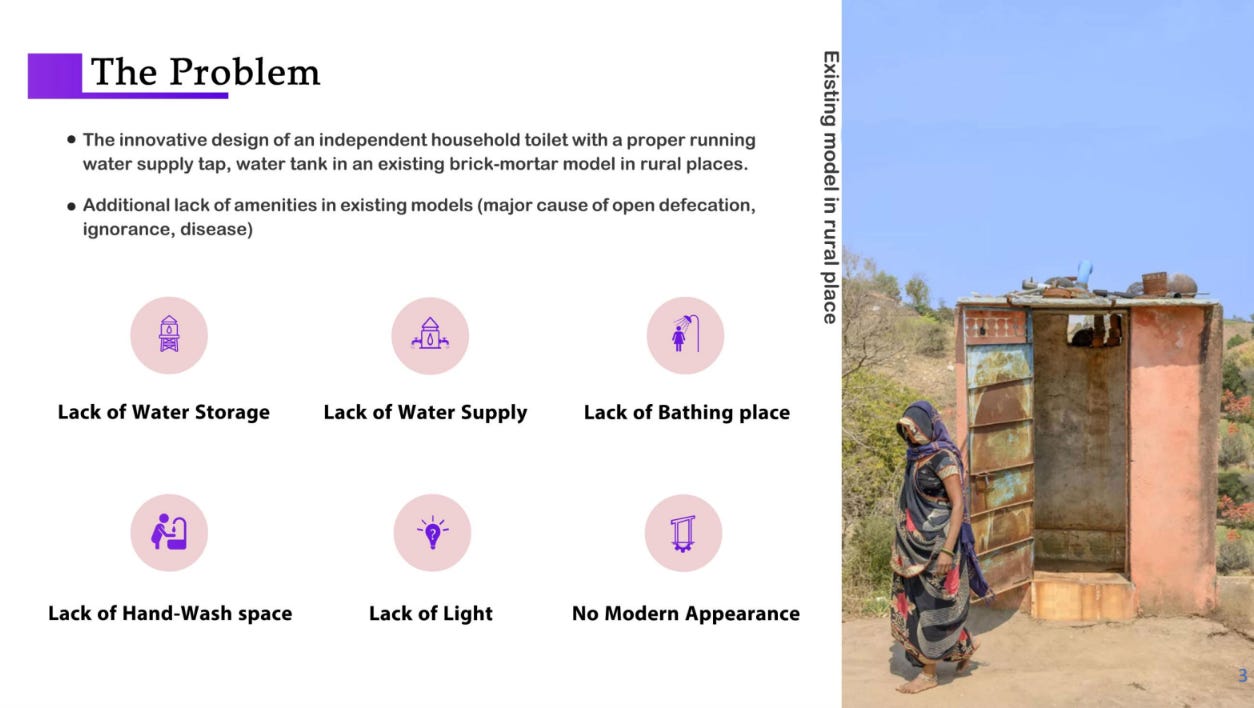
Here’s what a typical government-subsidised toilet looks like in rural India: a 4 wall room and hole, that’s it. No water storage. No water supply. No bathing area. No handwash basin. No lighting.
The government provides a subsidy of $150 to build these toilets. But with that budget, contractors can barely afford bricks, cement, and labour. But not plumbing, water tanks, or electrical wiring.
The result? Families either don’t use the toilets at all, or they face these daily challenges:
They have to manually carry water from hand pumps located far from their homes, fill buckets, and pour water into the toilet after each use. There’s no tap, no running water, nothing automated.
In the morning, when they need to bathe before school or work, they have to do it outside in the open or skip it entirely because there’s no bathing space inside the toilet.
At night, they avoid using the toilet because there’s no light, and they’re scared of snakes and insects lurking in the dark.
And when someone in the family is elderly or has mobility issues, they can’t use the toilet at all because it requires too much effort to fetch water manually.
This is the reality for 152 million rural families in India alone. Across South Asia, it’s 181 million. That means 44% of families in the region lack proper sanitation.
The market opportunity? $68 billion in South Asia, with $51 billion being directly addressable.
But here’s the catch: no one has built a solution that’s affordable, sustainable, and actually works for rural families.
Until now.
Zowie: The Toilet That Thinks
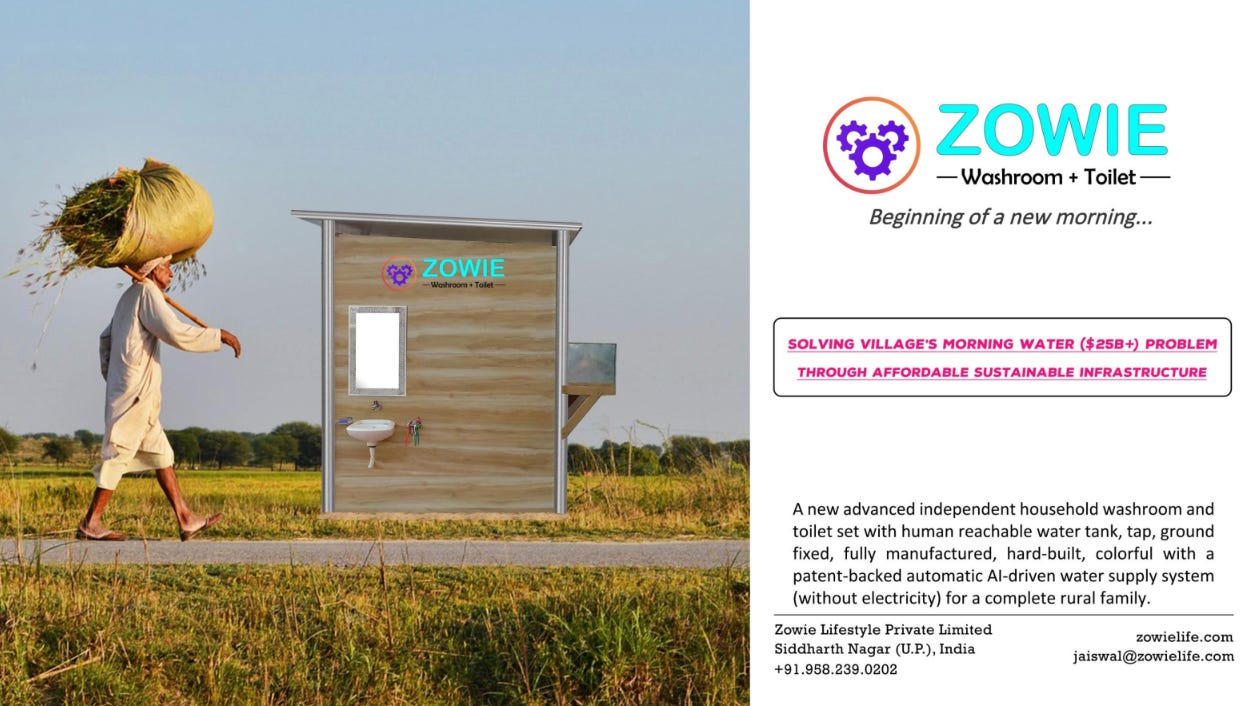
Zowie is a fully manufactured, independent household toilet that solves every single problem rural families face in the morning.
Every morning, rural families struggle with toilets that have no running water for bathing or flushing, no light to use them safely, and require hauling buckets of water manually from far-away hand pumps.
Here’s how Zowie makes it different:
A water tank you can actually reach. In most homes, water tanks are placed on rooftops, 10-15 feet above ground, requiring electric pumps to fill them. In rural areas where electricity is unreliable, this doesn’t work. Zowie’s water tank sits just 3-4 feet above the ground at the back of the structure so anyone can refill it by hand using a bucket. No pump needed. No electricity required.
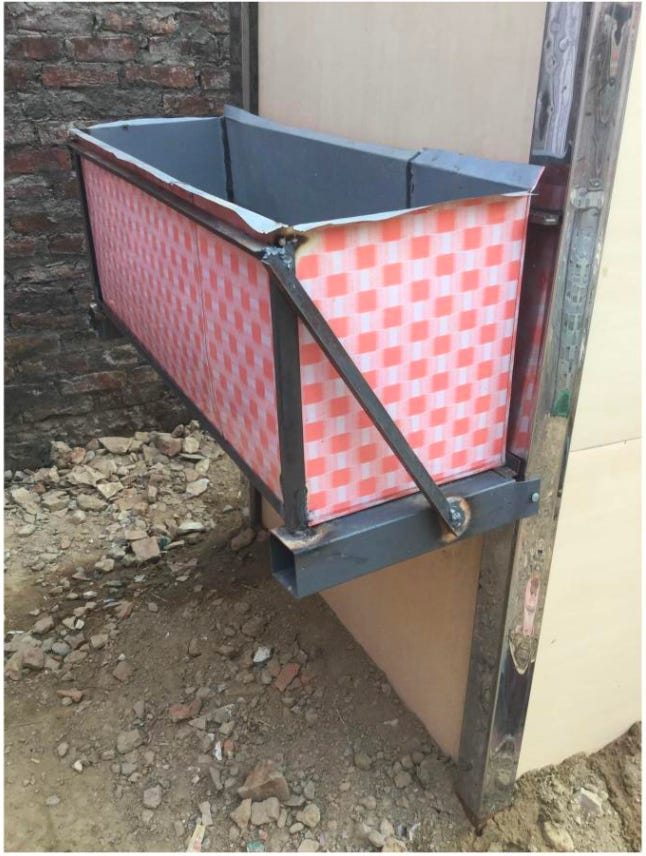
Internal water supply to every fixture. The water tank connects to all the taps inside—the toilet flush, the bathing area tap, and the handwash basin. Everything flows automatically from one central tank using gravity.
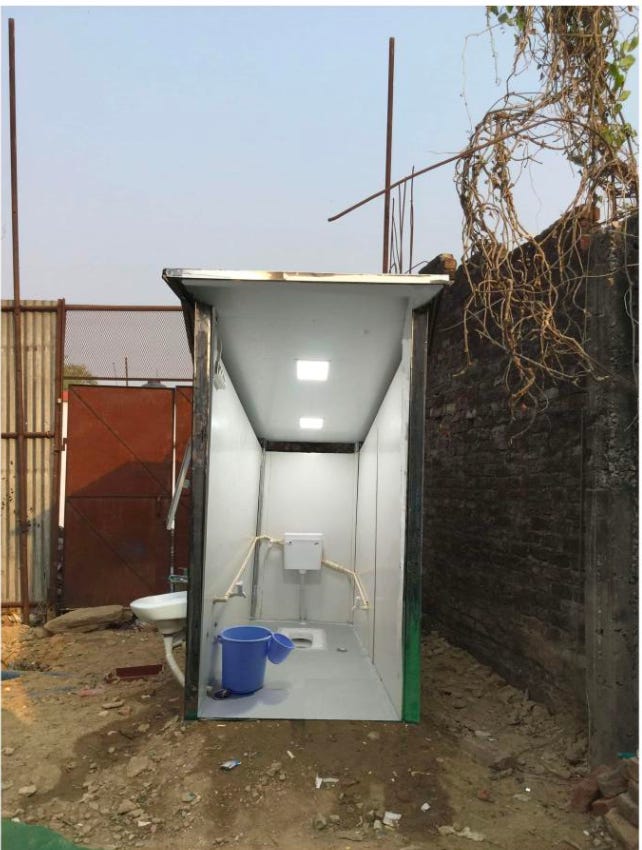
A separate bathing space. Zowie isn’t just a toilet. It’s a 2-metre structure with two sections: one for the toilet and one for bathing. Families can finally shower in private before school or work.
LED lighting powered by solar. Two LED lights inside the structure and a strip light outside ensure the toilet is usable at night. No more fear of darkness.
Colorful, modern design. Instead of dull brick-and-mortar, Zowie uses color-coated iron sheets and silver-lined pillars. It looks like something families can be proud of.
But here’s where it gets truly innovative.
The World’s First AGI in a Mechanical Machine
Zowie’s water supply system has something no other toilet in the world has: intelligence.
But it’s not AI or written code.
It’s a patented water management system that runs entirely on gravitational potential energy. No sensors. No electronics. No electricity. Just physics.
Here’s how it works:
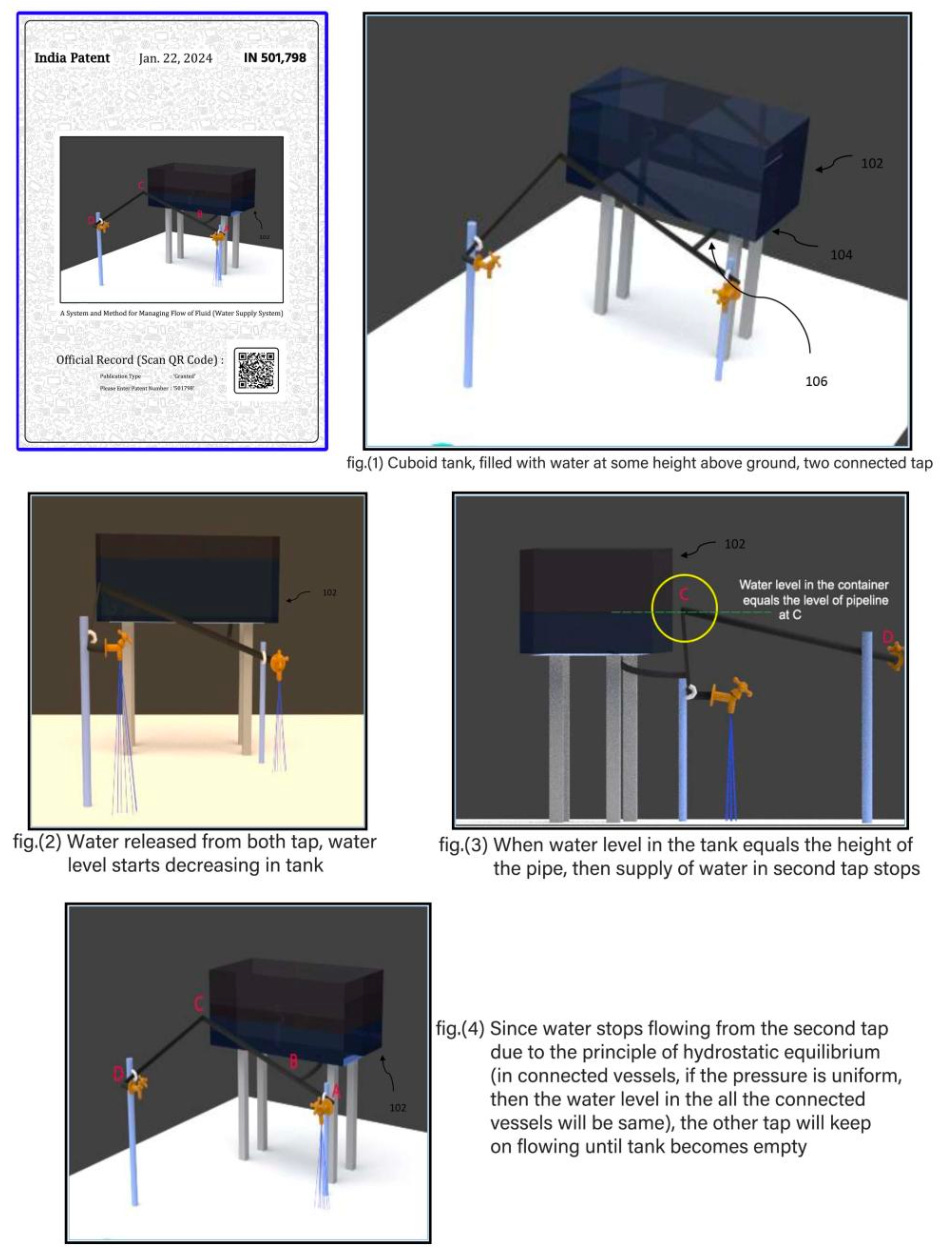
When the water tank is full, both the toilet flush and the hand-wash basin receive water normally. But as the water level drops, the system reaches a “threshold height”—a critical point where the physics of connected vessels kicks in.
At this point, the water supply to the handwash basin automatically stops, while the toilet flush continues to receive water until the tank is completely empty.
Why does this matter?
Because it mimics human decision-making. If you had limited water and had to choose between flushing the toilet or washing your hands, you’d prioritize the toilet. That’s basic human intelligence.
Zowie’s system does the same thing—automatically. Without any programming. Without any electronics. Just a clever arrangement of pipes based on fluid mechanics.
This is what Pankaj calls Artificial General Intelligence (AGI) in a mechanical machine. It’s the world’s first mechanical system that demonstrates human-like prioritization intelligence.
And it’s all backed by an Indian patent granted in January 2024.
Business Model: Three Models for Three Budgets
Zowie comes in three versions:
GVP pro zone: To see more, subscribe to our pro plan!
Platinum ($850 / ₹75,000): Includes an optional Western toilet, interior and exterior colorful walls, a toilet flush, two LED lights, and a 200-liter water tank.