

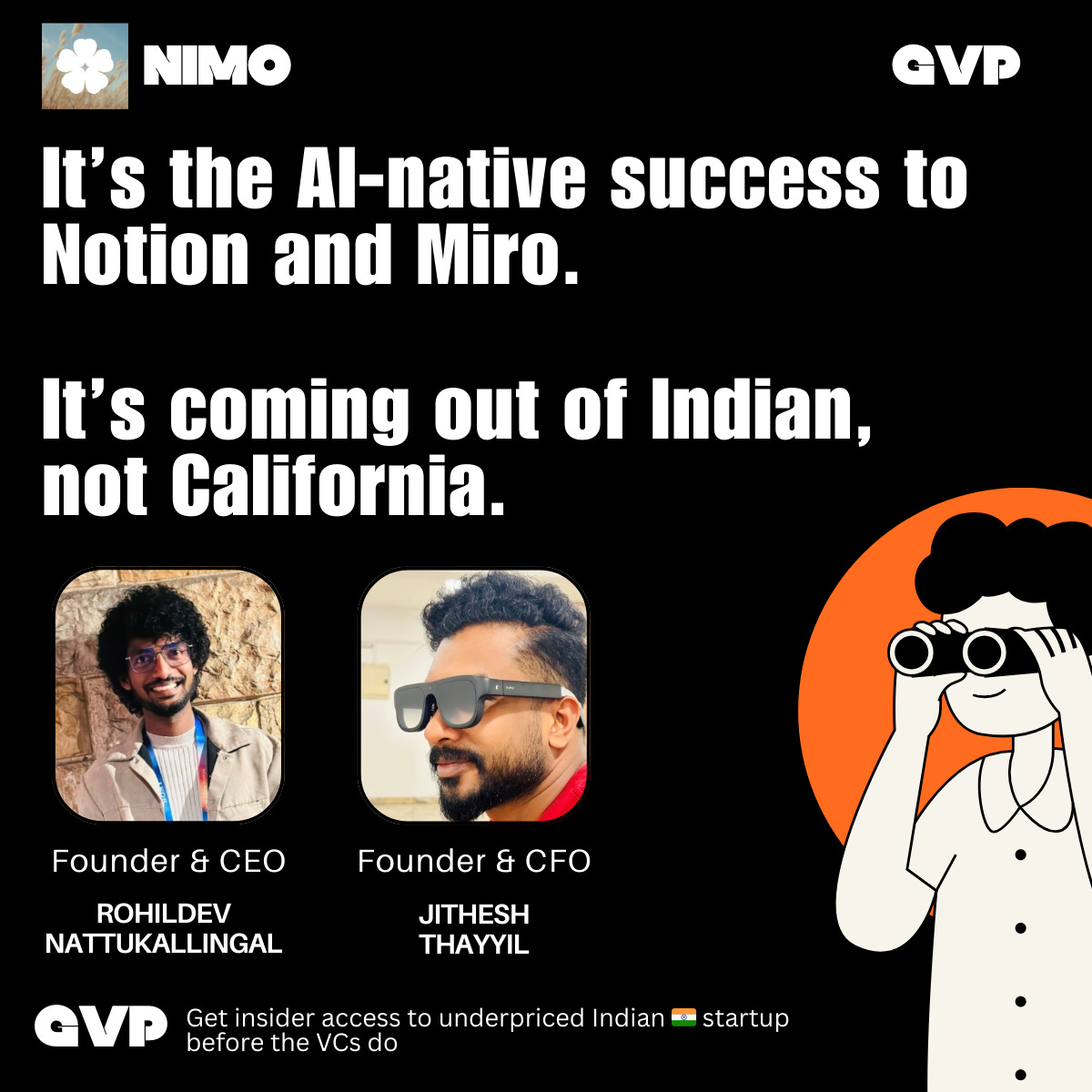
Quick Summary
Sector: AI Infrastructure / Productivity Software
Stage: Pre-Revenue | Beta Launch
Traction: 5,000+ waitlist in 3 weeks | #1 Product of the Day on Product Hunt | #4 Product of the Week
Product: Canvas-based workspace that unifies AI apps, agents, and workflows
Business Model: $29/month (50 tasks) | $200/month (unlimited)
Market: $147B TAM | 1B+ knowledge workers globally
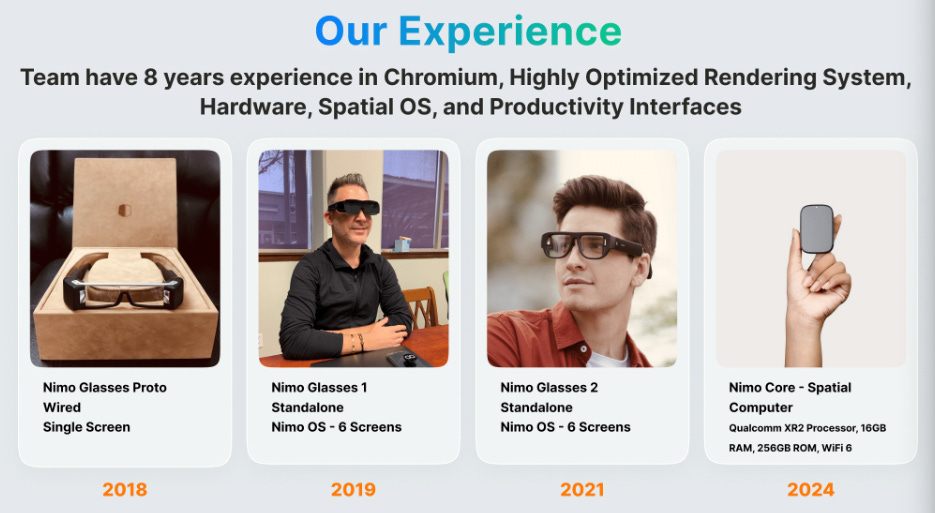
Team: 8 years building AR glasses and spatial computing OS
Opportunity: Every AI app today is fragmented. No shared context. No memory. No orchestration. The infrastructure layer doesn’t exist yet.
Welcome to Global Venture Play (GVP)
where we help investors discover undervalued Indian AI startups.
Every week, we feature one high-potential Indian startup, carefully vetted for traction, team strength, and scalability.
So far, we’ve featured 22 Indian AI startups, and 35% of them have secured investor meetings or funding opportunities.
Our subscribers include top venture firms like Accel, WTFund, and Ice VC, alongside 500+ investors across four continents.
“He built the Apple Vision Pro… eight years before Apple. Nobody noticed.”
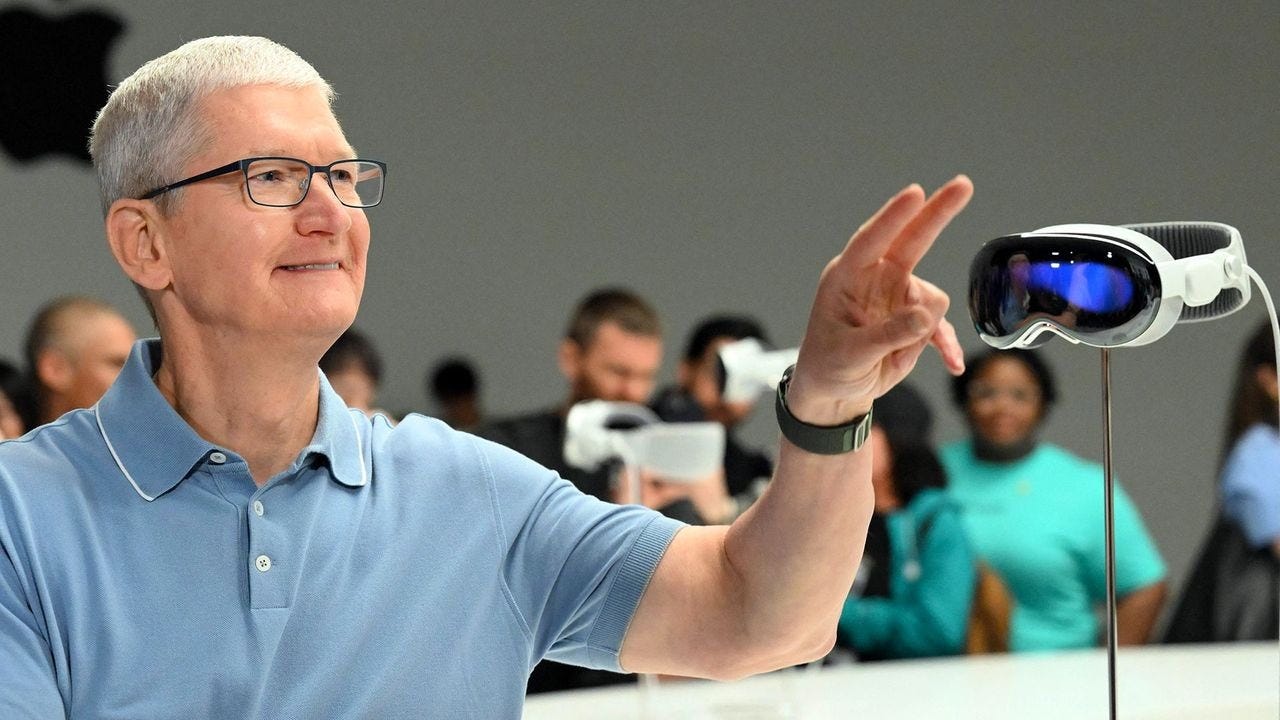
Eight years before the world called it “spatial computing.”
Rohil and his tiny team were in a small room in India building the future.
a pair of AR glasses with a full operating system inside.
He was doing in 2017 what Apple finally unveiled in 2024 “THE VISION PRO”.
But there was no hype, no fancy launch, no billion-dollar marketing budget for this early startup. Just a founder obsessively building the future before the market is ready.
And like every ahead-of-its-time invention, it went mostly unnoticed.
Until 2024.
They got an acquisition offer
That’s when one of America’s largest PC companies came knocking with an acquisition offer.
Six months of negotiations. Due diligence. Legal teams. The deal was nearly done.
But the deal went away…
Rohil had built the AR technology in India. Under Indian IP law, if he developed it there, India could claim tax rights over the intellectual property — unless he lived more than 50% of the year in the US.
He didn’t.
So for the US buyer, the acquisition became a regulatory nightmare. Too much risk. Too many tax complications.
The deal died.
Most founders would’ve given up.
Rohil didn’t.
He moved to the US. Fixed the residency requirement. Restructured the entire company. Spent months untangling the mess.
And while he was doing all of that, something strange started happening.
They found a hidden market for their problem from their Users
Beta testers who were using his AR operating system started using it for something completely unexpected.
They weren’t using it for AR.
They were using the multi-window system, the rendering engine, the canvas interface to run AI agents.
Not in AR glasses. Just on their laptops.
They were connecting Google Sheets to ChatGPT.
Running Perplexity alongside custom dashboards.
Orchestrating tasks across multiple apps. Building workflows.
All inside their AR OS.
And Rohil realized something:
People don’t need AR glasses to solve the AI problem. They need this interface right now.
Everyone use 10+ AI apps every day. ChatGPT. Claude. Perplexity. Midjourney. Google’s AI tools.
But they don’t work together.
They copy from ChatGPT.
Paste into Sheets.
Switch to Perplexity.
Copy again.
But ChatGPT already forgot what you asked 10 minutes ago.
AI needs to pull data from five apps, coordinate between them, and remember everything.
But browsers can’t do that.
So Rohil took the same OS he built for AR glasses and turned it into Nimo Infinity.
Three weeks after launching beta: #1 Product of the Day on Product Hunt. 5,000 people on the waitlist.
Today, I’m going to show you why this could become the operating system the entire AI world runs on.
Let’s dive in.
Browsers were built for websites. AI needs something completely different.
Here’s what happens when you try to do real work with AI today:
You’re preparing for an investor meeting
You open ChatGPT. Ask it to draft talking points.
You open Perplexity. Research the investor’s background.
You copy the research. Paste it back into ChatGPT. Ask for customized talking points.
You open Google Sheets. Start building a financial model.
You realize you need ChatGPT to help. But it has zero context about your research or your financial data.
So you copy from Sheets. Paste into ChatGPT. Generate some analysis. Copy it back.
30 minutes later:
12 browser tabs open
Information scattered everywhere
ChatGPT has forgotten half of what you asked
You’ve lost track of what you’re even doing
This is how knowledge workers use AI in 2025.
And it’s broken.
Because browsers were never designed for this.
Here’s how Nimo Infinity works:
Nimo is a canvas like Figma or Miro, except instead of design files, you’re organizing AI apps and workflows.
The canvas where AI apps actually work together, share context, and remember everything.
Here’s what that means:
It creates cards instead of tabs.
Each card holds multiple apps. Google Sheets + ChatGPT + a dashboard builder. All connected.
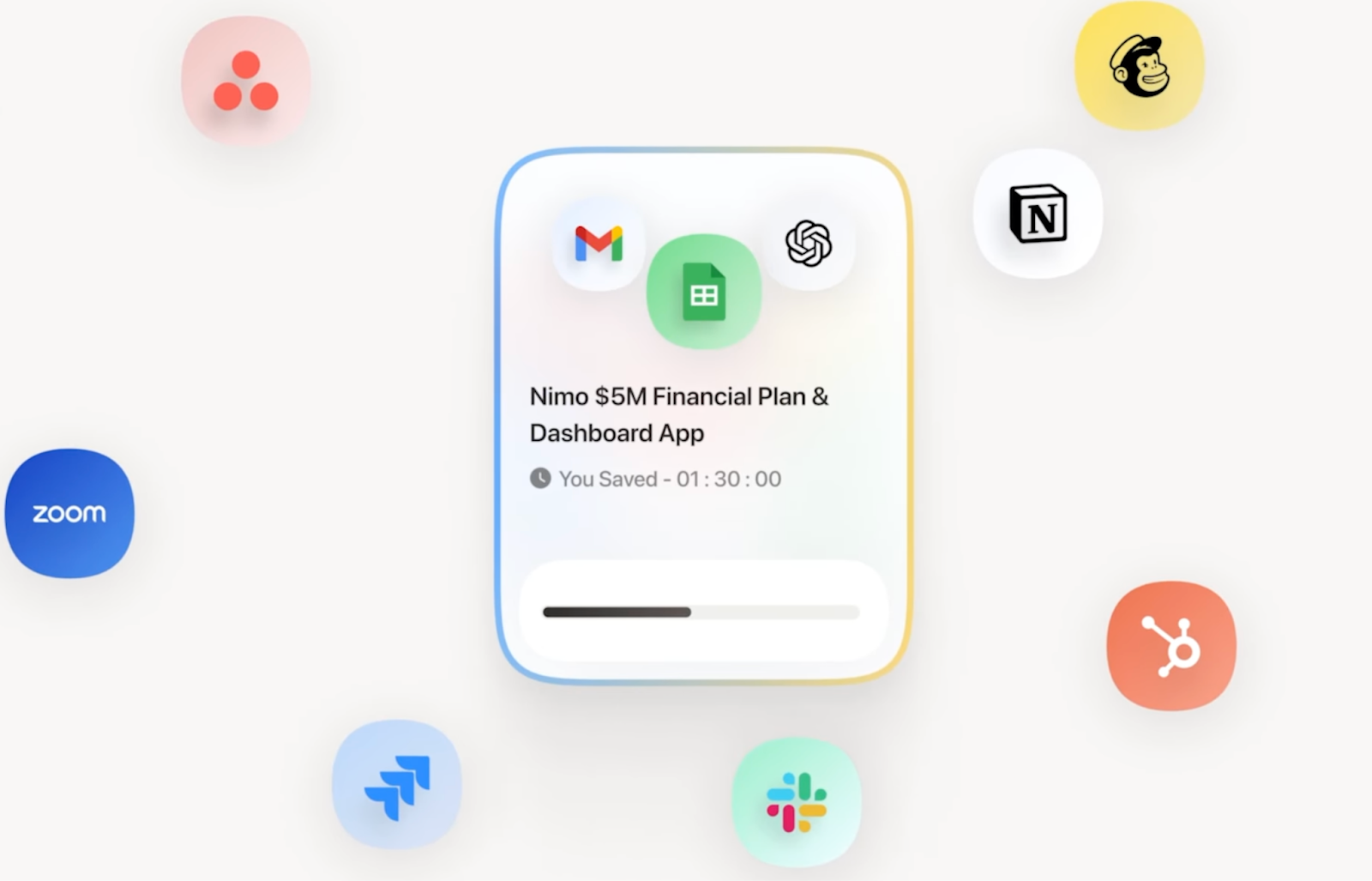
Apps talk to each other automatically.
Want ChatGPT to analyze your spreadsheet? Just ask. No copy-pasting. The apps already see each other.Everything remembers.
Each workspace keeps all your conversations and data. You pick up exactly where you left off.Your team works together in real-time.
Your colleague opens the same canvas. Sees your AI apps. Adds their work. No need for separate subscriptions.
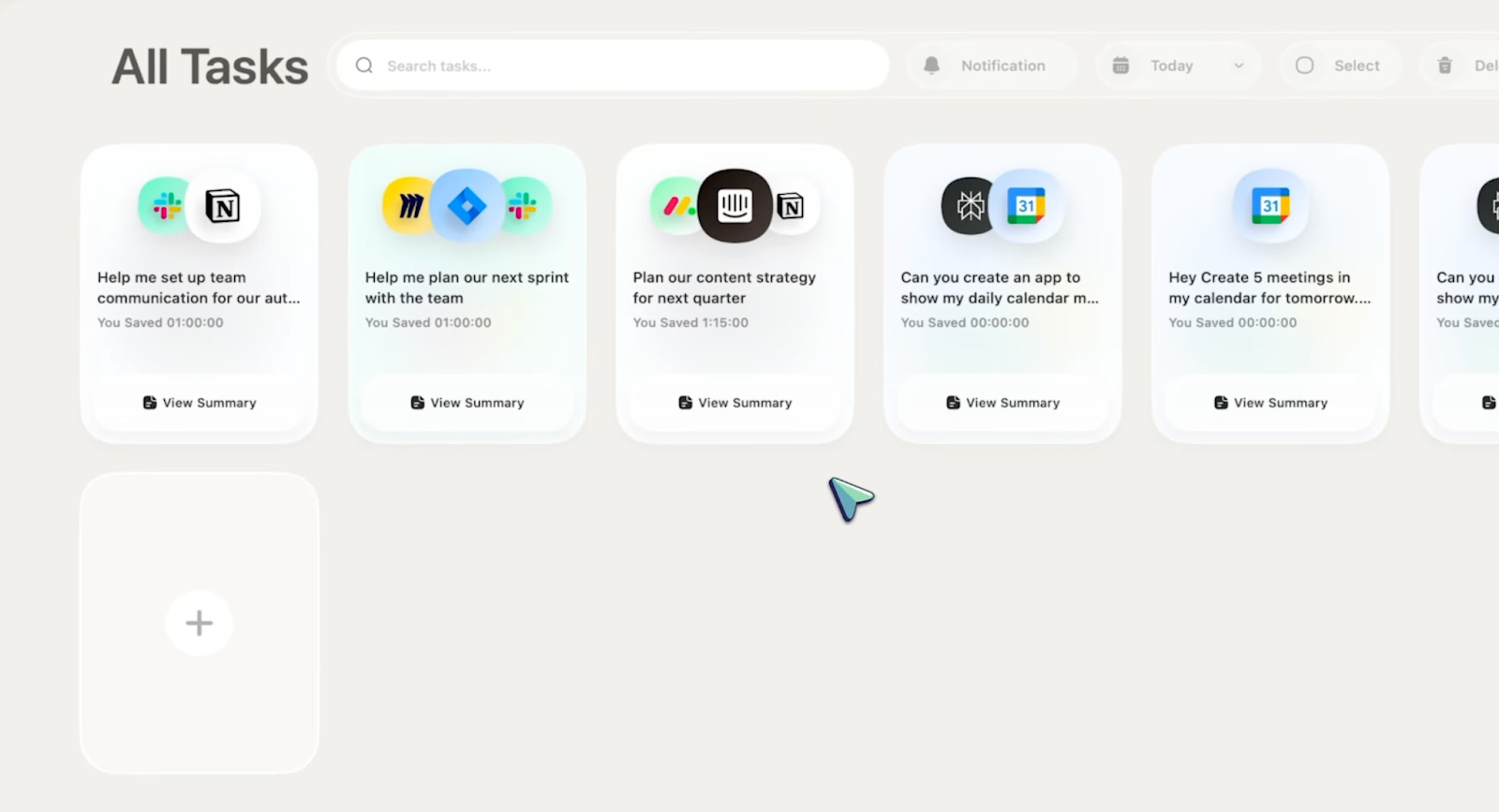
Here’s a real example:
A sales team built one card for meeting prep. It automatically:
Grabs client info from their CRM
Researches the client’s recent news (Perplexity)
Writes custom talking points (ChatGPT)
Creates a one-page summary to print
Just five steps, one card. Five minutes instead of forty-five.
No tabs. No copying. No switching between apps.
And it works with the AI tools you already use: ChatGPT, Claude, Perplexity, Midjourney, Google apps.
Market Opportunity: 1 billion people who use AI need a unified workspace for AI apps.
If just 25% adopt AI orchestration platforms over the next 3-5 years, that’s 250 million users and a $147B annual market.
The immediate opportunity is smaller but still massive:
15 million users in mid-market companies are already deploying multiple AI agents across their workflows today. They’re the ones feeling the pain most acutely.
That’s an $8.8B serviceable market.
And right now, 1.25 million early adopters are actively looking for solutions. These are power users running 10+ AI tools daily, experiencing severe fragmentation, and willing to pay for a fix.
That’s Nimo’s $735M immediate addressable market.
Why now?
Three things changed in 2024:
AI adoption crossed 50% among knowledge workers. The tools are mainstream now.
Companies realize AI fragmentation is killing productivity. They’re actively looking for orchestration solutions.
The infrastructure layer doesn’t exist yet. Notion and Miro are bolting AI features onto old products. Browsers weren’t built for this. There’s a gap.
Nimo is the first platform purpose-built to fill it.
Who they’re really competing with:
Not Chrome or Arc. Those are browsers.
Nimo competes with Notion and Miro, the workspace tools knowledge workers use to organize their work.
But here’s the difference: Notion and Miro were built for documents and design files. They’re now trying to add AI features.
Nimo was built from day one for AI orchestration. Multi-app workflows. Shared context. Memory across sessions.
The business model: Simple SaaS pricing with a clear path to enterprise expansion.
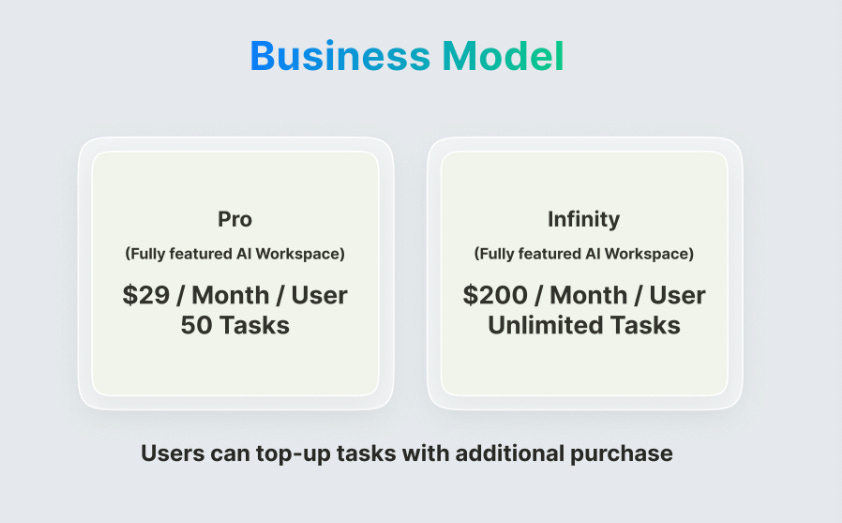
Nimo makes money through two subscription tiers:
Pro Plan: $29/month
50 AI tasks per month. Full access to canvas, memory, collaboration, and integrations. Perfect for individual knowledge workers.
Infinity Plan: $200/month
Unlimited AI tasks. Built for power users and teams who run AI workflows all day.
Users can buy more task credits if they exceed their limits — giving Nimo flexible, usage-based revenue that scales with customer value.
But here’s the long-term play:
Start with individual knowledge workers at $29/month. Then add enterprise features — team management, access control, compliance tools, custom integrations. Upsell organizations on enterprise contracts.
Same playbook Notion, Figma, and Miro used to build billion-dollar companies.
The wedge is individuals. The expansion is teams. The end game is enterprise.
Their traction: #1 on Product Hunt, 5,000 signups in 3 weeks, and real users building real workflows.
Nimo Infinity launched their beta on Product Hunt in November 2024.
Within 24 hours: #1 Product of the Day.
By the end of the week: #4 Product of the Week.
But more importantly:
5,000+ people joined the waitlist in the first three weeks.
1,000+ users joined their Discord to give feedback, report bugs, and request features.
And the feedback has been overwhelmingly clear:
What people love:
Finally having all their AI apps in one place with shared context
Creating reusable “dynamic apps” for recurring tasks (financial dashboards, meeting prep, research workflows)
Real-time collaboration without juggling subscriptions
What they’re actively improving:
User experience and onboarding (they just hired a senior UX designer from Australia)
AI accuracy and guardrails (being refined based on beta feedback)
More integrations and automation options
The product is in beta. But the demand is undeniable.
