

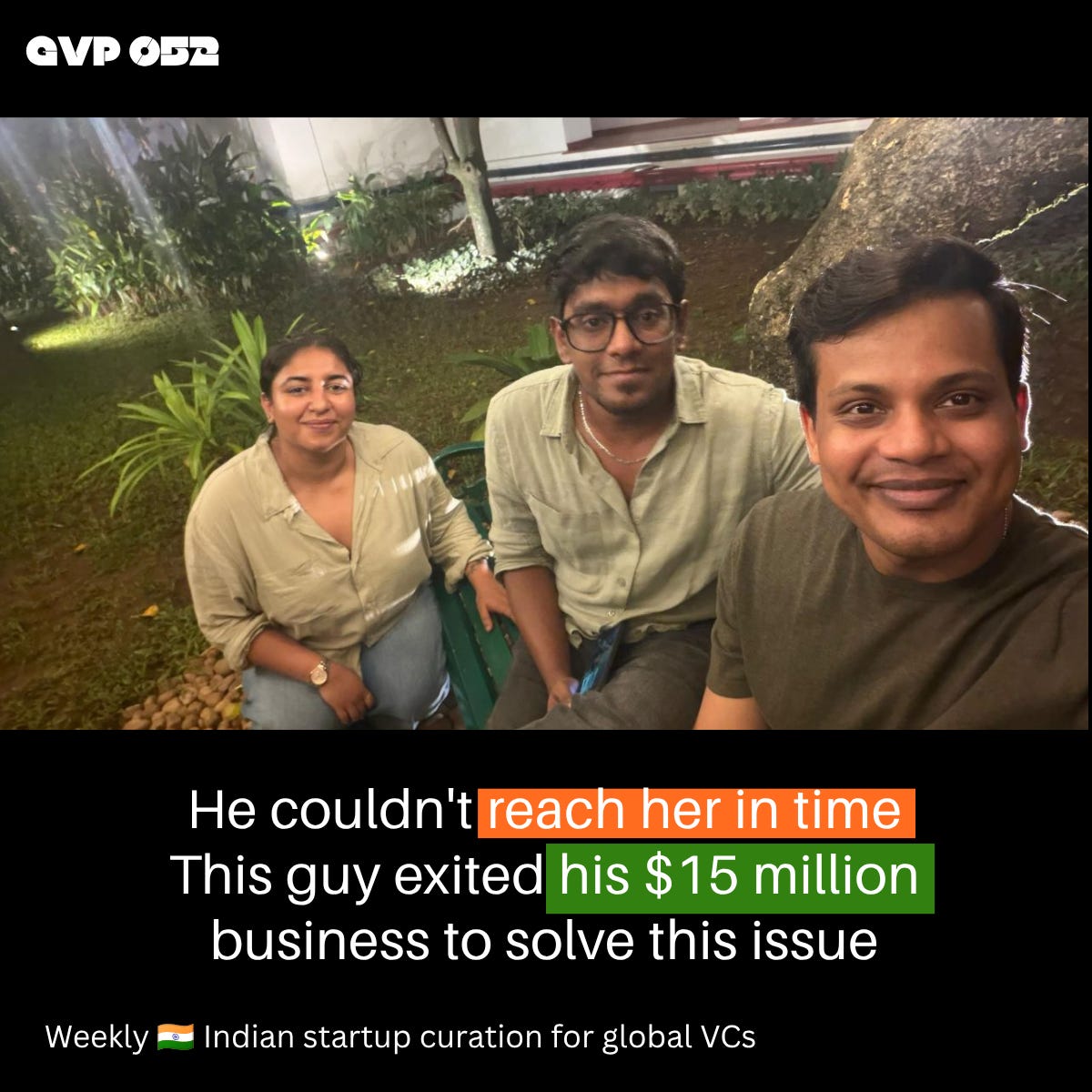
If you’re new here, Welcome.
Welcome back to GVP. Every week we meet one Indian founder, verify the traction, and write the story so you can make faster investment decisions. We added 32 new subscribers last week — now at 650 investors reading weekly. If someone forwarded this to you, subscribe here.
My dear fellow investors,
Sunil George Solomon spent 12 years building a garment manufacturing and export business. He’d scaled it past US$15 million (₹150 crore) in annual revenue.
Then in January 2025, someone close to him was assaulted on a work trip.
That event left a big black mark in his life.
When an assault like this happens to someone very close to you,
“I was too angry. This shouldn’t happen to anyone. She was on a work trip.”
Within months, he started stepping away from the business he’d spent over a decade building.
Today, I’m going to show you why he walked away from the business he’d built for over a decade and why his background might be exactly what this problem needed.
Then he met his co-founder…
Sunil didn’t jump straight in. He joined forces with Rohan Shaji Thomas, who had spent 10 years building packaging solutions.
They spent months on market research before they incorporated in April 2025.
Then they spent six more months exiting their old companies. They’ve been full-time only since February 2026.
That patience matters. So does what they are building
Hardware startups often stumble in two places: manufacturing and operations.
Turning a prototype into a reliable, certified product at scale is brutally hard, and many founders learn that through expensive mistakes.
Sunil has run garment factories. Rohan has built packaging solutions and precision machinery.
Between them, they bring two decades of manufacturing and operational discipline—experience that becomes especially valuable when a hardware company starts moving from prototype to production.
They found lots of apps, but no hardware.
When they looked at existing solutions, they found the same gap Sunil had just lived through.
“Most women’s clothing either has no pockets or pockets too shallow to be useful” Sunil said.
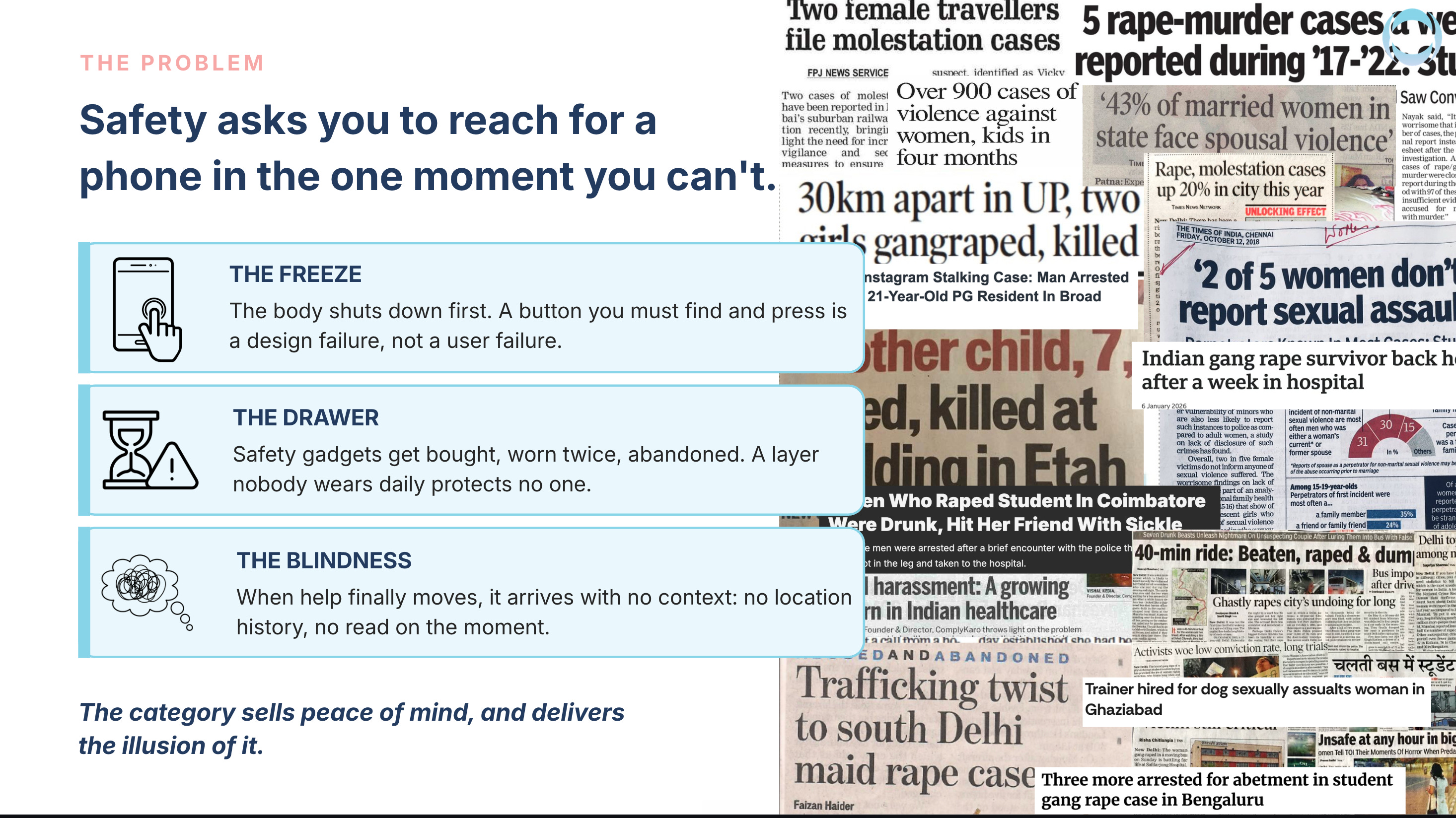
“They have to go into their bag, take out the phone, unlock it, find the app, click SOS. And during all this, they go through the cognitive freeze. The body does not even allow them to take the phone out.”
So they built for that moment instead.
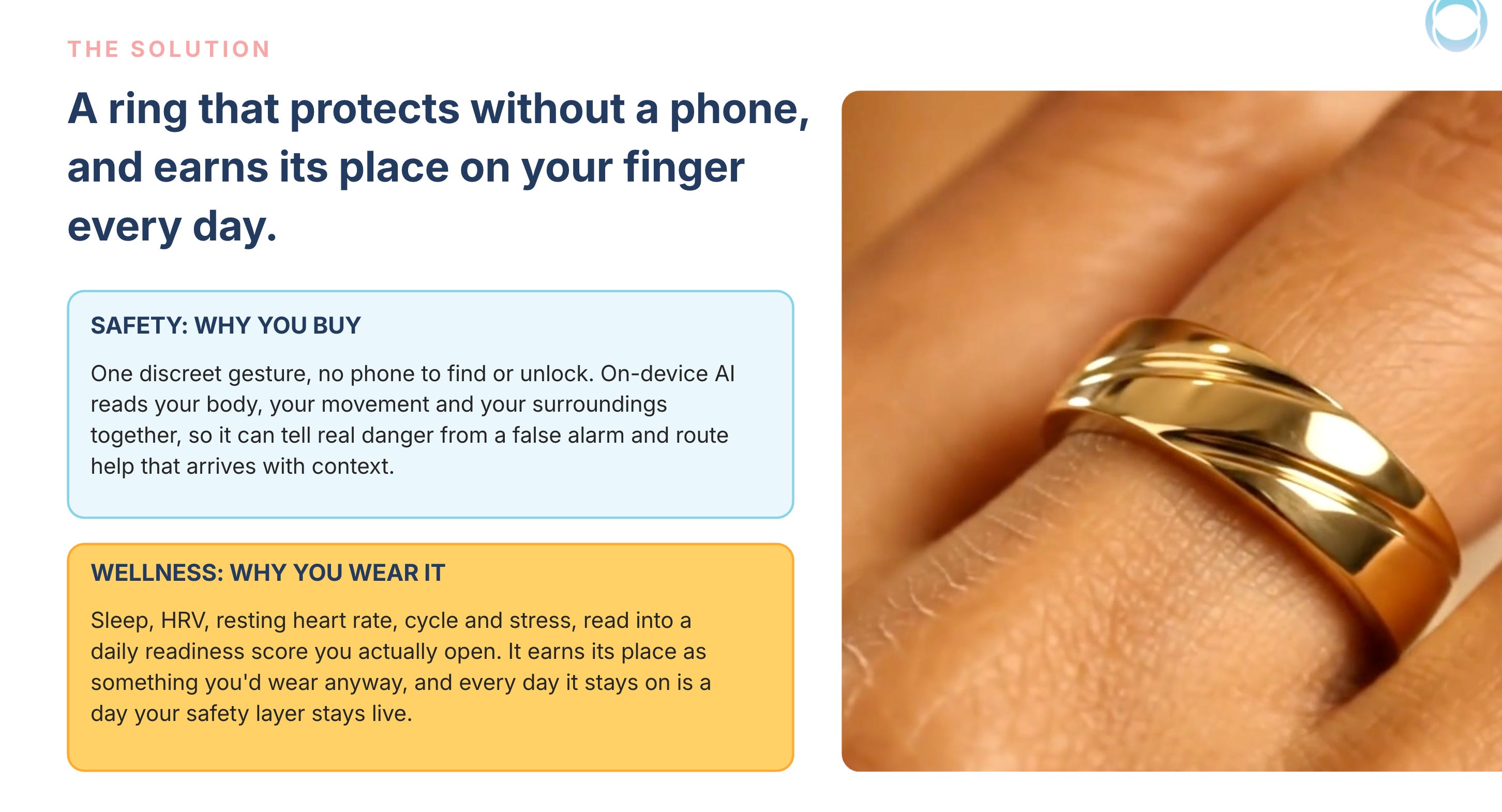
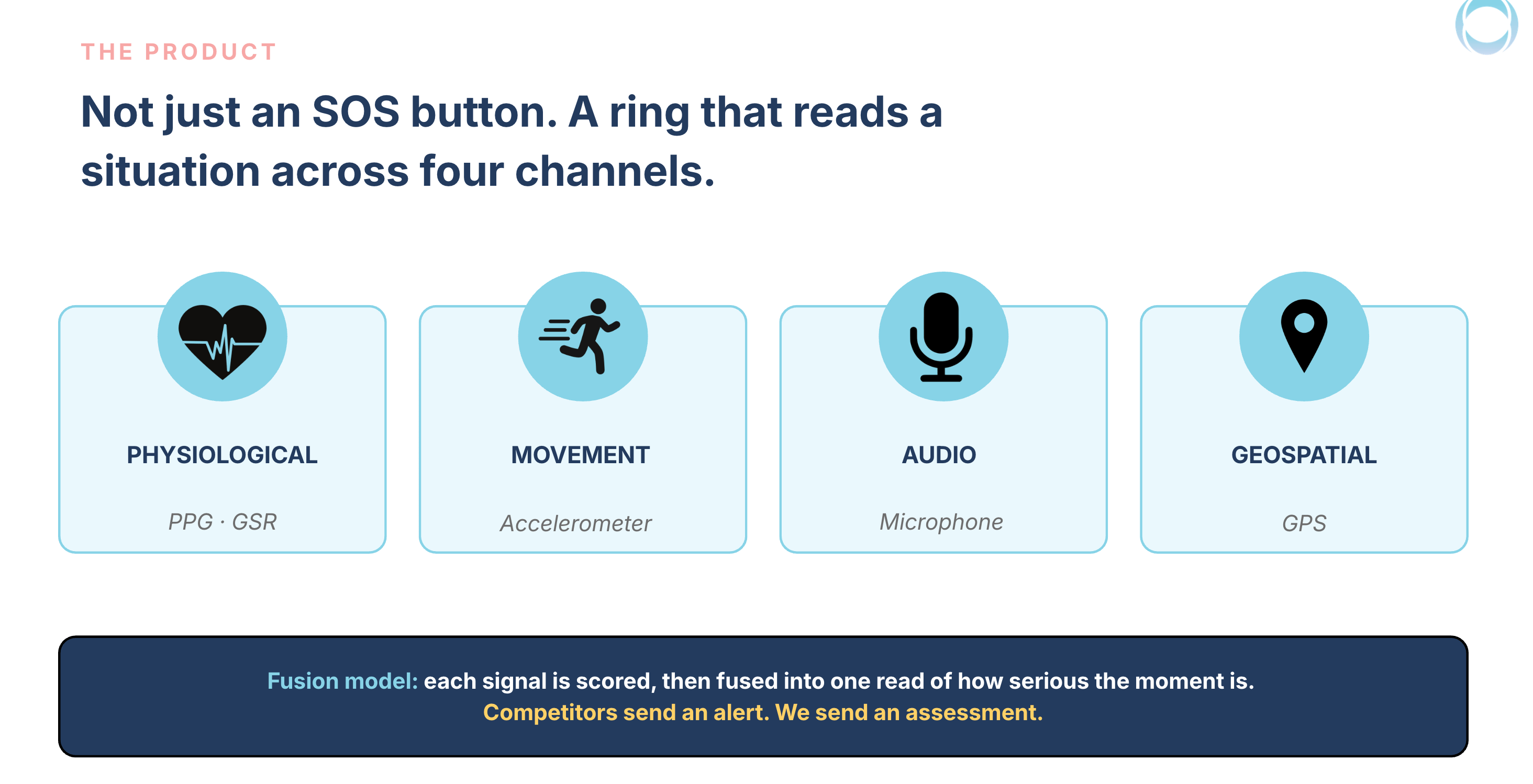
Wualt is a smart ring. Pressing it three times discreetly sends the user’s location and an alert to their chosen guardians.
The team also plans to connect the system with local response networks and law enforcement once the required partnerships are in place.
Why should women wear this device?
A single-utility safety gadget solves one problem: safety. So when nothing bad happens for six months, it often ends up in a drawer. And a device in a drawer protects no one.
So Wualt adds daily wellness tracking through the ring’s biometrics, including cycle patterns, sleep, resting heart rate, and stress.
Sunil put it simply: “Safety is why you buy it. Wellness is why you wear it.”
That daily wear is also what quietly builds something bigger.
Why is this the moment?
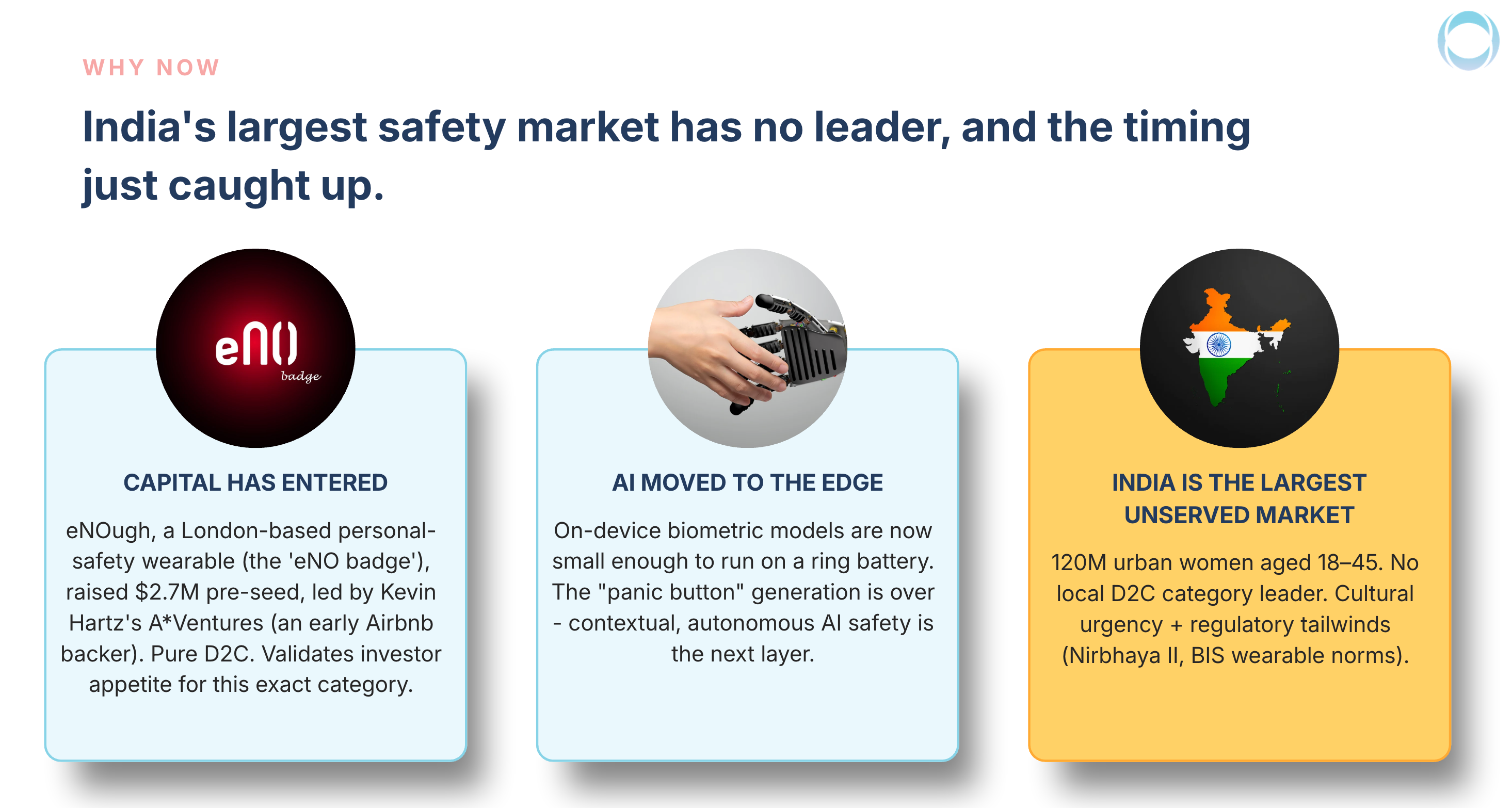
Three things lined up at once:
The tech finally fits. AI models are now small enough to run on a ring’s battery. That means the ring can send real context to responders, not just a bare alarm.
Capital is moving in. A UK personal-safety wearable recently raised $2.7M at this same stage, a sign that investors now see this as a real category, not a science project.
India is wide open. Millions of women work late shifts in hospitals, call centers, and corporates. It’s a huge at-risk population with no clear category leader building for them.
Is there a real B2B opportunity?
They have two business models.
1. Consumer (D2C)
A woman buys the ring for safety and wears it daily for the wellness features, paying once for the device and monthly for the subscription which covers only the health and wellness features.
This is the long-term brand play, but it doesn’t launch until 2027 because custom hardware takes time.
B2B
This is the near-term engine, and it’s where Sunil has an edge. Instead of selling to individual women, they sell to institutions: corporates and hospitals These buyers are already on the hook for worker safety through compliance and duty-of-care rules.
Their first step is a planned police-backed pilot involving 250 units across corporates, schools, and hospitals in tier-one cities in North India, scheduled for October 2026.
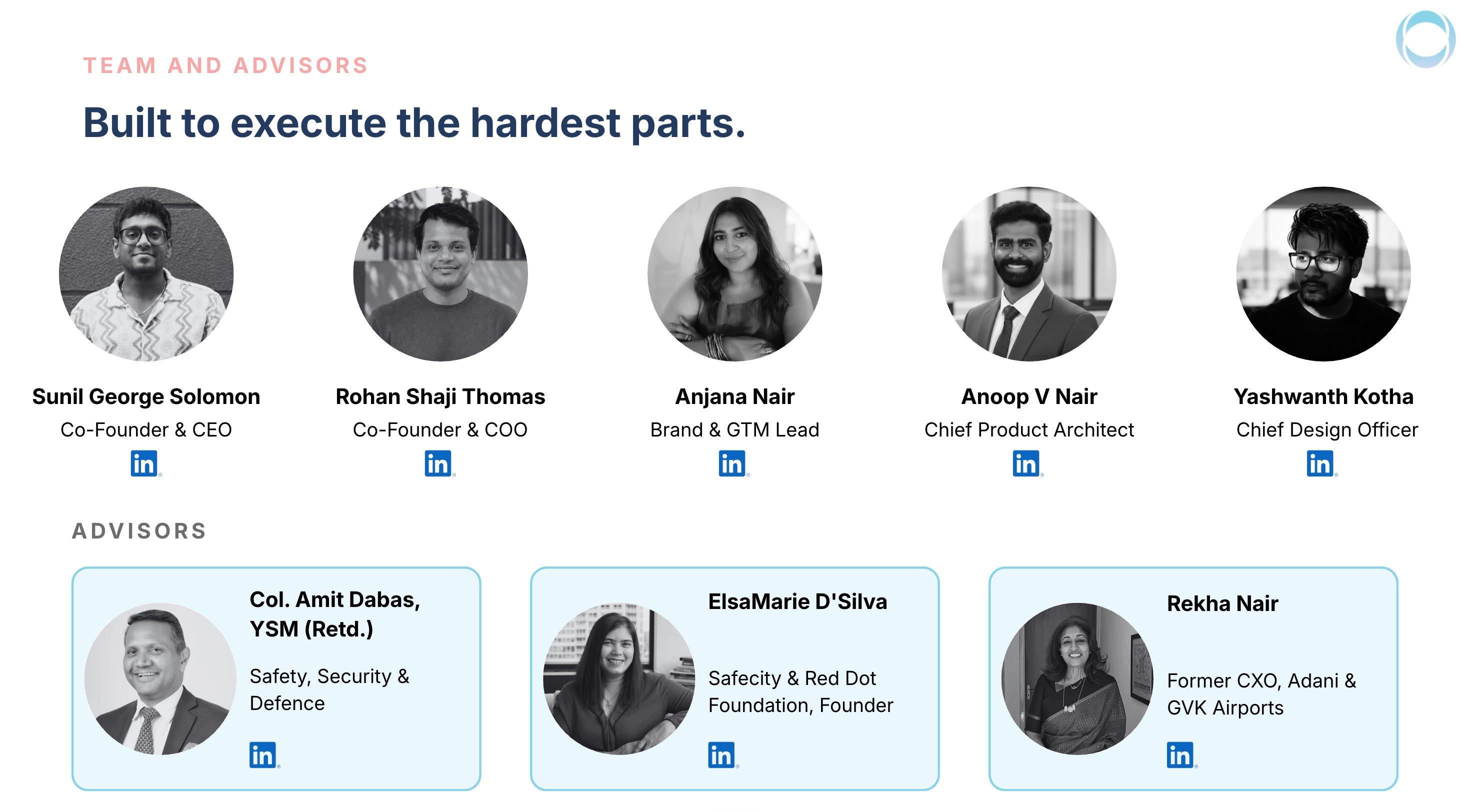
Meet the Team:
Sunil George Solomon — Co-founder & CEO. Spent 12 years running his own garment manufacturing and export business, scaling it past ₹150 crore (US$15.5M) in annual revenue. An operator who’s actually run factories.
Rohan Shaji Thomas — Co-founder & COO. Spent 10 years building packaging machines, precision hardware manufacturing for bottles, sachets, and cartons.
Anjana Nair — Brand & GTM Lead.
Anoop V Nair — Chief Product Architect.
Yashwanth Kotha — Chief Design Officer.
Advisors
ElsaMarie D’Silva — Founder of the Red Dot Foundation and Safecity; 15 years in women’s safety, working directly with law enforcement.
Col. Amit Dabas (YSM, Retd.) — Heads the Global Security Board at Indian Hotels Company (Taj group); decorated defence veteran.
Rekha Nair — Former CXO at Adani and GVK Airports.
The GVP Take
This is a rare case of founder-market fit on all three axes.
The founder has lived the problem, so he won’t quit.
He and Rohan are proven hardware operators, in a category that kills founders who aren’t.
The third axis is the sharpest. Their go-to-market model is B2B2C: they sell the ring to corporates and institutions, which then provide it to employees, students, patients, or other members of their communities.
They’re also honest about their blind spot. Not being safety experts themselves, they brought in advisors who are, which is exactly the right correction.
Now the honest risks. This is early: 5 prototypes, pre-revenue, and the pilot hasn’t run yet. The auto-detection AI they describe doesn’t exist today, and the response network that turns an alert into someone showing up still depends on partnerships being signed.
ElsaMarie D’Silva founded the Red Dot Foundation and Safecity, and has spent 15 years in women’s safety, working directly with law enforcement. Col. Amit Dabas, who heads the IHCL Global Security Board, advises on the security side.
Now the honest risks.
This is early: 15 prototypes, pre-revenue, and the pilot hasn’t run yet.
The auto-detection AI they describe doesn’t exist today, and the response network that turns an alert into someone showing up still depends on partnerships being signed.
The best early-stage bets are on founders, not products.
You’re betting on the person building it. If that’s a bet you’d make, just reply, and I’ll connect you with Sunil.
Watch this one.
Want an intro to the founders? Just reply to this email.
P.S. One last thing…
GVP has 650 investor subscribers — including partners at Accel, principals at family offices in Singapore and Dubai, and angels across the US, Australia, and Europe.
If you forward this newsletter to 3 investors who subscribe, we’ll make a warm intro for you to any family office or VC in our network you’d like to meet.
See you next week
If you want me to make a warm intro with this startup founder, feel free to reply to this email!
Email: jaylee@globalventureplay.com