

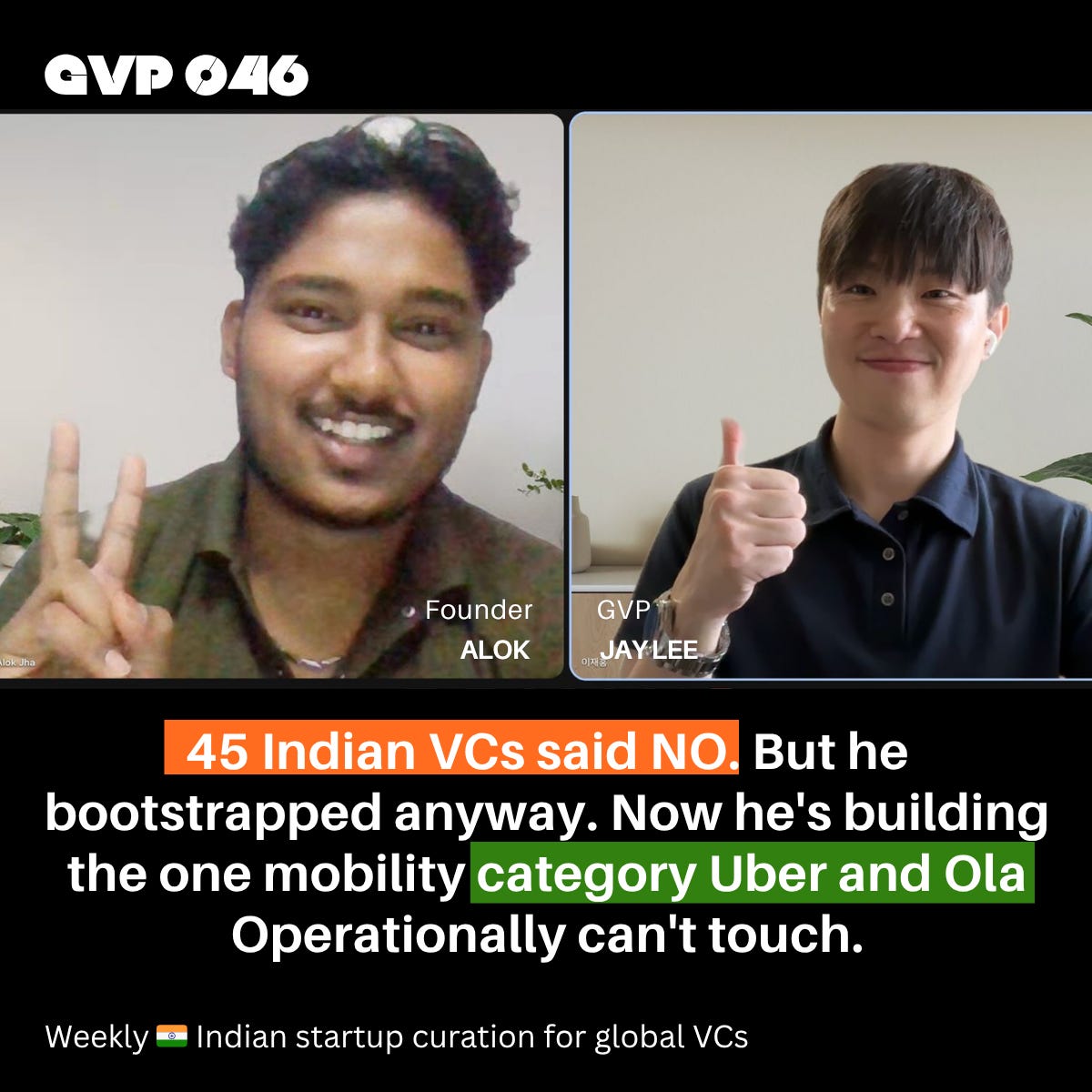
If you’re new here, Welcome.
Welcome back to GVP. Every week we meet one Indian founder, verify the traction, and write the story so you can make faster investment decisions. We added 32 new subscribers last week — now at 565 investors reading weekly. If someone forwarded this to you, subscribe here.
The Great Indian Cab Bloodbath.
My dear fellow investors,
In the last ten years, Indian cab-hailing has burned more venture capital than almost any consumer category in startup history.
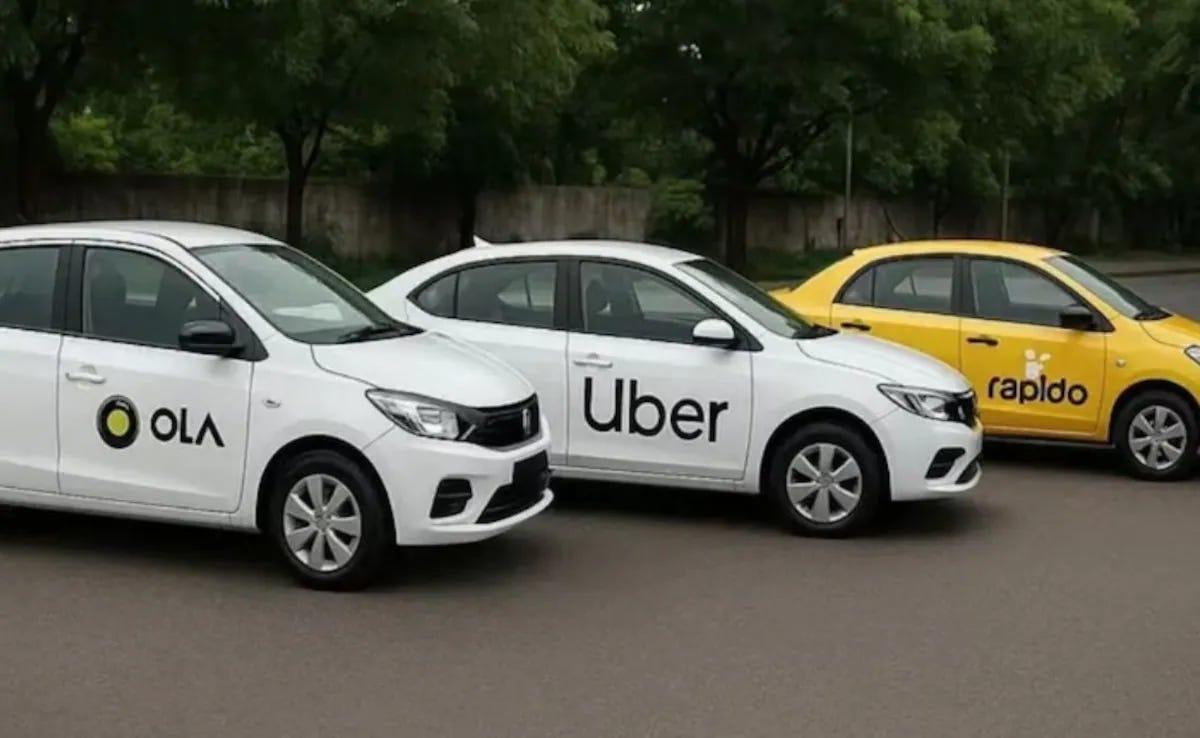
Uber India lost $165M (₹1,407 crore) last year alone.
Ola’s revenue is shrinking and it’s slipped to third place.
Even Rapido, the one company close to profitability, did it only after switching its business model entirely.
The three companies every Indian mobility investor knows. Combined losses last year: over $300 million.
It’s funny that the real moat in Indian cab-hailing was never technology. It wasn’t the drivers. It wasn’t brand. It was the ability to lose money longer than everyone else.
But while every Indian VC was funding that war, a different mobility market was running quietly underneath it. One that’s bigger by trip volume. One that no funded company has organized. One that almost no investor we know has ever ridden in.
That market is the one Macro Rides is going after.
The Market Hiding under Uber

In Delhi, millions of people use the Metro train every day to get to work.
The Metro is fast and cheap. The problem is getting to the Metro station from home that last 2 to 3 kilometers.
That distance is too far to walk and too short to take a regular taxi like Uber.
So people use a small electric three-wheeler called an e-rickshaw.
But the e-rickshaw system is broken.
In the current situation, it takes 20 to 30 minutes for what should be one 10-minute ride.
People skip the Metro entirely because of this.
A WRI India study of 7,200 commuters found that 70% of people who could use the Metro avoid it, mostly because of this last-mile mess.
Macro Rides wants to fix it.
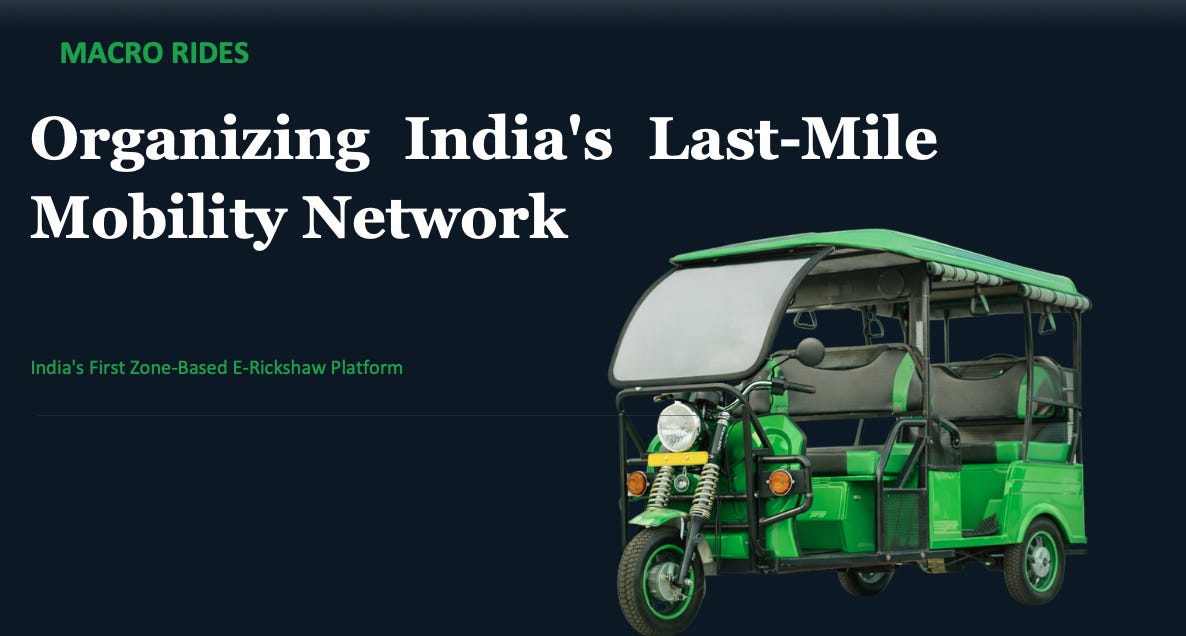
They want to build a phone app where you can book one e-rickshaw, it comes to your house, takes you straight to the Metro at a fixed price, and you are done.
India has 1.5 million e-rickshaws on the road today. None of them are on an app.
The total spend on this kind of short e-rickshaw travel is roughly $1 billion a year.
The Delhi Metro alone carries 4.6 million people every single day — most of them dealing with broken last-mile rides just to reach the train.
This is the largest passenger-mobility category in India by trip volume. And it is not organized.
How the founder understood the riders market working amazon ops team?
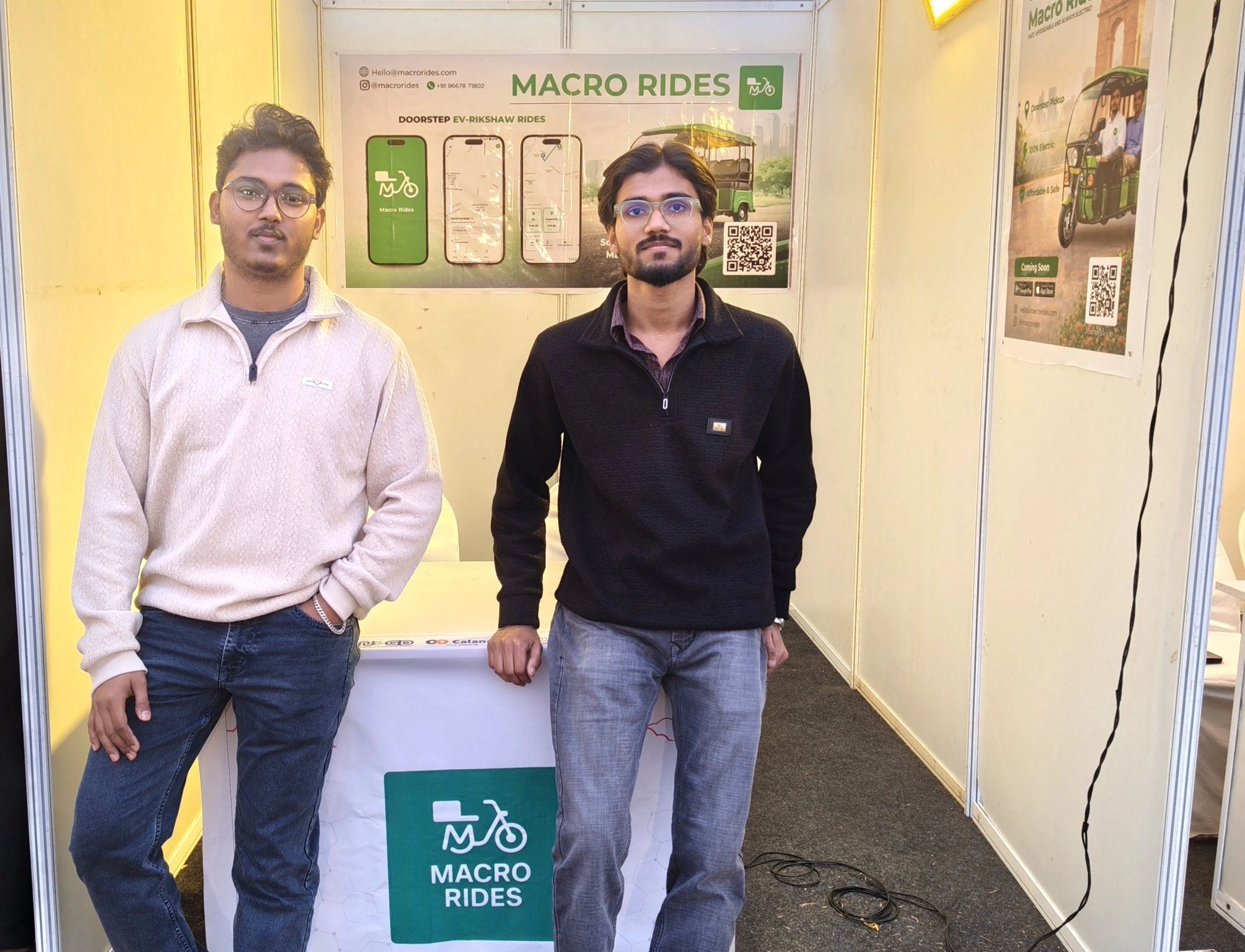
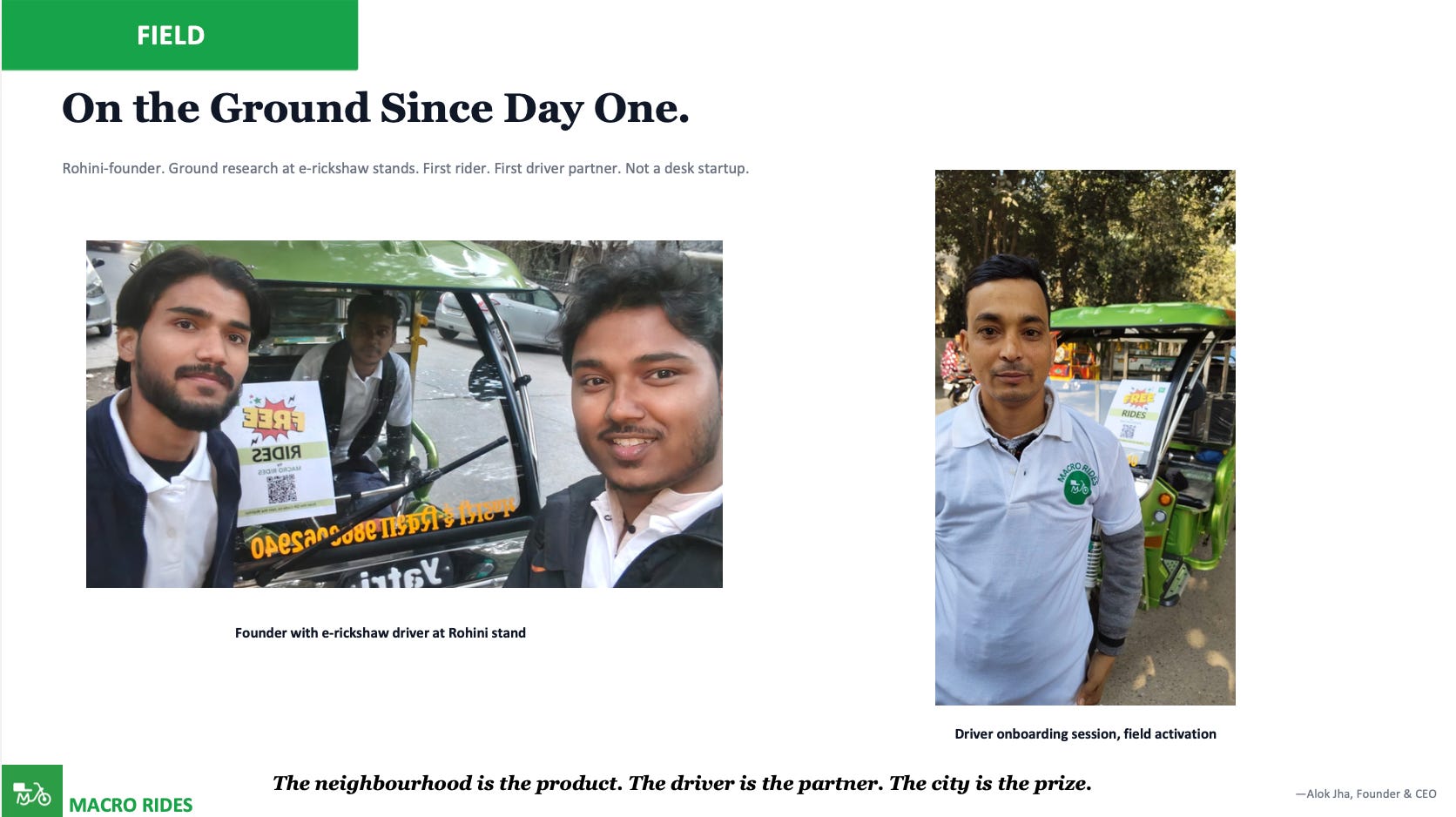
Alok Jha grew up in Rohini, in northwest Delhi. For eight years, his daily commute to the metro meant catching two separate e-rickshaws, haggling on price each time, and paying twice for one short ride.
He dropped out of a computer applications degree at 19.
He took a sales job at 17, then HR at a consultancy, then two years inside Amazon’s delivery operations.
The Amazon role is the one that matters. He spent two years watching how delivery drivers get paid, why they quit, and what makes a driver loyal versus disposable.
So he paid ₹800 to drive an e-rickshaw himself
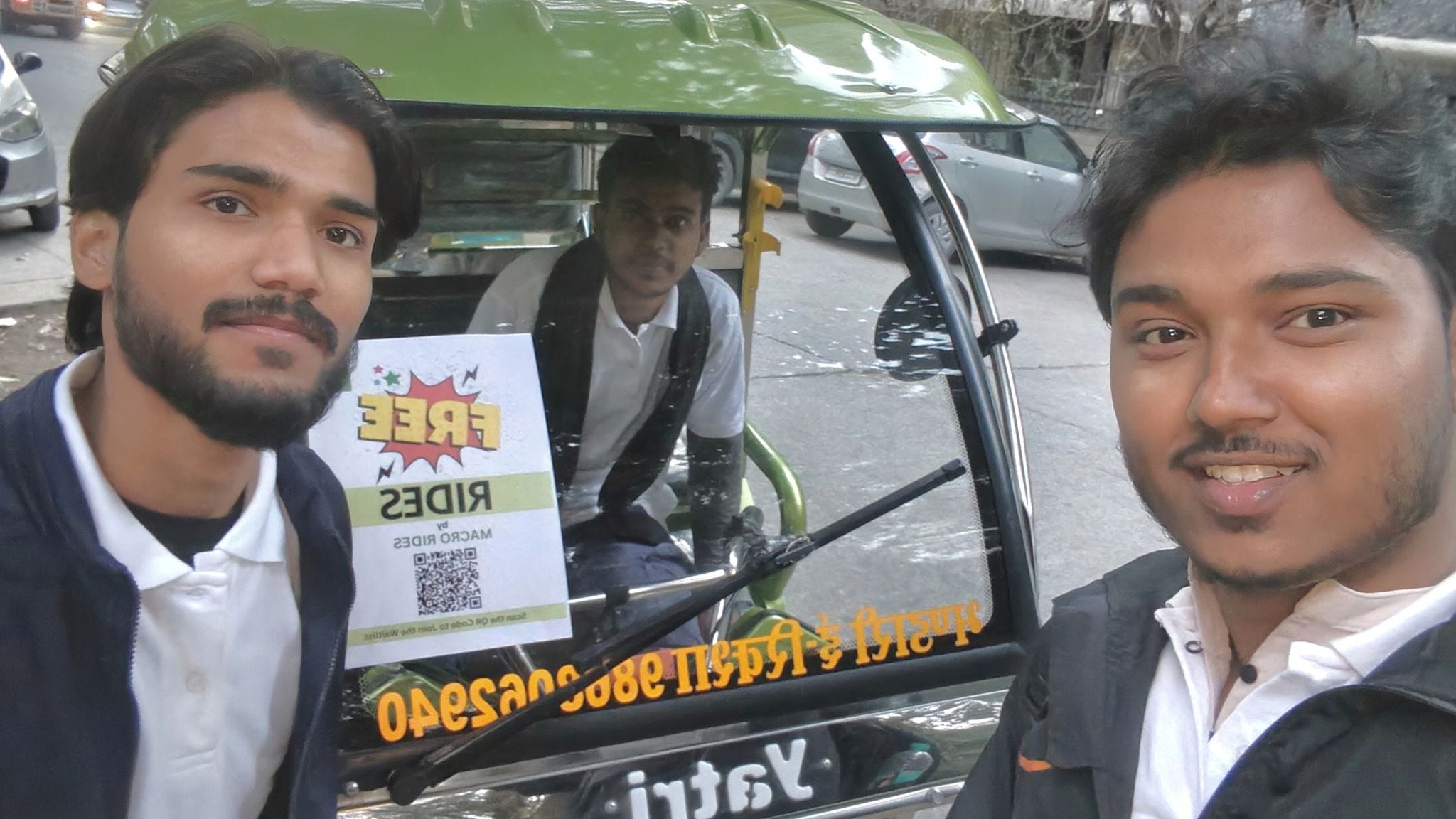
Earlier this year, Alok rented a rickshaw from a driver in Rohini for ₹800 — about what the driver normally makes in a 12-hour shift. He worked the route himself for 8 hours and ran 30+ trips.
What he learned in one day:
Drivers spend 40% of their day empty, rolling between fares
Passengers wait 10–15 minutes at stands for a ride to start
Fare haggling burns over a minute per pickup
At the end of the shift, the driver asked him one question.
“Bhaiya, yeh roz ho sakta hai kya?” (Brother, can this happen every day?)
The driver wasn’t asking about ride volume.
He was asking about predictability. The real product Macro Rides has to build isn’t a marketplace. It’s a guaranteed paycheck for someone who’s never had one.
Why did everyone else get this market wrong?
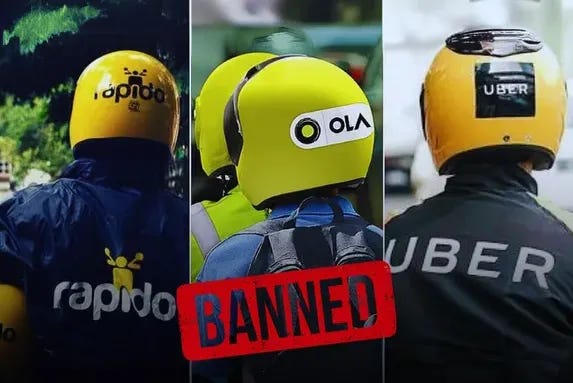
Two failure patterns explain why this category is still wide open.
The cab-hailing model doesn’t fit a 3-km ride.
Uber and Ola priced for 10+ km trips in cars. A ₹35 e-rickshaw ride generates less margin than their driver incentive payouts. Uber India spent ~$295M (₹2,516 Cr) on driver incentives last year alone to retain captains who were defecting to Rapido. The economics don’t work below a certain trip length.The one VC-backed company that tried e-rickshaws bought too much.
OyeRickshaw raised $13.2M from Matrix Partners, Chiratae, and Xiaomi between 2017 and 2022. They built 15 battery-swapping stations, scaled to 400 employees, and added hyperlocal delivery. Last year’s revenue: ₹57,500 (~$680). They became a fat company in a category that needed a light one.
The model that is working in India right now is the daily-subscription one — Rapido and Namma Yatri both took zero commission and charged drivers ₹20–₹30 a day. Rapido is now operationally profitable. Namma Yatri did 130 million rides on $5M.
Macro Rides is applying that model to e-rickshaws.
What is the opportunity here?
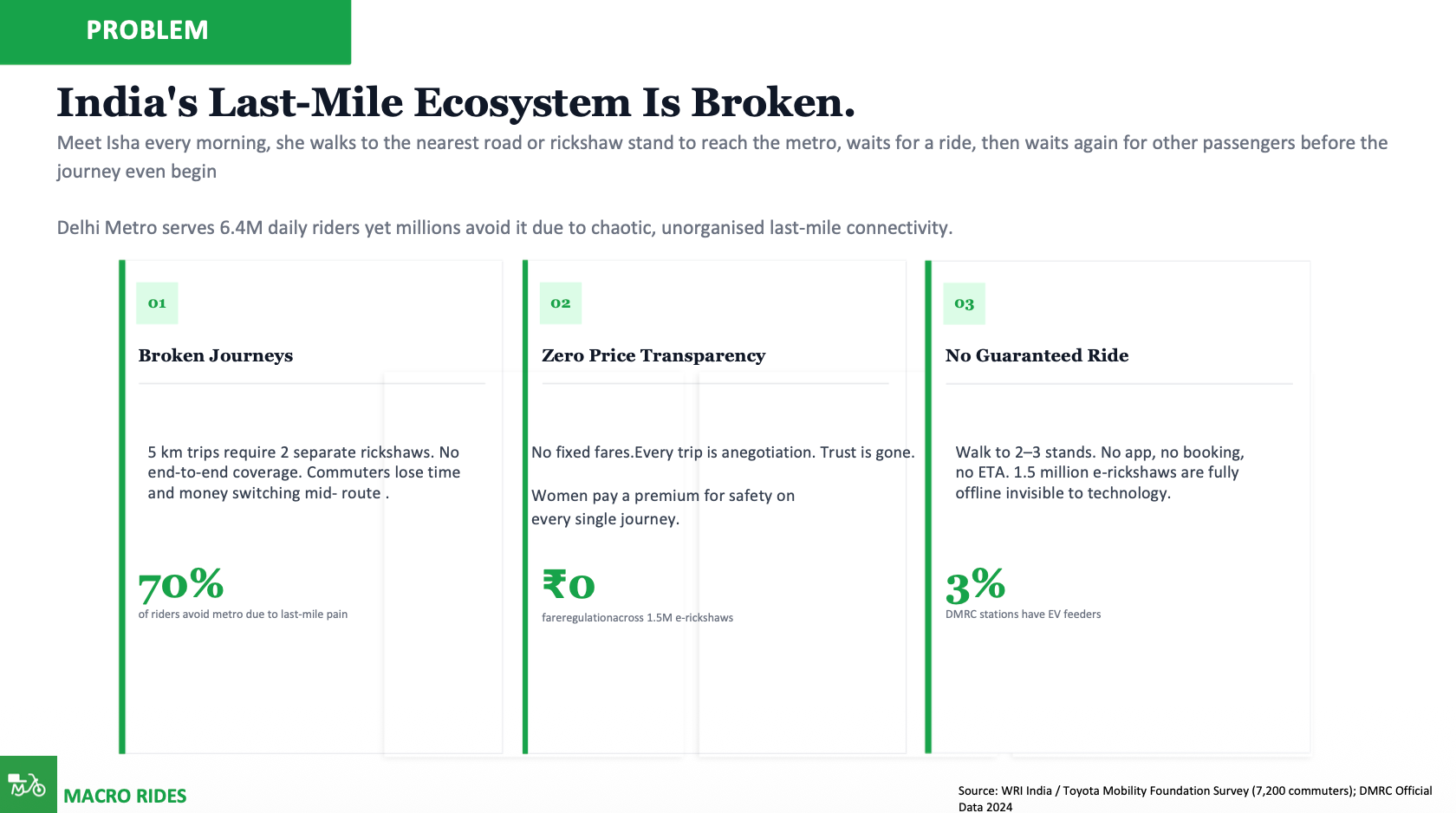
Three numbers matter here.
India has about 1.5 million e-rickshaws on the road today. They are everywhere. None of them have any technology. No app. No GPS booking. No fixed prices. Just drivers, vehicles, and stands.
The total amount of money spent every year on this kind of short e-rickshaw travel is somewhere around $1 billion in India. That is a big pie, and right now nobody is organizing it.
The Delhi Metro alone has 4.6 million people riding it every single day. Most of them have to deal with this last-mile mess.
So the opportunity is: take the messy, offline e-rickshaw system, put a phone app on top of it, and become the company that helps millions of people get to the Metro every day.
There is also a bigger pattern in India that helps explain why this is interesting right now.
What Macro Rides is actually building?
One app. The rickshaw comes to your door. The fare is fixed before you get in.
Three things make it work:
1. The rickshaw comes to you. No walking to a stand. No haggling. Pickup in 2-3 minutes.
2. Drivers earn more. They pay a small daily fee (₹50-150) and keep every rupee passengers pay. Rapido and Namma Yatri proved this model works. Nobody has tried it with e-rickshaws yet.
3. The company owns nothing. OyeRickshaw bought rickshaws, batteries, and a 400-person team. They died. Macro Rides owns zero vehicles. Just the app.
Pricing is simple: ₹35 for a shared seat, ₹50 for a private ride.
They launch one zone at a time. Rohini first. Then corridor by corridor across D
The team
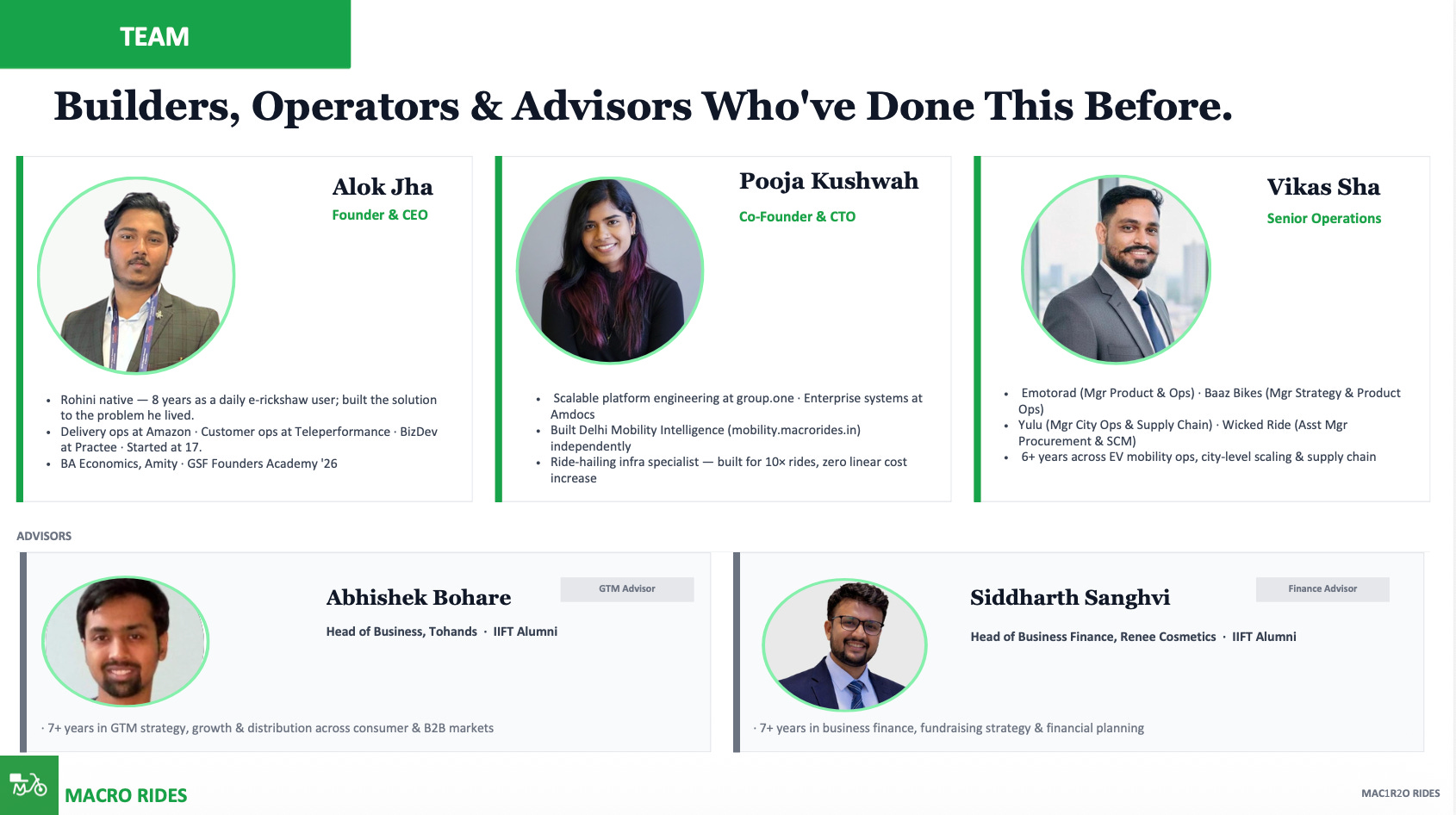
Alok Jha (Founder & CEO). Rohini-local. 8 years lived the problem. Sales, HR, and two years inside Amazon’s delivery operations. Bootstrapped Macro Rides since June 2024.
Pooja Kushwah (Co-founder & CTO). Built platform engineering at group.one and enterprise systems at Amdocs. Built the company’s mobility dashboard solo.
Vikas Sha (Senior Operations). Six years across Emotorad, Baaz Bikes, Yulu, and Wicked Ride. EV mobility ops stack.
Advisors: Abhishek Bohare (GTM, Tohands) and Siddharth Sanghvi (Finance, Renee Cosmetics). Both IIFT alumni.
Our take
Three things stand out about this bet.
Uber and Ola can’t enter this market. A 3-kilometer ride at ₹35 is too small for them. The commission they would earn on that ride is less than what they spend to acquire a customer. The math doesn’t work for big players. That means the category is protected from the giants by default.
The business model is already proven in India. Rapido and Namma Yatri don’t take a cut from rides. They charge drivers a small daily fee instead. Rapido is now operationally profitable. Namma Yatri did 130 million rides on just $5 million. Macro Rides is copying that exact playbook — but for e-rickshaws, the one category nobody has applied it to yet.
The Delhi Metro is building 21 new stations. Each new station opens up a new neighborhood that needs last-mile rides. Every station = one more zone Macro Rides can launch in. The expansion is funded, under construction, and on schedule.
P.S. One last thing…
GVP has 565+ investor subscribers — including partners at Accel, principals at family offices in Singapore and Dubai, and angels across the US, Australia, and Europe.
If you forward this newsletter to 3 investors who subscribe, we'll make a warm intro for you to any family office or VC in our network you'd like to meet.
See you next week
If you want me to make a warm intro with this startup founder, feel free to reply to this email!
Email: jaylee@globalventureplay.com