

My dear fellow investors,
For ten years, Indian cab-hailing has been a race to the bottom.
Uber, Ola, and Rapido all chase the same rider, the one counting every rupee, the one who will switch apps to save twenty.
So they slash prices, pour money into discounts, and burn cash to win him over.
What none of them built for is the second rider. The one who would gladly pay more for a clean car that actually shows up on time.
For a long time, that rider had nowhere to go. Then came BluSmart. It gave that rider exactly what they wanted. It put 8,700 electric cabs on the road, gave more than 25 million rides, and made close to $98 million (₹820 crore) in a year.
Their promise was a fixed price, no sudden surge, a clean car, and a driver who would actually show up.
Then it shut down… due to some financial fraud.
But the people who wanted those rides did not go away. It proved that india has a market for premium cabs.
That is the market Naviget is going after
Where are these premium customers?
There is a myth that India will not pay for premium.
It is half true and going out of date fast.
India is not one market, but three countries stacked together.

India 1 is the small top layer, made up of tens of millions of people who earn, spend, and consume like a rich country.
India 2 is the large aspiring middle, with hundreds of millions of people who want better products, better jobs, and a better lifestyle, but still need strong value for money.
India 3 is the largest layer, where people have very limited disposable income and most spending goes toward basic needs like food, housing, healthcare, education, and transport.
The cab giants all fight over India 2, where price wins every time.
But it is India 1 that happily pays more for convenience, and nowhere more so than for the trip to the airport.
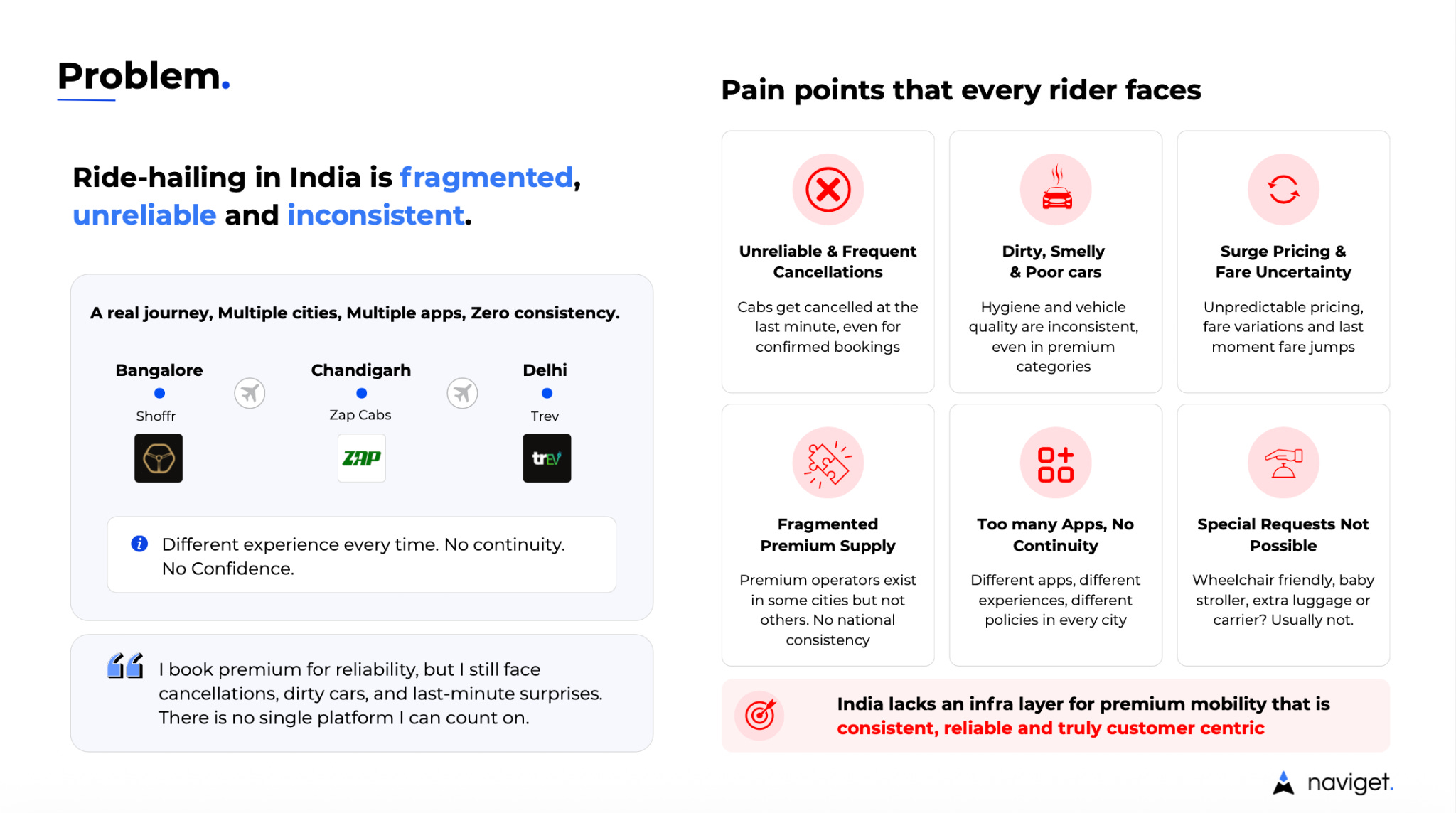
That is where Naviget started, in Bangalore.
The city’s airport handled 43.82 million passengers last year, making it the second busiest in India, and on its busiest day, more than 137,000 people passed through.
It sits about 35 km from the city, which is too far for anything but a cab for most travellers.
By our estimate, somewhere between a quarter and a third of those passengers take a taxi, which works out to roughly 30,000 to 40,000 airport cab trips every day at this one airport.
A ride between the city and the airport runs ₹700 to ₹1,100 ($8 to $13), and that is before Uber’s surge pricing kicks in during peak traffic.
So that is the slice Naviget began with, one high-value lane where the rider already wants something nobody sells well.
What makes them different
When you schedule a cab on Uber, it feels reserved, but it is not.
The app waits until your pickup time and then looks for a driver, the same as any normal booking. That is why a driver can still cancel on you, and on the big apps most riders have faced exactly that.
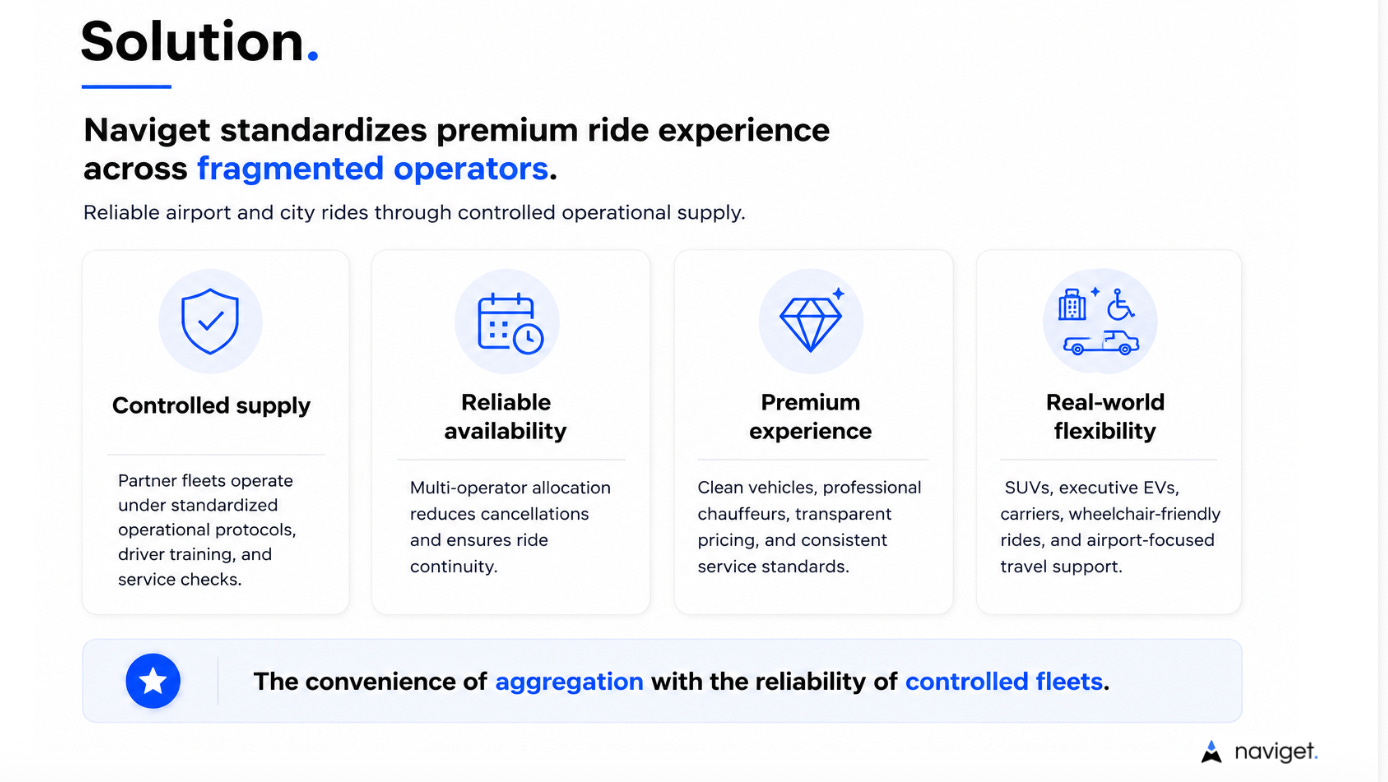
Naviget works the other way around. It does not offer your ride to drivers and hope one accepts. It assigns the ride, and an assigned ride cannot be declined.
If a driver has a real emergency, the trip moves instantly to another driver in the same fleet, so your booking never collapses.
Every driver comes through a verified fleet operator who has already checked them, which is why the car shows up clean and nobody cancels.
Their business model
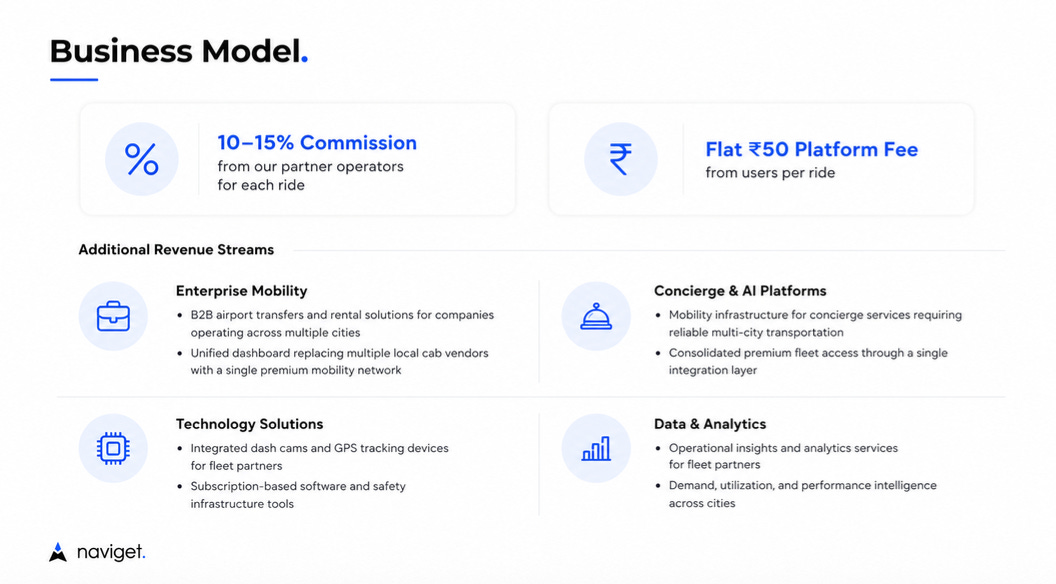
Naviget owns no cars and employs no drivers.
It sits on top of professional fleet operators who already own the vehicles and gives them the technology they were missing.
The partners bring the cars and the people. Naviget brings the app, the fixed pricing, and the standards.
The money comes in two simple ways:
A small cut from the fleet operator on each ride.
A flat platform fee from the rider on top.
There is no surge and no last-minute jump, just a fixed price the rider sees before booking.
And if Naviget ever cancels on you, it pays back double.
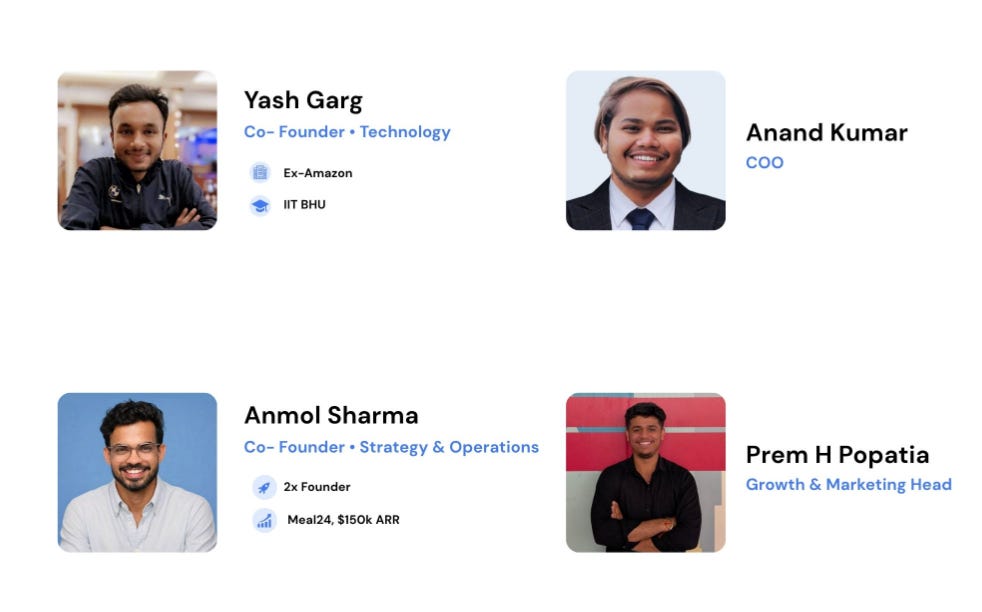
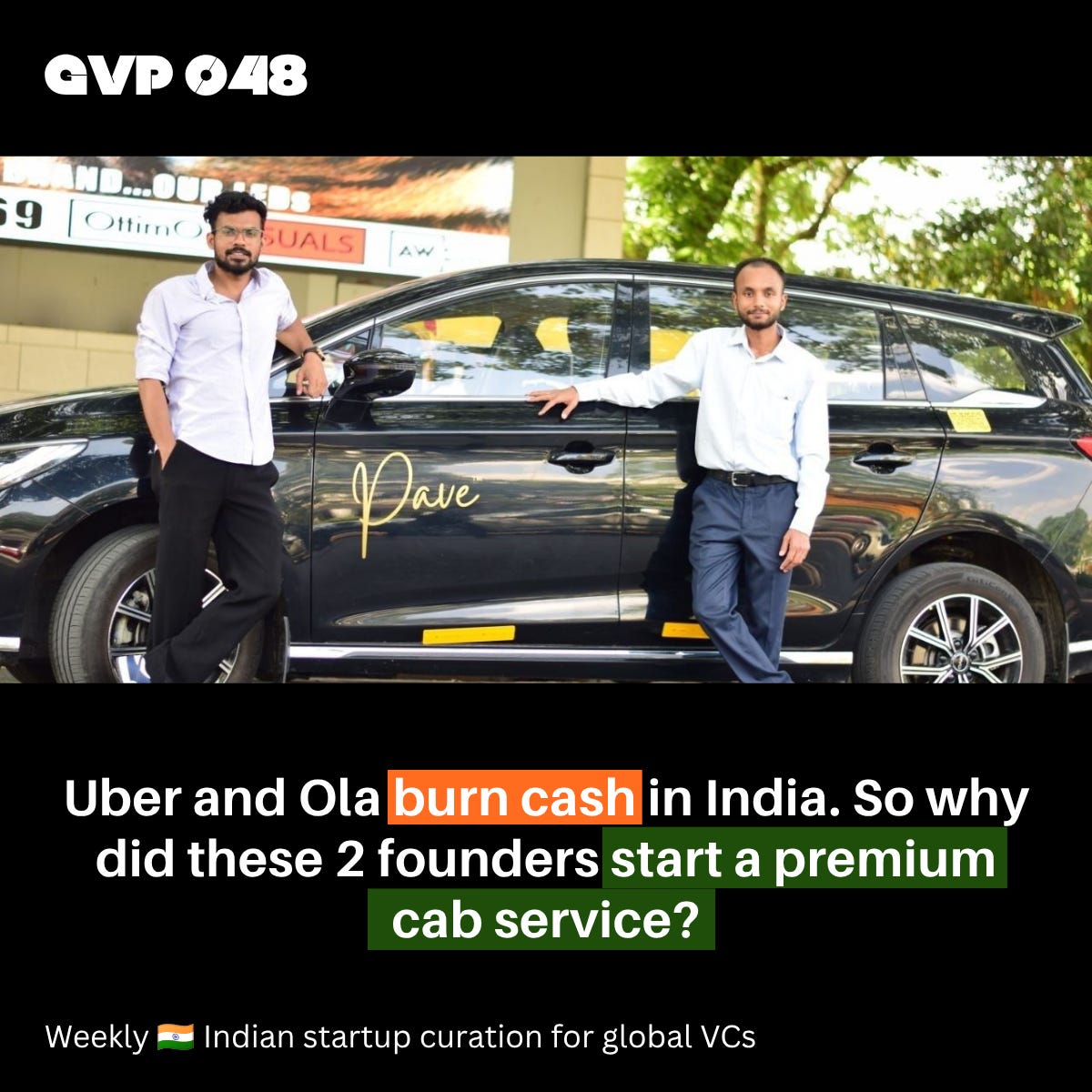
Anmol Sharma (Co-founder, strategy and operations). Started building young. His first company, Meal24, was a food-delivery startup he scaled past ₹1 crore in revenue before it shut down. He has been a founder twice over.
Yash Garg (Co-founder, technology). An IIT-BHU graduate who worked at Amazon before this, with hands-on experience building tech-driven systems.
What stands out is how they found this idea.
They did not start with cabs. They first built a simple tool to compare cab prices across apps, and it pulled in 5,000 users in a single day.
But watching those users taught them something that changed everything.
People were not really hunting for the cheapest ride.
They wanted a ride they could trust to show up. So they stopped building a tool that finds the cheapest cab and started building one that makes sure a good cab actually arrives, every time.
That one shift in thinking is the reason Naviget exists.
The traction
Naviget has done all of this without spending a rupee on marketing.
In about three months it completed more than 2,500 rides, almost entirely in Bangalore.
The number that matters most is repeat usage.
Around 70% of riders came back for another trip, which is the clearest early sign that the service is keeping its promise. People do not return to a cab out of loyalty. They return because it worked.
The average ride is worth about ₹1,400, so these are high-value trips, not cheap hops. And the early validation goes beyond individual riders. Naviget already serves as a mobility partner for concierge platforms like HULP and CREW by Swiggy, which use it for premium airport and executive travel.
So far it has never cancelled on a rider, and it backs that with a 2x refund if it ever does.
GVP TAKE
A lot of founders would look at BluSmart’s collapse and see a warning. Naviget’s founders looked at it and saw a map. That is the thing that gives me conviction here.
BluSmart already ran the expensive experiment and proved the hard part, that millions of Indians will pay more for a cab that simply works.
It died from fraud in the company that owned its cars, not from weak demand.
Naviget is chasing that same proven demand, but it owns no cars and carries no fleet debt, so the exact thing that killed BluSmart cannot kill them. They kept the promise and threw away the part that was fragile.
Two more things stand out:
They started in the one place where reliability is worth paying for. A missed flight costs thousands, so paying a little more for a cab that shows up is an easy yes. It is a narrow wedge, but it is the right one.
The early numbers point the right way. A 70% repeat rate with zero spent on marketing is the strongest signal a young, reliable business can show, because people only come back when the promise is held.
The gap will not stay empty. The giants can move the moment it looks worth defending.
P.S. One last thing…
GVP has 625+ investor subscribers — including partners at Accel, principals at family offices in Singapore and Dubai, and angels across the US, Australia, and Europe.
If you forward this newsletter to 3 investors who subscribe, we’ll make a warm intro for you to any family office or VC in our network you’d like to meet.
See you next week
If you want me to make a warm intro with this startup founder, feel free to reply to this email!
Email: jaylee@globalventureplay.com