

$8,300. Seven co-founders. One food truck in a small Kerala town, run until 3am while they were all still in college.
Eight years later: 8 outlets across Kerala and Bangalore. Daily Bakehouse at 25% EBITDA.
“Eating out in India is still considered an occasion. We want to make it a habit.”
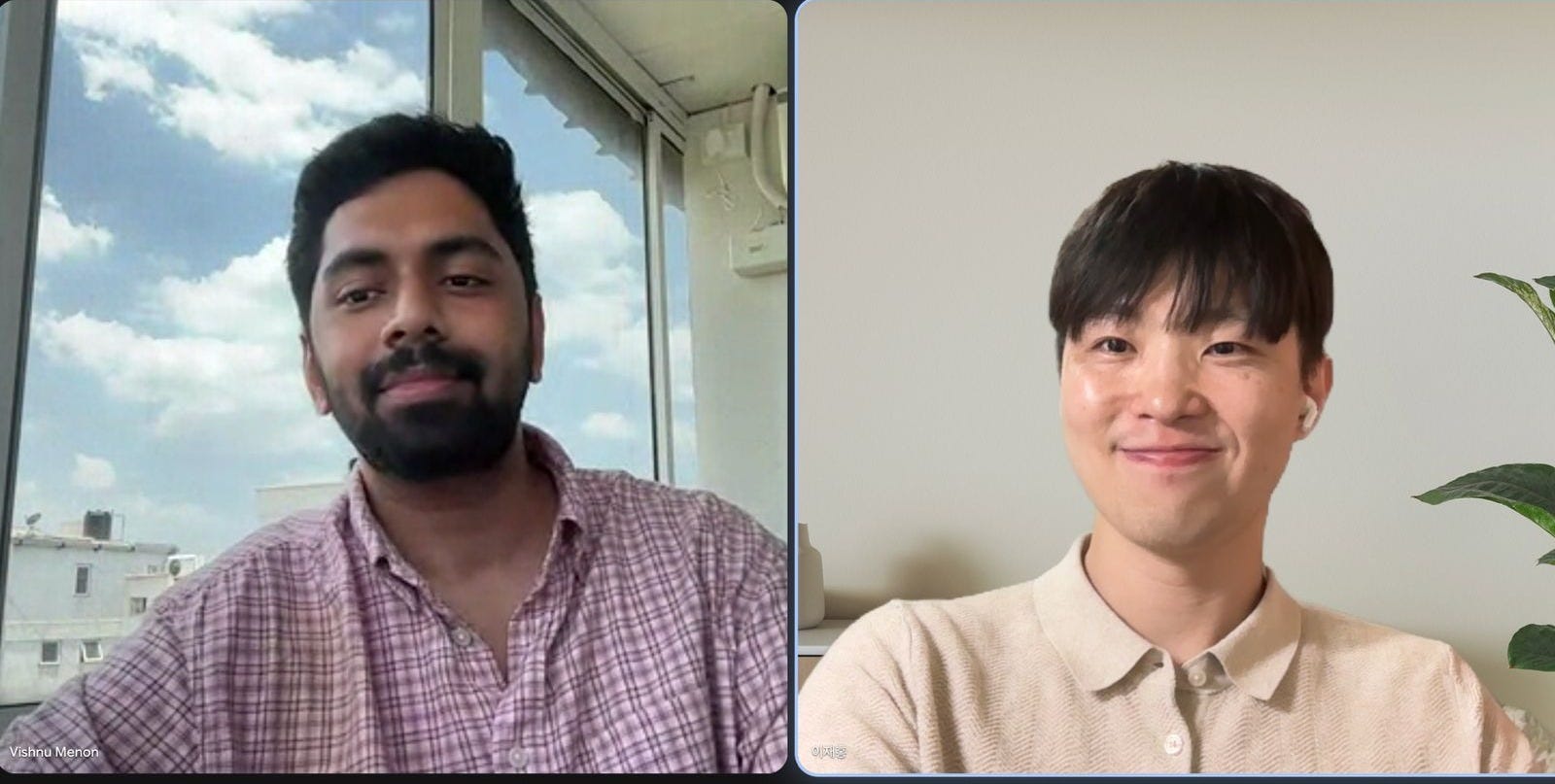
I sat down with Vishnu Menon, CEO of Tableset Pantry, the parent company behind Just Love and Daily Bakehouse. I took some notes and have added them below.
1. Start Before You’re Ready
Vishnu and his six co-founders launched a food truck with no F&B experience and no consultant. They were engineering and architecture students running the truck from evening to 3am, then heading to class the next morning. The hardest part wasn’t the hours. It was learning an industry they had already entered. That forced speed of learning is now their operational edge.
2. The Engineering Mindset in F&B
Every co-founder came from a technical background. That turned out to be an advantage, not a liability. Where most founders see a restaurant, Vishnu saw a system: central kitchen, supply chain, replicable formats, predictive ordering. Eight years in, that systems thinking is what makes a 300 sq ft outlet with 2 employees operationally viable at scale.
3. Occasion-Led to Habit-Led
India’s F&B market is massive but culturally underutilized. Eating out is still treated as a special event, not a daily norm, held back by the gap between affordability and quality. Tableset Pantry’s entire thesis is closing that gap: engineered pricing at $0.60 to $2.40, hot food (Indians don’t eat cold sandwiches), and formats small enough to be everywhere. Turn dining out into routine, and the TAM rewrites itself.
4. The Daily Bakehouse Model Is the Bet
300 sq ft. 2 employees. Grab-and-go. Products supplied from central kitchen. Three visits per customer per day, breakfast, lunch, evening, each under $2.40. This is the brand they’re raising to scale, not Just Love. Just Love generates 90% of current revenue and anchors the brand. Daily Bakehouse is the expansion vehicle.
5. Location Is Not a Soft Decision
After 8 years and bad locations, Vishnu runs a three-filter process: Is this an F&B hub where people cluster to choose? Is our target audience here? Do the rentals fit within our hardcoded percentage of revenue? Daily Bakehouse doesn’t go into malls or high streets. It goes into airports, railway stations, and tech parks, where people are already moving and need fast, affordable food. The product is strong enough that the wrong location is the only way to lose.
6. Starbucks Is the Warning, Not the Benchmark
400 outlets. 10 years. Still not profitable in India. That’s what happens when you price coffee at $4.76 in a tea-drinking country. Tableset Pantry’s brands are affordable by design, not by discount. No coupons, no offers. The price is just right for the market. Premium formats in India are losing because they solve a Western problem. Vishnu is solving an Indian one.
7. AI Is an Operations Tool, Not a Story
Vishnu isn’t building an AI startup. But he’s using it: production planning, consumption forecasting, staff quality monitoring via cameras, internal reporting summaries. The ambition is to predict order patterns by outlet by hour using 24 months of data, reducing waste and improving efficiency. AI tightens the engine. The engine is still food.
8. Family Offices First, IPO in Ten Years
The Phase 1 raise is $1.4M, too small for most VCs and right-sized for family offices. Vishnu isn’t chasing institutional money or a quick exit. The target is full India coverage across both brands, then a public listing in 10 years. Cure Foods, which acquired multiple F&B brands and is now heading to IPO, is the local proof point that the playbook works.