

In Vasant Kunj, an elderly man suddenly became unconscious at home. His family was nearby, but in that moment they felt helpless.
One of his relatives pressed the DrRing SOS button he carried with him, and the alert went to a command centre at the Indian Spinal Injuries Hospital nearby. The hospital team called the family, dispatched an ambulance, and the man got help.
It is the kind of emergency most families do not think much about until it happens. If an older person falls, suffers a stroke, or loses consciousness at home, the first problem is:
How does somebody know they need help, and how quickly can that help reach them?
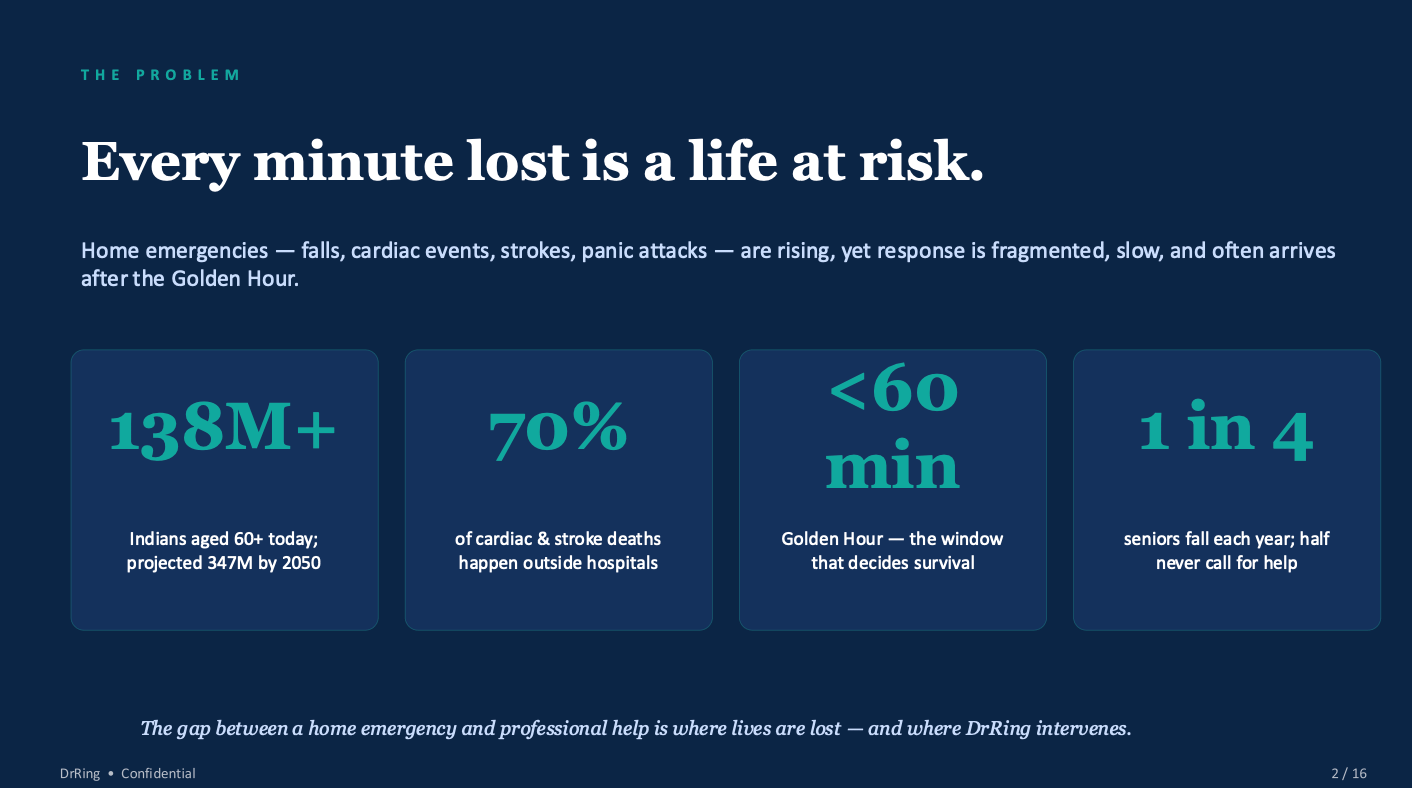
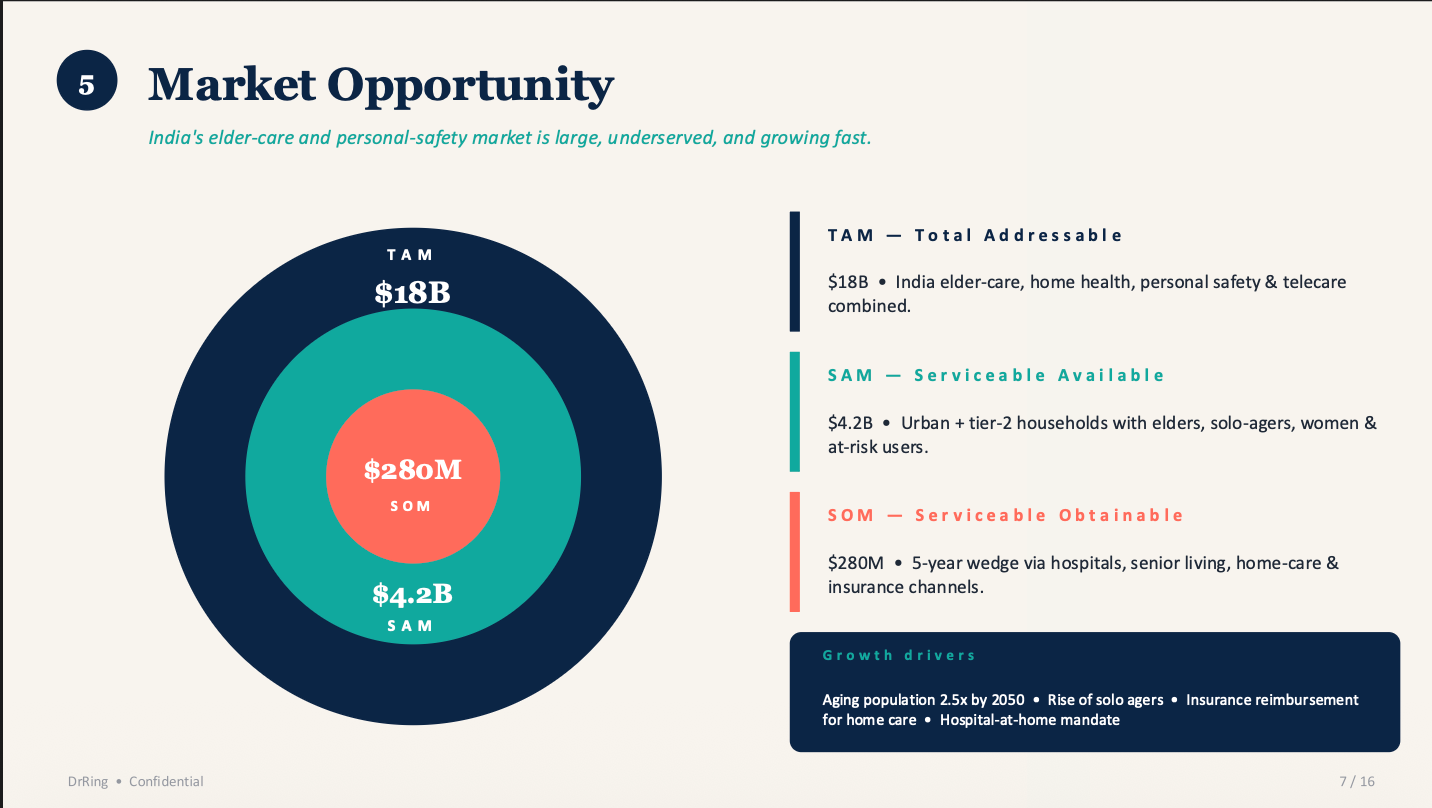
India already has around 153 million people over the age of 60. By 2050, UNFPA expects that number to reach roughly 347 million.
And the problem is not small even today.
India’s Longitudinal Ageing Study found that about 13% of Indians over 60 had experienced a fall.
In a recent study of 683 stroke patients across 13 hospitals in West Bengal, nearly 57% reached a stroke-ready hospital more than 4.5 hours after symptoms began. Patients who were alone when the stroke occurred had much higher odds of arriving late.
The minutes between life and death
The simplest way to understand DrRing is this: the wearable is only the first step.
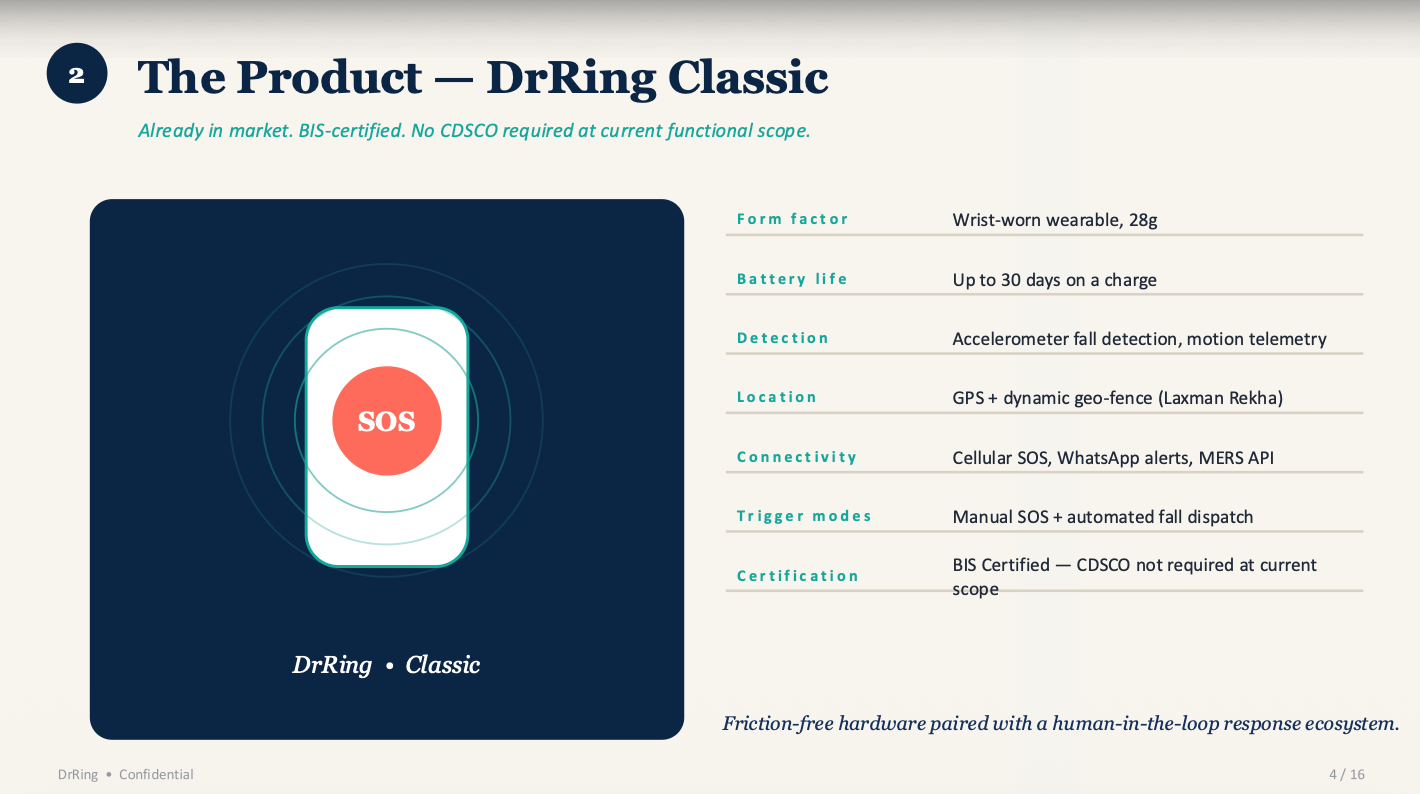
If a senior presses the SOS button, or the device detects a fall, an alert is sent with their location. From there, the system tries to figure out what kind of help is needed and who should respond.
That could mean a family member, a caregiver, an ambulance, or a nearby hospital.
DrRing is also building command centres with hospitals, so in some areas the alert can go directly to a medical team instead of stopping with a notification on somebody’s phone.
That is what happened in Vasant Kunj.
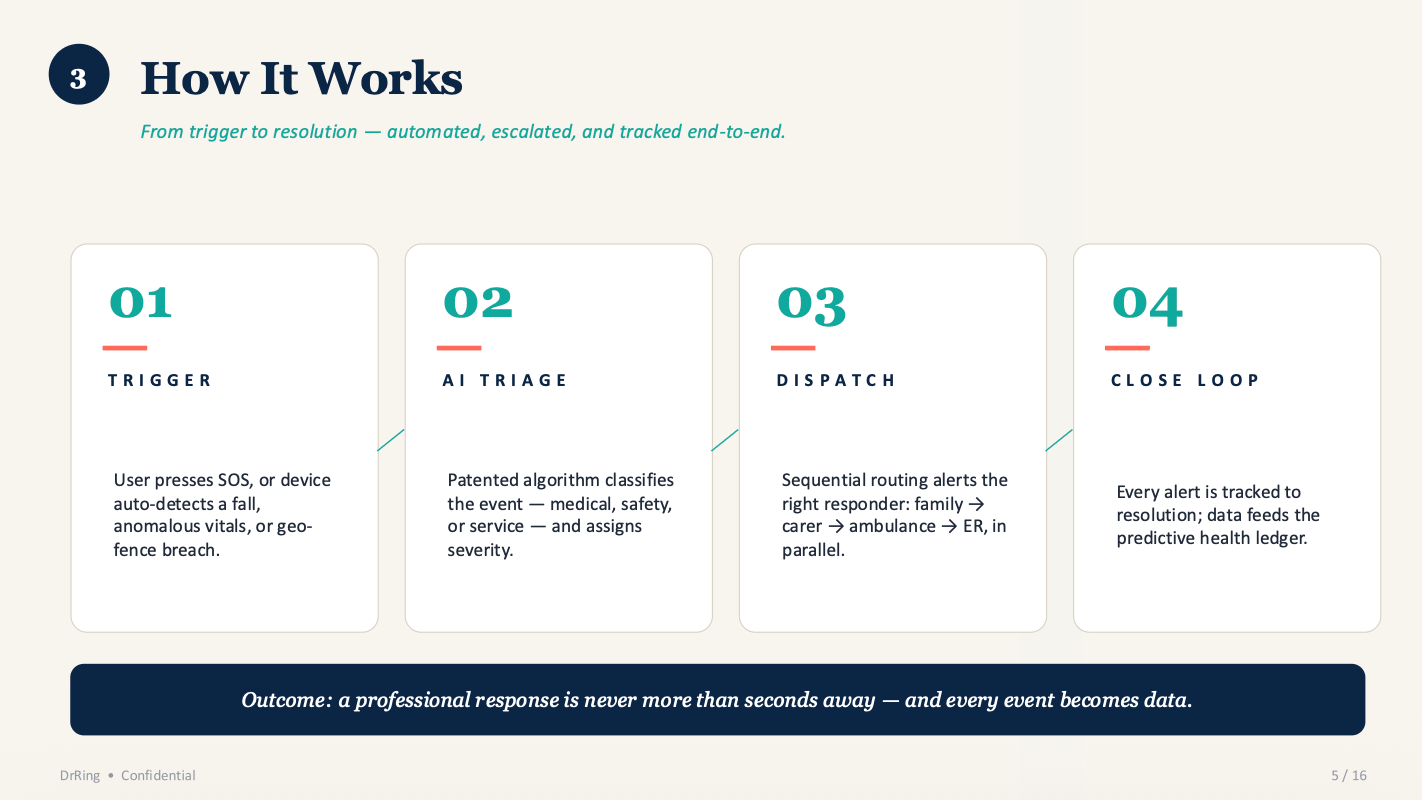
The company describes the process in four parts:
Detect: the wearable identifies a fall or receives an SOS.
Triage: the system classifies the situation and decides how serious it may be.
Dispatch: the right person or service is alerted.
Close the loop: the case is tracked until somebody responds.
The important part is what happens after the alert.
There are already plenty of devices that can detect falls. Apple Watch can do it. Other emergency wearables can do it too.
DrRing is betting that the harder problem in India is building the network that responds once the alert goes off.
Their customers are wearing their product
DrRing initially assumed seniors would keep the SOS device on them. Some didn’t. They left it beside the bed, forgot to charge it, or simply took it off.
If someone falls in the bathroom while the button is in another room, the entire response system becomes useless.
So the team started experimenting with a silver ornament version, fixed SOS buttons near beds and bathrooms, and voice integrations with Alexa and Google Home.
They are slowly moving from one wearable to multiple ways to call for help inside the home.
Made for seniors, by seniors
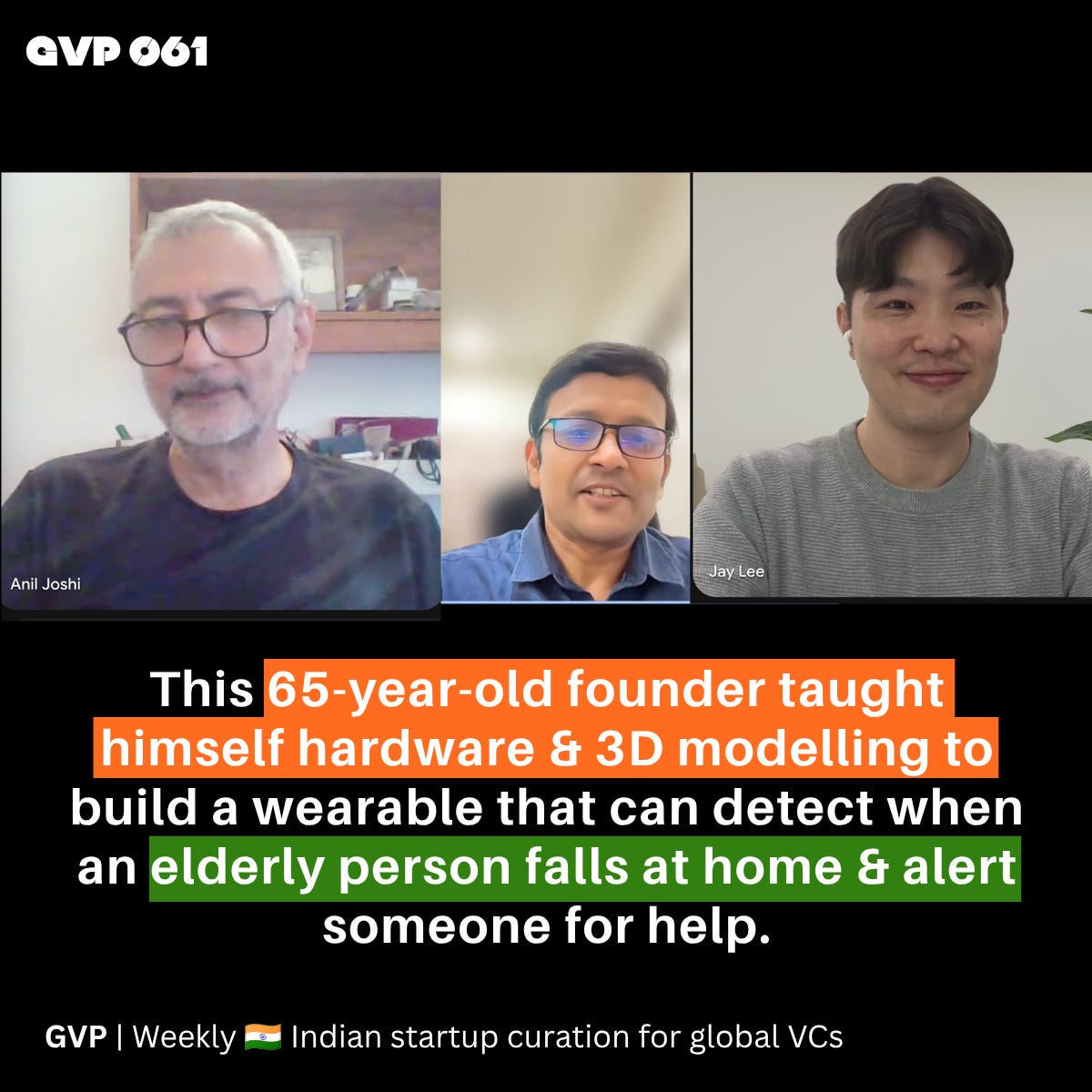
One of DrRing’s founders, Anil Joshi, is 65 himself.
He has spent around 15–20 years working in healthcare technology. Before DrRing, he worked on an early personal-health-records product built around Microsoft HealthVault. Younger founders may understand the technology, but living through ageing makes the everyday risks more obvious.
What makes his story more interesting is that he did not come from hardware.
When DrRing started, Anil had never built a wearable. Over the next two to three years, he learned how to assemble devices, work with 3D models, and install the systems himself.
Anil and Parag have also known each other since 2012, when they first worked together on a healthcare product built around Microsoft HealthVault.
The bigger opportunity is not selling directly to consumers
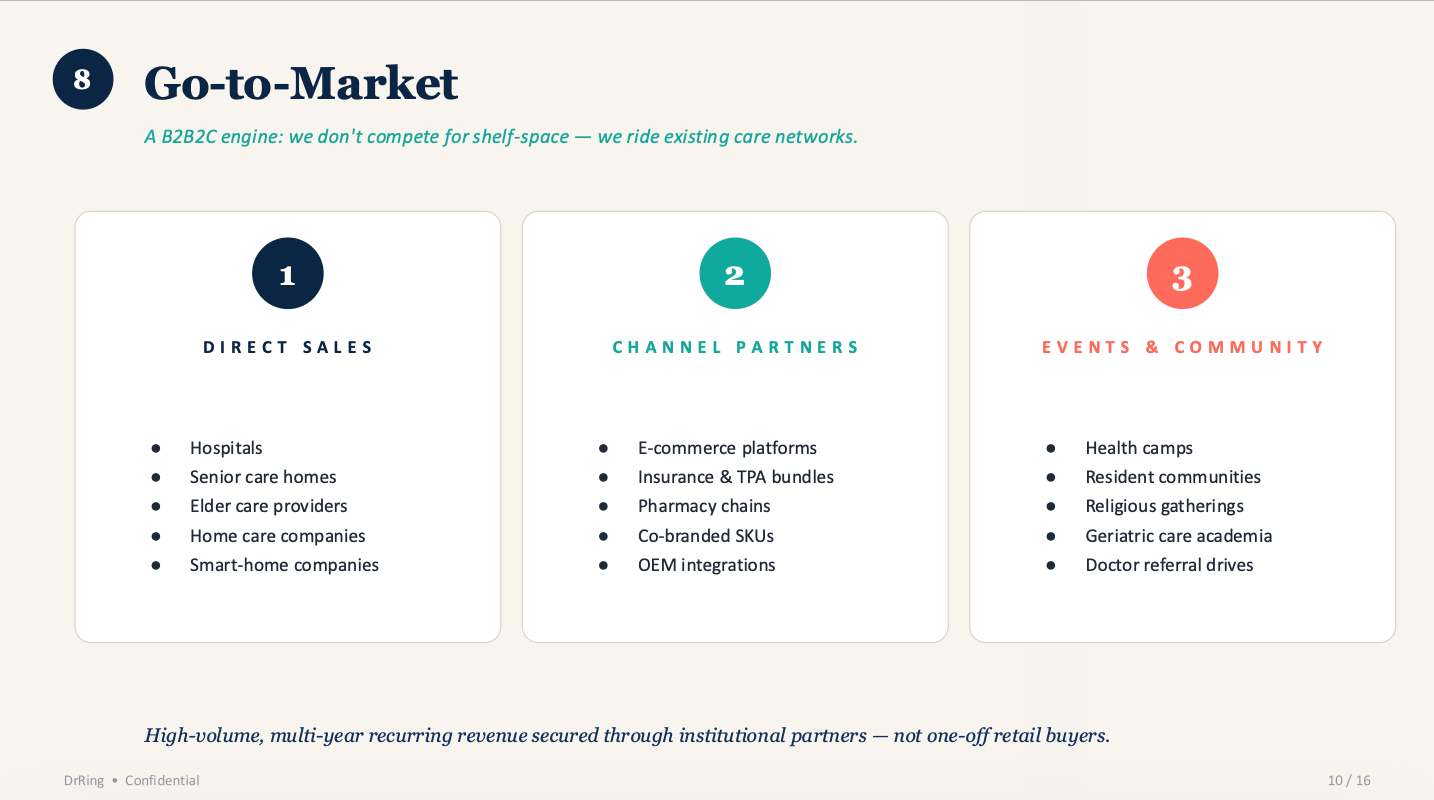
DrRing can sell directly to families through digital channels and Amazon, but that is not where the model becomes interesting.
The bigger distribution path is through hospitals, senior-living operators, elder-care companies and home-healthcare providers that already serve the people DrRing is trying to reach.
That changes the economics. Instead of convincing every family from scratch, one institutional partner can bring DrRing into hundreds or thousands of homes.
It also fits the product better. A hospital or elder-care provider does not just help distribute the device; it can become part of the response network behind it.
That is why DrRing is trying to build distribution and emergency-response partnerships at the same time.
They have already processed 3,000 alerts
DrRing started selling its current product around August 2025.
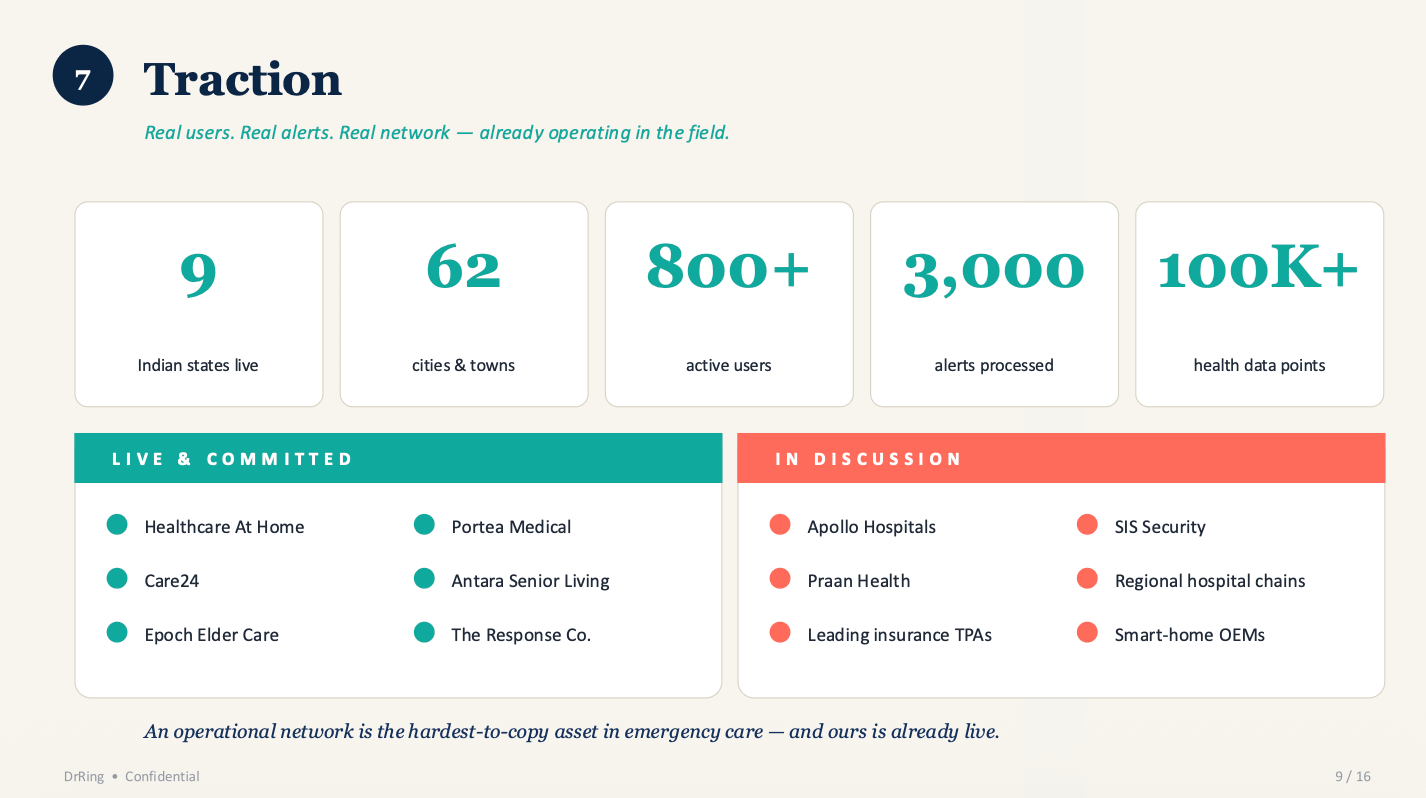
Since then, the company has reached:
800+ active users
3,000 alerts processed
62 cities and towns
100,000+ health data points collected
The founders say that presence has since expanded to 21 states and that they are approaching 1,000 families
In Delhi, DrRing has started integrating command centres with hospitals, which is what allowed the Vasant Kunj case to move from a button press to an ambulance dispatch.
For an early-stage company, that is useful validation.
Why not just use an Apple Watch?
Apple Watch and other devices can already detect falls and trigger emergency alerts.
DrRing is trying to solve what happens after that alert.
Its system can escalate from family members to carers, ambulances and hospitals, and track the emergency until someone responds.
That is the bet behind DrRing: the device detects the problem, but the response network gets help to the person.
GVP Take
Their early proof is promising. The company has hundreds of active users, thousands of alerts processed, and a few real emergencies where the system led to medical help.
But the next stage is much harder.
Emergency response is local. The quality of the service depends on which hospitals, ambulances and care partners DrRing has in each area. So the company now has to prove that it can expand this network without response times or reliability getting worse.
For us, the numbers to watch are paying subscribers, renewals, real emergency response times, false alerts, and how many cities have live hospital or ambulance coverage.
If those numbers improve as the network grows, DrRing could become more than a wearable company.
If DrRing can scale its hospital and ambulance network, it could become the system families rely on when an elderly parent has an emergency at home.
Want an intro to the founders? Just reply to this email.
P.S. One last thing…
GVP has 683 investor subscribers — including partners at Accel, principals at family offices in Singapore and Dubai, and angels across the US, Australia, and Europe.
If you forward this newsletter to 3 investors who subscribe, we’ll make a warm intro for you to any family office or VC in our network you’d like to meet.
If you want me to make a warm intro with this startup founder, feel free to reply to this email!
Email: jaylee@globalventureplay.com
See you next week