

Hi there,
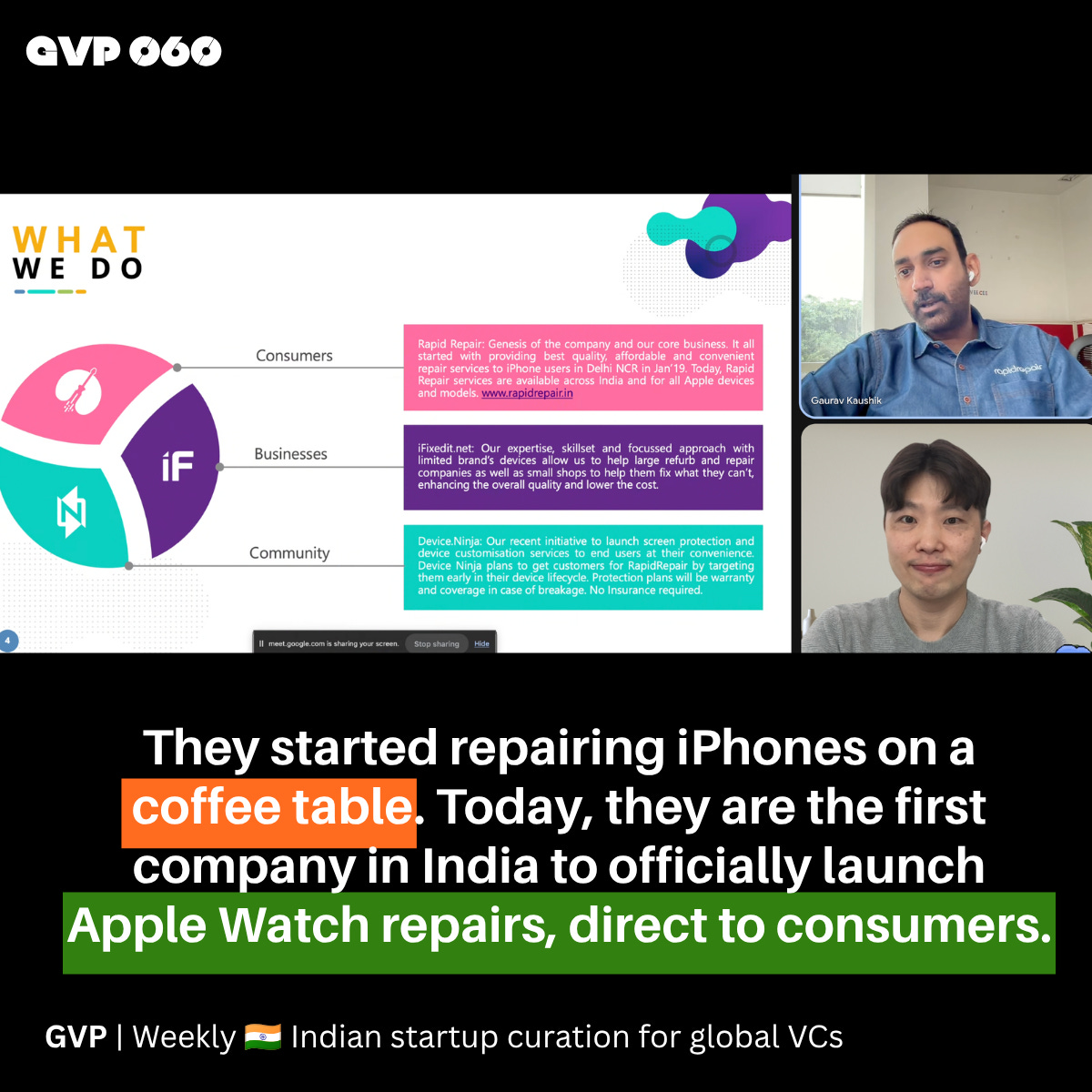
Gaurav Kaushik and Vivek Chauhan were picking up customers’ iPhones in their own cars.
Sometimes, they didn’t know how to fix what they had collected.
They had started with a basic landing page and were driving around Delhi NCR, buying spare parts from local shops. When a repair was beyond them, they asked other repair shops for help.
The work happened at home, on a coffee table. Once a device was fixed, they drove it back to the customer.
Those were the first days of Rapid Repair.
To understand why customers would hand over their iPhones to an operation like that, you have to look at the options they had when something broke.
Apple users ironey when their device needs repair
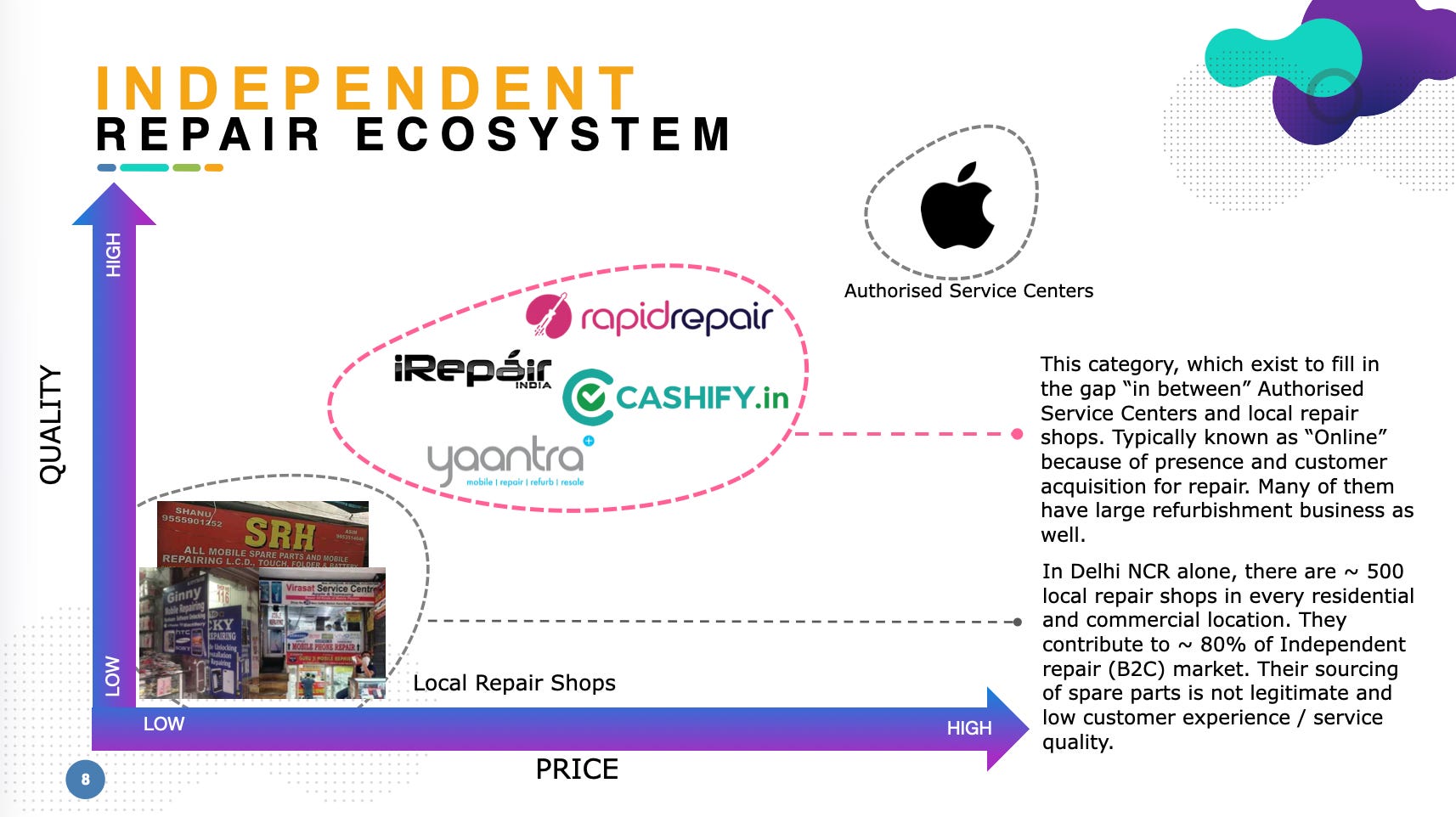
In India, Apple users have two options when their devices need service:
An authorised service centre: repairs are reliable, but they can be expensive, and the scope of what gets repaired is limited.
An independent repair shop: repairs can be cheaper, but the quality of the work, replacement parts and warranty can vary from one shop to another.
4 in 10 Indian smartphone users needed multiple service centre visits before their issue was resolved, while 43% felt repair costs were somewhat high to very high.
For an $800 or $3000 device, that uncertainty matters.
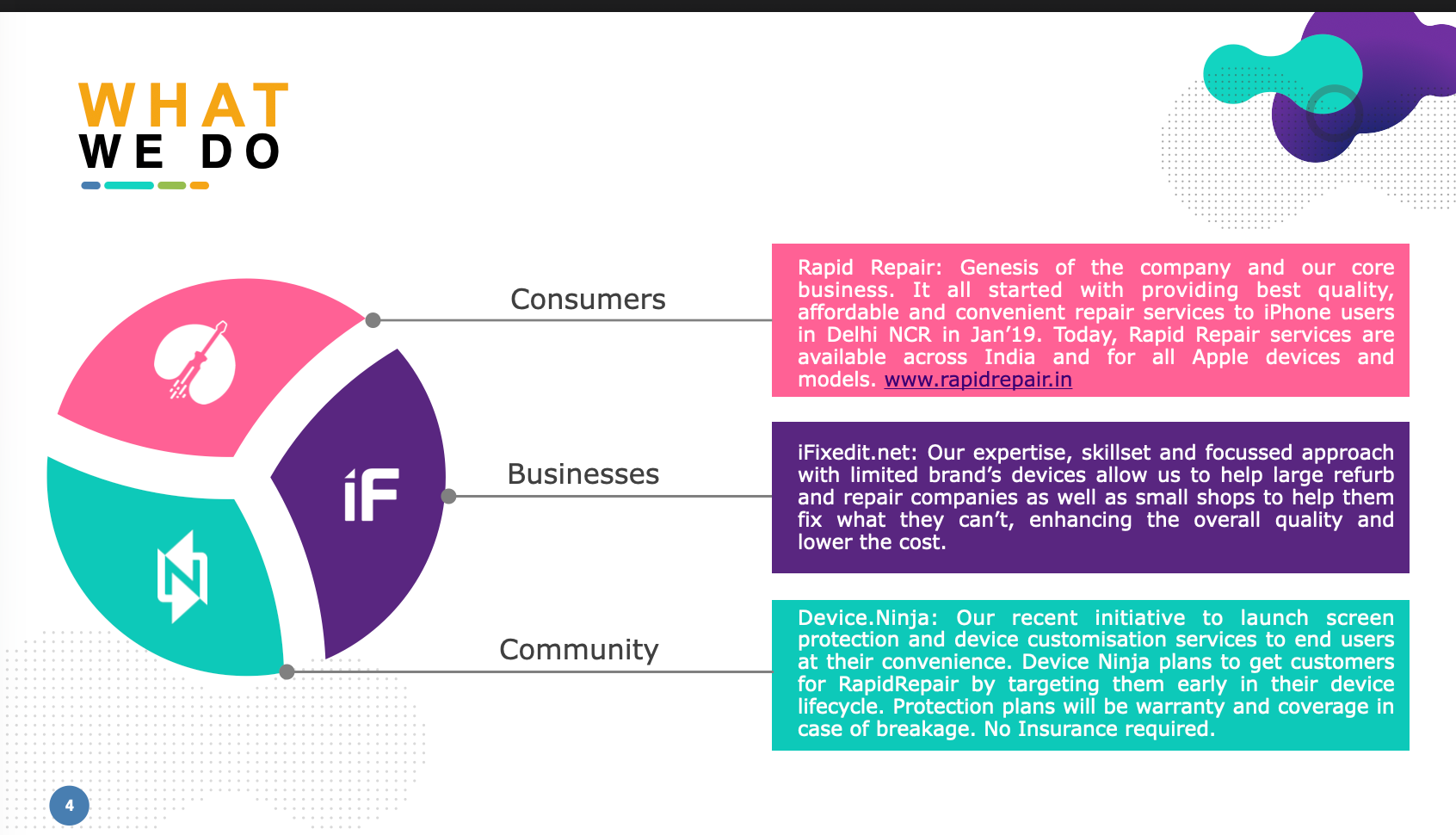
Rapid Repair is an independent repair service focused on Apple devices. It is the consumer business inside iFixedit, repairing iPhones, iPads, Apple Watches and MacBooks through a central repair operation in Gurgaon.
Customers can send in devices through pickup, drop-off, and mail-in services. The company has built its own parts supply chain, inventory systems and repair workflows around that operation.
It aims to give customers a consistent service, including difficult repairs, without needing a repair shop in every city.
More expensive products need high maintenance
As people spend more on a phone, keeping it working for longer becomes more valuable. That gives a specialist repair business a larger pool of devices worth fixing.
In 2025, phones priced above ₹30,000 accounted for a record 22% of India’s smartphone shipments. Apple captured 28% of the market by value. Source
There is also demand for a second life for these devices. India’s refurbished smartphone volumes grew 13% year-on-year in the first half of 2026. Apple accounted for around 23% of that market, but only around 20% of the overall refurbished market was organised. Source
That is the next market iFixedit wants to enter: refurbishing devices and selling them as certified pre-owned products. Its repair experience is relevant, but sourcing used devices, pricing them and reselling them will need to work too.
Further out, Gaurav wants to service devices from overseas. India’s Electronics Repair Services Outsourcing programme, launched in 2023, was designed to make the country a destination for international electronics repair. Source
The immediate business is Apple repair in India. Refurbishment and overseas repair could expand it, but both remain opportunities the company needs to prove.
What iFixedit has built
The company made one unusual decision early: stay focused on Apple.
It doesn’t try to repair every phone and laptop brand.
By March 2026, its repair mix was roughly:
48% iPhones
22% Apple Watches
18% iPads
12% MacBooks and iMacs
Today, the company has repaired more than 3,000 Apple Watches alone and is the first company in India to launch Apple Watch repairs, direct to consumers.
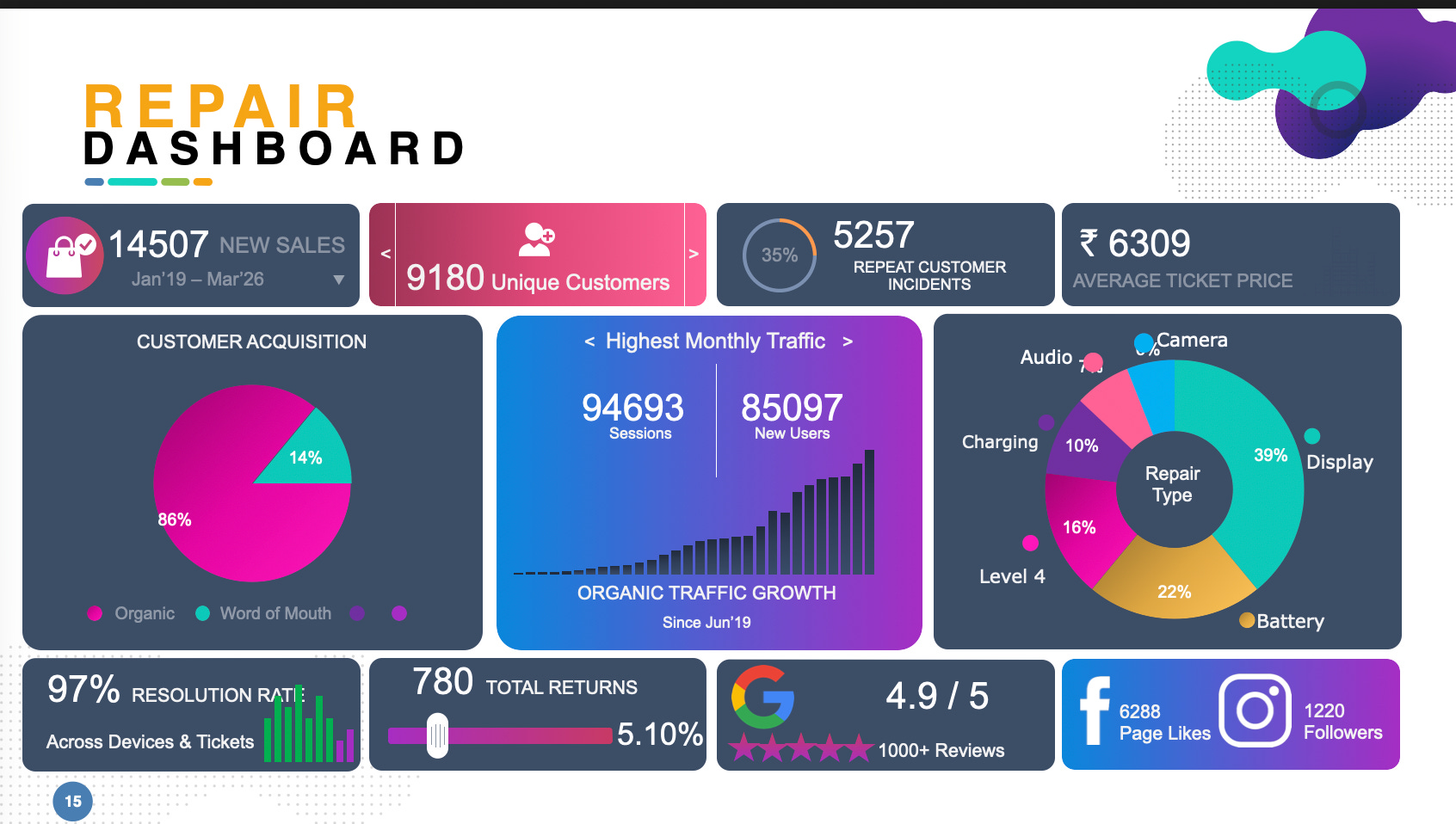
That focus also allowed them to work on repairs many and many other service provider avoid. Around 16% of the company’s repair mix is Level 4 work, which includes more difficult board-level repairs rather than simple screen or battery replacements.
But the technicians are only one part of what they have built.
Over the years, the company obtained EPR, IEC, LMPC and other licences, developed its parts supply chain, built warehousing and inventory systems, and customised Zoho around its own repair and service workflows.
Customers outside Gurgaon don’t need a Rapid Repair store in their city either.
The company uses pickup, drop, and mail-in services, which its deck says can reach 18,000 pin codes across India.
Instead of opening hundreds of general repair shops, build one specialised system that can receive difficult Apple repairs from anywhere.
The team behind iFixedit
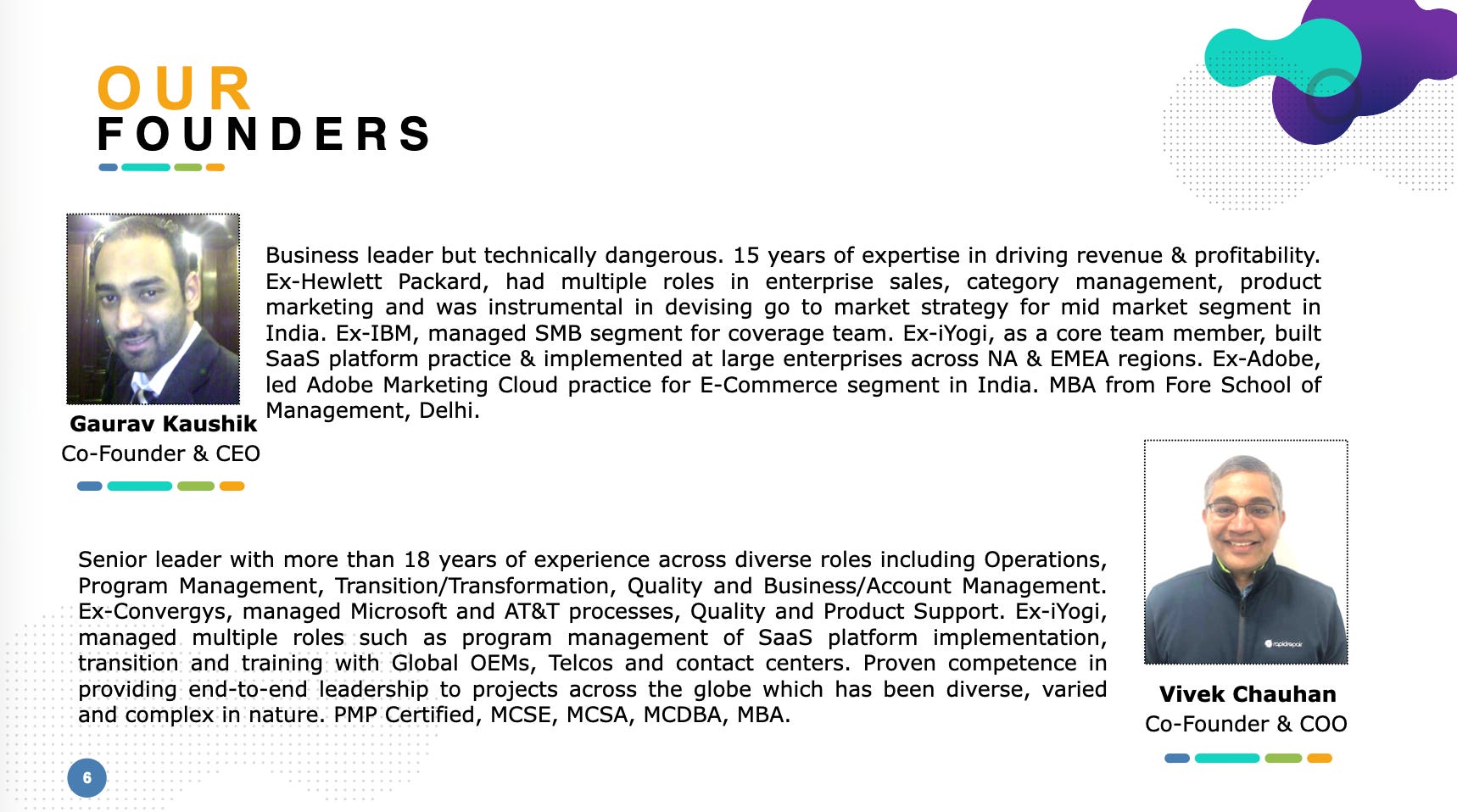
Gaurav and Vivek have worked together for around 16 years.
They first met at iYogi.
Gaurav’s background spans technology, enterprise sales, and product and go-to-market roles across companies including HP, IBM, iYogi, and Adobe.
Vivek comes from the operating side, with more than 18 years across quality, program management, transformation, and business operations.
Such backgrounds alongside both coming from Armed Forces family, show up in how they built the company and culture.
Neither started by outsourcing the problem to someone else.
They picked up the devices themselves, learned the repair process, built the service workflow, and gradually added the licenses, technicians, supply chain, and systems around it.
Gaurav also told us there were periods during COVID when the company didn’t have enough cash to comfortably meet payroll.
He says he borrowed money from friends and sold personal property rather than delay employee salaries.
The company survived that period without raising outside capital.
Early traction
iFixedit isn’t an idea-stage company. It has been operating since 2019.
Five numbers stand out:
1. More than 14,500 repair jobs by March 2026.
The latest dashboard in the deck shows 14,507 sales across 9,180 unique customers.
2. Around 35% of repair incidents came from repeat customers.
The company reported 5,257 repeat-customer incidents. That’s notable for a service people normally use only when something breaks.
3. 97% of repair tickets were resolved.
The deck also reports a 5.1% return rate across repairs.
4. Customer acquisition has been almost entirely unpaid.
The deck attributes 86% of customer acquisition to organic channels and 14% to word of mouth. It also shows more than 1,000 Google reviews with a 4.9/5 rating.
5. The business is already profitable.
Gaurav says iFixedit did roughly ₹2.28 crore in revenue in its last financial year, with around 20% EBITDA, while remaining bootstrapped.
What iFixedit wants to build next
The founders want to extend the operation beyond repairing devices customers already own.
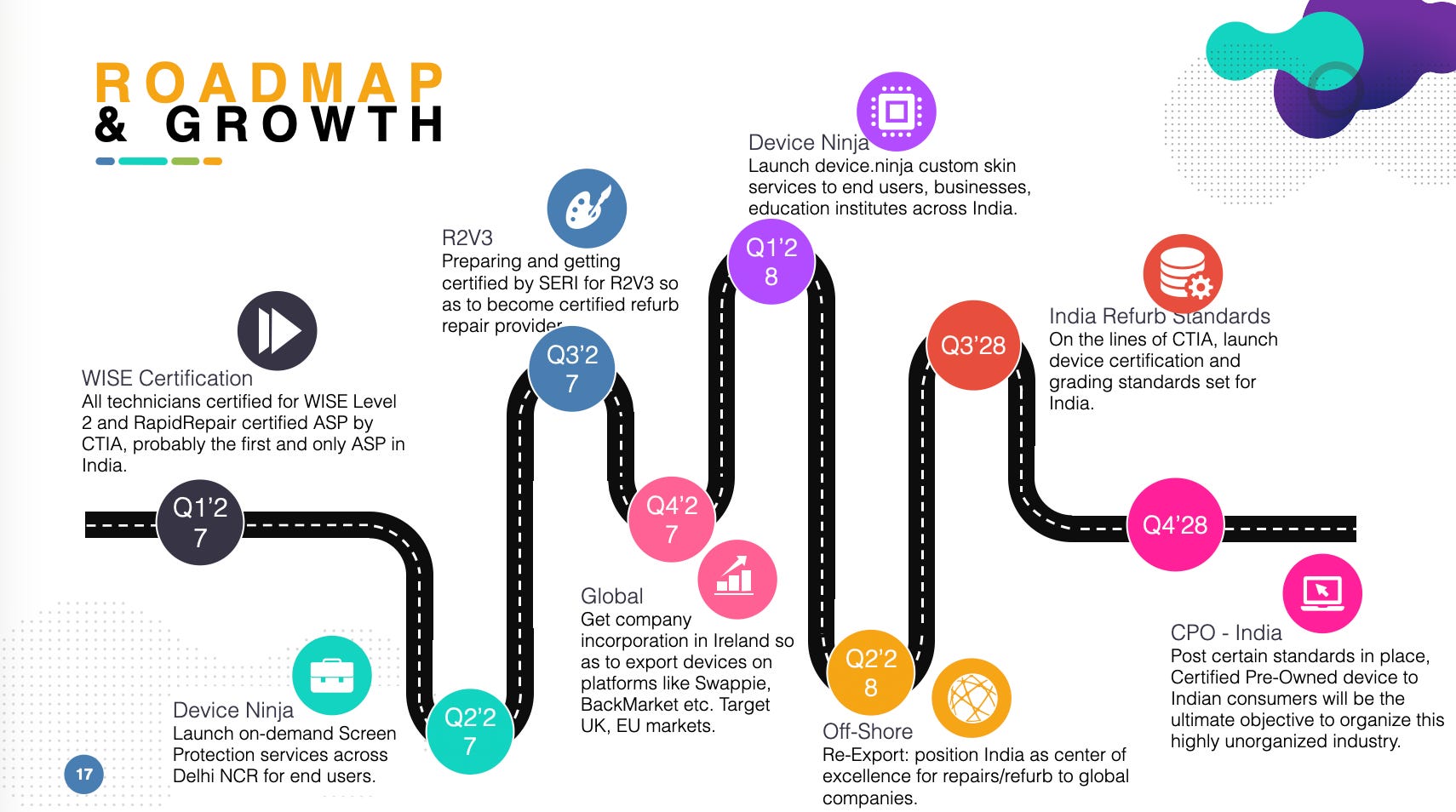
Their roadmap includes Device. Ninja, certified pre-owned devices, and refurbishment standards. Moving into that business means being able to source used devices, repair and test them consistently, and sell them with a certification customers trust.
Further out, they want to expand into cross-border repair and resale, with markets such as the UK and Europe on the roadmap.
Their immediate international focus is Japan, where the Apple device market is already mature, and repair demand is expected to grow significantly by 2030.
To make that work, the repair operation would need to sit alongside international shipping, compliance, and after-sales support.
Above all, the company is already going through stringent R2V3 and WISE certification programs to ensure global quality standards.
GVP Take
We are seeing three main signals here:
The market is moving in their favour. More expensive Apple devices give owners a reason to repair, while the growing refurbished market and government support for international repair create room to expand.
The founders fit the business. Gaurav brings technology, sales and product experience; Vivek brings operations and quality expertise. This business needs both to earn customer trust and deliver consistent repairs.
They have a strong base to build on. Around 35% of repair incidents come from repeat customers, while 86% of acquisition is organic and 14% comes through word of mouth. Gaurav reports roughly ₹2.28 crore in annual revenue and around 20% EBITDA, built without outside funding.
The next test is growing beyond NCR while keeping repair quality, turnaround times and margins intact.